

It's surreal to say, but this month marks 15 years since Game of Thrones premiered its pilot episode on April 17, 2011. It's been quite a journey from that point to now. Across eight seasons, HBO's fantasy juggernaut captivated audiences with its bloody twists, razor sharp writing, spectacular battles, and intricate storytelling, changing television as we know it in the process. It's difficult to imagine what modern media would look like without Thrones, and we don't even want to try!
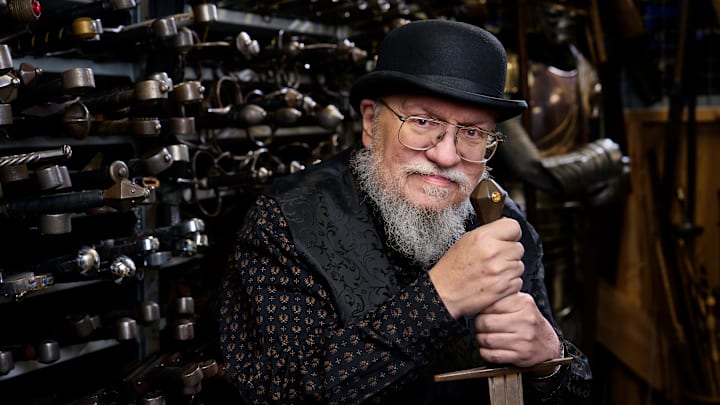
For as ubiquitous as Game of Thrones has become, it all started with one man: George R.R. Martin, the author whose A Song of Ice and Fire books serve as the basis for the series. Martin isn't just one of the most recognizable authors of the modern age; he's also an accomplished TV writer and producer as well, who penned episodes for the first four seasons of HBO's series.
Shortly after Game of Thrones finished out his run, award-winning journalist James Hibberd published an extensive behind-the-scenes book called Fire Cannot Kill A Dragon which featured a plethora of interviews with the show's cast and crew. Nestled among its many tantalizing insights is a moment where Hibberd asks Martin what his hope for Thrones' legacy is. The author's answer has always stuck with me:
"We were the most popular show in the world, for a time. We set a record for most Emmys, and that’s a legacy. But records are made to be broken, and twelve years ago there was another show that was was the most popular in the world and I don’t know what it was. I tell you what I hope for in terms of legacy: that we established adult fantasy as a viable genre on television. Now everybody wants 'the next Game of Thrones.' Will anything be the next Game of Thrones? Even our prequels? I don’t know. If they all flop, then it will be another ten years before somebody tries a fantasy show again. That would be sad. I would like to see fantasy become a permanent genre, like lawyer shows or cop shows. There are good cop shows and shit cop shows, but there are always cop shows coming on. And it doesn’t matter if a cop show is good because there’s always another coming. That’s what I would like to see, every year a new fantasy show or two. That would be the legacy I would like to see for Game of Thrones."

George R.R. Martin's wish for Game of Thrones has become reality
Time has borne out Martin's words. We're now 15 years out from the premiere of Game of Thrones, and just under seven years from its finale in May 2019. Martin's hypothetical fear that a few more fantasy shows flopping could lead to the demise of this resurgence hasn't come to pass; instead, the opposite has been true. These days it feels like every streamer and studio is taking their crack at fantasy shows, dreaming of capturing the sort of faithful viewers who rallied behind Thrones and remain passionate about its contemporaries.
From notable contenders for the proverbial throne like Netflix's The Witcher, Prime Video's The Lord of the Rings: The Rings of Power, and HBO's own acclaimed Thrones spinoffs House of the Dragon and A Knight of the Seven Kingdoms, to those who barely made it into the running before being axed like Cursed, The Dark Crystal: Age of Resistance, and more, even just listing the number of fantasy shows that have come out in Game of Thrones' wake would be an arduous task.
That's not to say there haven't been devastating losses, or that things couldn't change. Some shows that seemed destined for greatness met the headsman's blade as prematurely as Ned Stark. The most notable of those cancelations was The Wheel of Time, a similarly ambitious fantasy show on Prime Video based on one of the most iconic fantasy book series of all time — one of the true equals to the likes of A Song of Ice and Fire or The Lord of the Rings. Another that stunned its fans was Shadow and Bone, based on the beloved Grishaverse books by Leigh Bardugo, which Netflix canned after its second season despite having a highly-anticipated Six of Crows spinoff already written and ready to film with a fan-favorite cast.

With the end of massive studio gambles like The Wheel of Time and Shadow and Bone, it does feel like the fantasy TV boom is beginning to slow, if not quite fade. We're still getting plenty of great media in that fantasy space to watch, including some series set right in Westeros. But studios are being more cautious than they were in the immediate aftermath of Dany burning down King's Landing and igniting ratings records along with it. Now, they're taking a more measured approach by necessity, rather than tossing unlimited amounts of money at the fantasy genre in hopes of spawning the next big thing.
And that may not be all bad. The fantasy gold rush was never going to last forever; that simply wouldn't have been sustainable. But that doesn't mean that positives can't still come out of this shift in studio mindsets. Look no farther than HBO's A Knight of the Seven Kingdoms. The latest Westeros spinoff has a much smaller budget than its predecessor, House of the Dragon, yet its first season was incredibly well received. The more modest expense also gave HBO confidence to move swiftly ahead on season 2, with filming beginning before the first was even out. If massively expensive series like The Lord of the Rings: The Rings of Power, then A Knight of the Seven Kingdoms could offer a blueprint for a more reasonable way forward.
Studios also aren't totally calling it quits on the mega-budget series either. As of this writing, HBO has just unveiled its first trailer for a new reboot of Harry Potter that is expected to rival The Rings of Power's lofty price tag by the time it finishes adapting all seven of J.K. Rowling's books. We can debate the wisdom of rehashing Harry Potter, but the fact that HBO is willing to go all-in on it is yet another signal of the hunger that both studios and viewers still have for premium fantasy fare on television.

As Martin said about cop shows, there have been good fantasy shows and sh*t fantasy shows in the years since the curtain dropped on Game of Thrones, but there has always been some fantasy show or other for viewers to watch on television. While Hibberd's question almost felt academic when it was first asked with Game of Thrones so freshly over, time has seen that dream for its legacy come to pass. Because of Game of Thrones, fantasy has become a widespread staple of the television ecosystem — and its sister genre science fiction has also seen a notable boost as well.
We may still be discovering the ways Thrones has impacted television at large, but for now, it seems safe to say that the legacy lives on.
All eight seasons of Game of Thrones are available to stream on HBO Max. We'll be celebrating the show's 15th anniversary all month long at Winter Is Coming, looking back on the series and all its highs and lows. Join us for the return to Westeros!
 Add us as a preferred source on Google