

The name George R.R. Martin is synonymous in popular culture with Game of Thrones and A Song of Ice and Fire, and while that's more than understandable considering the cultural impact of the author's fantasy world, this Halloween we're looking back at an often underrated part of Martin's history as writer. Yes, he writes a mean battle scene and no one does complicated fictional family trees better, but in his early days, Martin's reputation primarily rested on other genres: namely, science fiction and horror.
Long before Westeros had even sparked in his imagination, George R.R. Martin penned numerous short stories and several novels, some of which are downright terrifying or disturbing. Let's explore some of GRRM's early works which serve as a perfect reminder of his roots writing stories that left readers haunted long after they read the final lines.

1. Fevre Dream (1982)
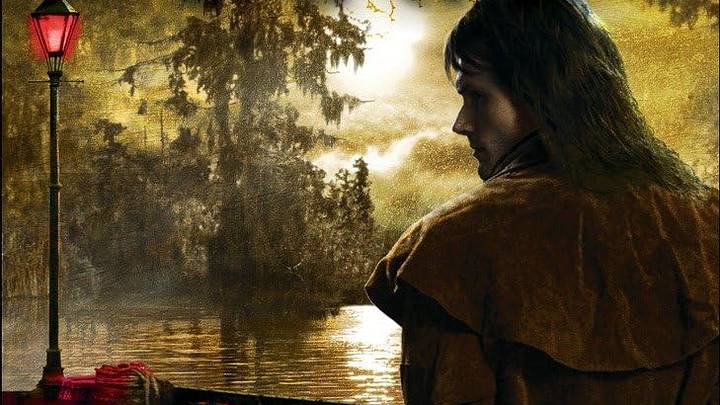
Of all Martin's books that he wrote before A Game of Thrones, the best by far is the vampire novel Fevre Dream. This spooky vampire novel takes place in the antebellum South, where a jaded steamboat captain named Abner Marsh is contracted to transport a mysterious person named Joshua York down Mississippi River. York only comes out at night, and prefers Abner ask as few questions about his goals as possible. Yes, he's a vampire, and that fact is so small of a spoiler in the grand scheme of this twisty, brutal, terrifying story that it's hardly worth batting an eye at.
Fevre Dream has all the makings of a classic Martin story: bloodshed, betrayal, unlikely friendship, commentary on the human condition, and a narrative that keeps you guessing right down to the final pages.

2. Meathouse Man (1976)
GRRM has never shied away from grim content in his short stories or novels, but of everything he's written in his 50+ year career, the most disturbing by far is Meathouse Man. This sci-fi story is set in Martin's Thousand Worlds, an interconnected universe of loosely connected tales set on disparate planets, which was his most prominent fictional setting before Westeros. And when I say it is disturbing, I really, truly mean it.
Meathouse Man is about a disillusioned young man living on a planet that specializes in corpse labor, where the dead are reanimated and put to work in a variety of undesirable jobs...including brothels. Yes, you read that right. The unnamed character at the heart of this story is a corpse handler who uses them for hard labor, but his trips to the brothels as he searches for meaning in life form the heart of the story. It is just as utterly f***ed up as you would think from the premise.
The original Meathouse Man short story is available to read in Dreamsongs Vol. I, but there's also a Hugo Award-nominated graphic novel of it that was done by Martin's longtime art collaborator Raya Golden, which is an excellent adaptation that is made even more unnerving by the inclusion of artwork.

3. Sandkings (1979)
While we're talking about GRRM's Dreamsongs collection, another story that can be found there that has plenty of horror vibes is Sandkings. This acclaimed work is Martin's only story to win both the Hugo and Nebula, and remains one of the pinnacles of his career in terms of short fiction to this day. Like Meathouse Man it is set in the Thousand Worlds, with shades of the kind of cautionary exotic pet story told in Gremlins, except dialed all the way up to its most horrifying, inescapable point.
Sandkings follows an affluent playboy named Kress, who likes to keep the most dangerous exotic pets he can find for his own amusement. After stumbling across a mysterious shop, he purchases four colonies of "sandkings," small, insetctoid-type creatures which are ruled by a central being at the heart of their hive — called a "maw" — with no limitations on the size or sentience they can grow to except their surroundings and diet. Kress foolishly begins pitting other alien creatures against his sandkings at parties, as they grow ever larger and more dangerous.
Eventually, they slip containment and fully escape his control. The horrific deeds Kress commits to try to keep them satiated are bad enough, but the eerie nature of the sandkings grows ever clearer the larger and more deadly they become. Suffice to say, there are no happy endings in this one.

4. Nightflyers (1980)
With Nightflyers, Martin took the haunted house formula that is so beloved in the horror genre and transplanted it onto a mysterious spaceship. This spooky story is about a group of scientists who set out aboard the titular ship to study an alien race in hopes of salvaging some of its technology.
However, the ship has its own secrets that make it far deadlier than anything they find in the great beyond. The Nightflyer is seemingly a fully autonomous vessel operated by one person, the reclusive Captain Royd Eris. But the captain only ever appears as a hologram or disembodied voice, and it isn't long before people start suddenly turning up dead. Things get even creepier when the team's telepath uncovers another presence aboard the ship, and the genetically enhanced protagonist, Melantha Jhirl, has to race against impending doom to figure out what's behind the string of deaths before its her turn.
In many ways, Nightflyer is the most classic of Martin's horror stories in terms of its tropes. It was adapted as a film in 1987, and a Syfy miniseries in 2019, making it one of the author's more enduring early tales.

5. The Plague Star (1985)
Haviland Tuf was one of Martin's most memorable early-career protagonists; an androgenous, overweight ship captain with a dry sense of humor and an irrepressible love of cats. All seven of Tuf's adventures are collected in the fix-up novel Tuf Voyaging, and while they're not horror all the way down, The Plague Star most certainly uses some classic horror concepts in ways that will feel familiar to anyone who loves Alien or other sci-fi horror stories.
The Plague Star was one of the last Tuf stories Martin wrote, but the first chronologically. It lays the foundation for the rest of the series by showing how Tuf got his signature seed ship, which contains a priceless library of genetic material and advanced technology that allows him to zip around the Ten Thousand Worlds solving ecological disasters in the making.
The Plague Star has a similar arc to Nightflyers, where Tuf and a team of mercenaries go in search of the titular Plague Star, a strange celestial body orbiting a ruined world which periodically rains disease down onto the planet, wiping out or mutating all life below. They soon discover that the Plague Star is a ship, and upon boarding it, long-dormant defense mechanisms and deadly creatures begin to awaken and wipe them out. Considering that the team in question are a bunch of opportunistic cutthroats, they soon start turning on each other as the situation spirals out of control, until there's just one left standing.
Like Meathouse Man, The Plague Star was adapted into a graphic novel by Raya Golden, titled Voyaging, which is also a very solid way to experience the story for the first time if you prefer that format.
This list contains just a sampling of some of Martin's more unnerving tales. Many of his early works of short fiction have horror elements, and are very much worth the time if you want to explore his deeper catalog. Most are contained in the two-volume collection Dreamsongs.
 Add us as a preferred source on Google