

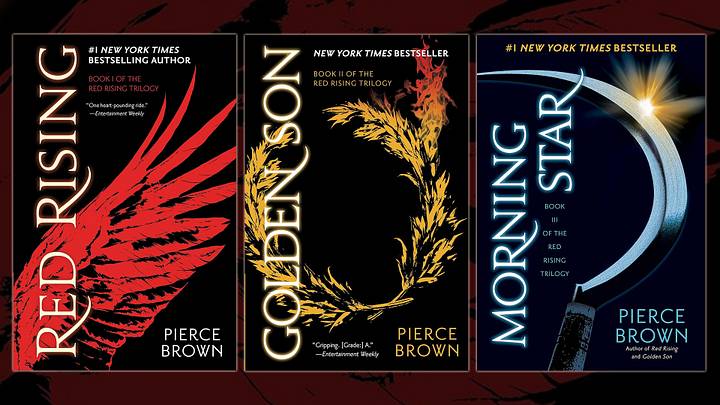
The Red Rising saga by Pierce Brown is one of those works in sci-fi and fantasy that really does take over your life. It starts with one book and ends with you rereading passages at midnight, recommending it to strangers, and feeling something akin to grief knowing the seventh book is the last. There are not many stories that earn that kind of devotion from its fans, and fewer still that deserve it.
One could say what makes this saga so consuming is how uncomfortably serious the elements it deals with are. This is a series about class and power and what oppression looks like when it has been so thoroughly normalized that the people at the bottom believe it is natural. It is about revolution and what revolution costs over time, even in the lives of the people leading it and the ideals they started with.
It is also about brotherhood and loyalty and what those things actually mean when the world is trying to pull everyone apart. And of course, there is the social commentary that is almost always on point and never decorative.
The world Pierce Brown built across these six books with the color caste system, the colonized solar system, the ancient Gold culture with all its Roman-influenced ritual and violence, is arguably one of the most fully realized settings in contemporary speculative fiction. And the characters who move through it are people we deeply care about in a way that sneaks up somewhere around the first two books and never quite lets go.
The Red Rising saga runs across two parts. The first three books follow Darrow's rise from the very bottom of the caste system into the heart of the Gold world and the revolution that follows. From Golden Son (book 2) onward, it becomes full-blown space opera, epic in scope and ambition.
The second part (planned as a tetralogy), from Iron Gold through Light Bringer expands further still to something of a war epic featuring multiple POVs, a solar system in constant conflict with itself and a Republic trying to survive its own contradictions. Heavy, timely, and completely timeless all at once, it is one of those rare series that feels like it was written specifically for the moment.
Today we are ranking all six books published so far in the Red Rising saga, revisiting why we fell in love with each part of the story.

6. Dark Age (Red Rising #5)
Dark Age is often dubbed the darkest and longest book in the series. It is hundreds of pages of sustained, deliberate, unflinching darkness, and Pierce Brown is completely intentional about all aspects of its material. It follows the saga as we see what prolonged war does to people, to ideals, and it holds that subject with real seriousness and craft.
The Mercury campaign alone is a masterpiece of military science fiction, and then it turns into something far worse, and then it turns into something worse than that, and Brown never flinches from any of it. Every thread in the book is running at that same pitch with grief and loss and the cost of choices made books ago finally coming all at once.
We see the Republic fracture from within and characters we love get taken from us without ceremony. By the last page everything Darrow and Virginia and the Howlers built across three books is in ruins, and the story earns every page of that devastation honestly.
We cannot stress enough how great this book is. It is also the hardest one to love while you are inside it. Fans after finishing it almost universally describe Dark Age as devastating and brilliant and nearly unbearable in equal measure, and truly that describes it exactly right.
Dark Age sits sixth on our list because of what it costs to endure it and not because of any failure on its part. It follows Iron Gold, which laid the entire foundation of the second arc and leads into Light Bringer, where the light finally returns in some sense if not all. DA is the dark in between.

5. Red Rising (Red Rising #1)
Red Rising is the book that started everything, and it is sitting at five, which is a strange thing to reckon with but not because it is any less brilliant than its successors This is a heavy, serious, genuinely dark and engrossing novel from its very first pages and Pierce Brown is not easing anyone into anything here.
The world he builds, the color caste system with its engineered exploitation and its layers of mythology designed to keep the lowest colors compliant, is some of the sharpest pieces of world-building in contemporary science fiction, and the anger running underneath it is real and it is earned.
The Institute is where this saga's most important relationships are born, and Brown gets almost all of them exactly right. Sevro is feral and funny and immediately one of the best characters in the series, and his commitment to Darrow is established so quickly and so completely that we never doubt it for the next five books. Mustang is introduced here too, and Brown doesn't present her as a secondary character, never a love interest first. She is the Primus of House Minerva, a brilliant strategist who has already rejected the Gold mindset on her own terms before Darrow ever finds her. Their alliance builds slowly and realistically, and it holds.
Then there is the rest of the house. Roque, the poet of House Mars and one of Darrow's closest friends, whose loyalty is one of the most important threads in the first trilogy. Pax, enormous and ferocious and fiercely devoted once Darrow earns it. Titus and the final reveal about his identity. And Cassius au Bellona.
Cassius is perhaps the most important introduction in the whole book, and Darrow's first Gold friend. Their friendship in those early chapters, the guilt Darrow carries while also loving his dear friend, and eventually the way it shatters when Cassius learns what Darrow did to Julian au Bellona is one of the most important ruptures in the saga. They go from brothers to blood feuders across a single duel, and the shadow of that fracture follows everything Cassius does for the rest of the series.
Red Rising sits at number five because from Golden Son onward this becomes a different kind of story entirely, with the fate of the solar system in the balance. The contained scope of the Institute reads differently once you know what's coming and we are grateful for what it gave us. In a saga this strong, fifth is where it lands.

4. Iron Gold (Red Rising #4)
Iron Gold often does not get the love it deserves. I was watching this interview last month where Pierce Brown was overjoyed when the host told him Iron Gold was their No. 1 RR book, which is a testament to how seldom he hears it.
It is indeed an exceptional entry in the series and one of our very own favorites. The first trilogy in the Red Rising saga is done around a single, tight first-person perspective and Iron Gold breaks that structure open completely, expanding to four separate POVs and a world 10 years changed from where Morning Star left it.
A lot of readers feel the change is a loss and it's understandable. But Iron Gold did what the series absolutely needed at the time, which is ask what the revolution actually produced. You cannot ask that question from inside Darrow's head alone.
The Darrow thread obviously carries the heaviest emotional weight in the book, and the fracture it ends on with the choice Darrow makes that finally breaks Sevro and scatters the Howlers is one of the most painful things in the series to watch. We also witness one of our absolute favorites in the whole saga die in this book in a way that is sure to wreck fans.
The new POVs are where the book rewards patience. Lysander watches from the side of everything Darrow destroyed and is human enough to make that uncomfortable. Lyria is what the revolution was supposed to be for, given a voice and shown a Republic that has not gotten around to helping her yet. Ephraim is what the war leaves behind when it moves on.
Together the POVs form something like a jury for Darrow's choices, and I cannot stress enough how much richer Dark Age and Light Bringer are because Iron Gold got this structure right, against what readers wanted, and held it. Perhaps it is not as widely beloved as the others, but it is one of the best works in the series.

3. Golden Son (Red Rising #2)
Golden Son is the second book in the saga, following Red Rising and preceding Morning Star. This is the entry where the saga truly becomes an epic space opera. The Roman-influenced culture of Gold society, the ancient grudges between houses, the language of honor and obligation and blood, all of it comes alive here.
This is a better book than its predecessor in almost every way. Darrow is formidable and often fortunate in the first book. Here though he loses in ways that damage real people and cannot be undone, and the political stakes are higher than ever.
Golden Son does some of the finest character work in the series and it introduces characters we will continue to love through the saga. The ending is a masterclass in how to close a middle book and Brown trusted readers to follow him into Morning Star where that trust was entirely justified.

2. Morning Star (Red Rising #3)
Morning Star is the conclusion of the first trilogy and it is the best ending to a science fiction trilogy I have read in years. It opens with Darrow broken and isolated, everything Golden Son built taken apart around him, and then Sevro arrives, because of course he does, to rescue him.
That moment is one of our absolute favorites in the whole saga. One can say it is the peak of their friendship built across the past two books.
Then there is Cassius. His arc in Morning Star is one of the most fantastically handled things in the first trilogy as we witness the slow, awkward, grudging process of two people who broke each other badly finding their way back to what they believe in. What tips it is learning the Sovereign's real role in everything and the story earns the quiet reconciliation between them completely. Cassius calling Darrow his brother before leaving finally is one of the most affecting moments in the trilogy, and it works the way it does only because of how long and how badly their relationship was broken.
The revolution is also not clean or triumphant in any simple sense. The grief Darrow carries is honest and unresolved after being betrayed, and eventually losing one of his closest friends because they couldn't let go of their ideals is achingly written. The Howlers at full strength with Sevro and Darrow side by side is the epic the first trilogy kept us waiting for, and Brown delivers it with everything he has.
If the saga had stopped here with Morning Star, it would have been enough. The fact that it did not is one of the better things to happen to science fiction in this decade and we couldn't be more grateful.

1. Light Bringer (Red Rising #6)
Light Bringer is the sixth book in the saga, following Dark Age, and the penultimate entry before Red God. Fans who stayed through five books, through Dark Age especially, are the readers who loved this saga most, and this book gives us what we were waiting for in a carefully and hard-earnedly hopeful way.
The hope is not cheap and it is not easy and it does not come without cost, but it is there, and after everything the series put us through to get here, feeling it still there is one of the best reading experiences any book in this saga offers.
The Darrow and Sevro reunion is the emotional core of the book and it is handled with so much maturity. The fracture from Iron Gold and the nightmare of Dark Age are both still present when they find each other. Darrow's apology, where he stops defending his choices and simply owns what he asked Sevro to sacrifice, is one of the hardest things Darrow does in the whole saga. Like those we love most who have seen us at our worst and stayed anyway, watching these two find their way back to each other feels personal. That is how good the character work in this series is.
Then there is the duel at Ashvar, which is the finest single sequence in the saga and the Clang. Clang. Clang. of it became fandom shorthand almost immediately after the book came out. But Light Bringer is more than any single moment in it. Lysander across this book is a genuine horror, someone who believes in his own righteousness with a completeness that makes him more dangerous than any villain who knows what he is. Virginia holds her thread with the composure and intelligence the series has always given her. It is where character work and loss and earned consequence all arrive at once. Lux ex Tenebris. Light out of darkness. Pierce Brown promised that from the very first page and here he delivers that.
In our opinion, Light Bringer is the best book in the Red Rising saga. It has the action and the scale and the heartbreak the series is known for, but it also has a quality the series does not always have time for: grace. It is a book that knows what it has done and handles it with care, and reading it after everything the saga put us through is one unforgettable experience.
Red God is the final book in the saga. Everything Light Bringer set in motion — the new coalition, Lysander still out there with everything he has done, Darrow and Sevro and Virginia on a collision course with the reckoning the series has warned is inevitable since book 1 — all of it will have to be tied together in the last installment. We trust Pierce Brown with it. We have trusted him since the mines of Mars and he has never given us a reason not to.
 Add us as a preferred source on Google