

In 1982, Ridley Scott brought Philip K. Dick's sci-fi masterwork to the big screen in live-action. While the movie is very different from 1968's Do Androids Dream of Electric Sheep?, Scott still helmed a project that has endured to become one of the biggest cult classics of all time.
That said, the creative decisions made by Scott and company ultimately resulted in huge parts of the source material being ignored or heavily altered. For instance, the term "Blade Runner" never appears in the book, even though it is the job that protagonist Rick Deckard is paid to do. Dick largely just refers to them as bounty hunters, or simply cops.
One of the biggest elements of Electric Sheep that both movies really downplay is the presence of artificial animals and the scarcity of real, biological ones. Scott did factor it into the worldbuilding, but it massively took a back seat compared to how Dick showcased the theme.
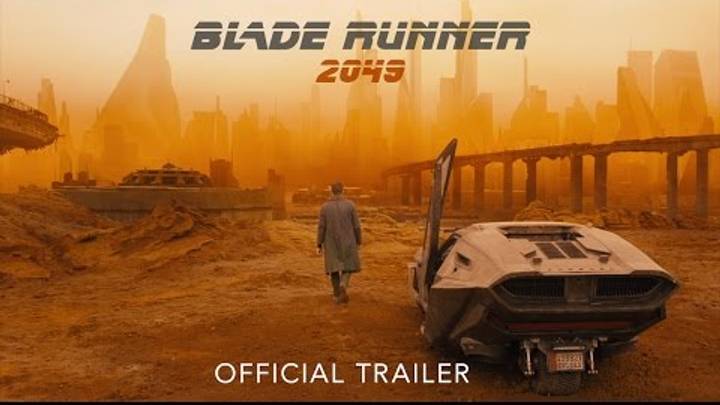
Toward the end of the 1968 book, Dick really drives home his point with a key animal scene. Scott clearly thought it was surplus to requirements, or perhaps ill-fitting to his movie's climactic finale. Thankfully. Denis Villeneuve's 2017 follow-up, Blade Runner 2049, found time for a version of the literary sequence in question.
Electric Sheep's thoughtful toad moment that Blade Runner left out, explained
Near the end of Electric Sheep, with Deckard physically and emotionally exhausted after a day of retiring Replicants, he drives out into the nuclear wasteland north of LA. There, with everything dead around him, he finds the space and macabre peace he needs to try and re-center himself. While there, he is astonished and thrilled to find a toad in the dust.
"The toad, he saw, blended in totally with the texture and shade of the ever-present dust. It had, perhaps, evolved, meeting the new climate as it had met all climates before. Had it not moved he would never have spotted it; yet he had been sitting no more than two yards from it.Electric Sheep (1968), Philip K. Dick
What happens when you find — if you find — an animal believed extinct? he asked himself, trying to remember. It happened so seldom. Something about a star of honor from the U.N. and a stipend. A reward running into millions of dollars."
The social importance of owning a real animal rather than an artificial one, as I said earlier, is a major recurring theme in the source material, rather than a passing piece of worldbuilding like it is in the movies. Deckard hurries home to his wife, Iran, who doesn't exist at all in the live-action adaptation. Unfortunately for Deckard, Iran discovers the toad's inner workings, revealing it's artificial.
While initially crestfallen, Deckard decides it doesn't matter whether the toad is real or not, and that it deserves his empathy anyway. It's an artful way of summing up the story's central themes. Scott understandably omits sequence entirely from his movie. Not only would it have been a real pace-killer, but it would also have lost much of its impact due to other parts of the book that never made the cut.
How Blade Runner 2049 cleverly adapted Deckard's toad discovery
Those who have seen the movies, never read the book, but now know about Deckard's moment with the toad, might know where I'm going with this. In Blade Runner 2049, while K (Ryan Gosling) is searching for Deckard (Harrison Ford), he heads into the wasteland of Las Vegas, where he suspects Deckard is hiding out.
As he searches, he comes across an active beehive that surprises him for a number of reasons. The most obvious is that, in all likelihood, K has never seen a real bee. The second is that, if the bees are real, they're alive and thriving in such a harsh and unforgiving environment.
It's tricky to tell whether the bees are real or not from just watching the movie, but director Denis Villeneuve has confirmed (via IGN) that they are, and that a "bee-feeder science fiction gadget" is visible in the shot. This allows them to survive without any plant life for miles around.
Note: Blade Runner 2049 is not adapted from a book like Blade Runner is, but is rather a canonical extension of Ridley's version of the story.
The moment is packed with the same strange beauty and poignancy as Deckard's discovery of the toad in Electric Sheep. Perhaps the biggest difference, other than swapping out a toad for a bunch of bees (cooler vibes, honestly), is that the toad is artificial and the bees are not. Still, both instances offer hope to the character involved.
That isn't the only similarity, either. Just as the bees' presence initially presents a mystery of how they could possibly be real, something similar is true of the toad. Unlike frogs, which can't spend all that long in arid conditions such as a desert, toads can be more resilient in these settings. Still, with toads believed to be extinct in the book, doubt is cast over the whole situation.
Finally, what I find particularly satisfying about K's moment with the bees is that Deckard is still the man behind it. As such, one of his most pivotal book moments isn't totally inherited by Gosling's character. Deckard turns out to be the beekeeper. This means he has helped bees thrive in the desert, which quietly and unknowingly makes up for the initial disappointment his literary counterpart experienced when he finds out the toad is artificial in Electric Sheep
Blade Runner 2049 is streaming on Paramount+.
 Add us as a preferred source on Google