

There's no denying that Dark Matter is a multiverse show. The sci-fi trope of traveling between alternate dimensions is at the very core of everything it does. However, Dark Matter has always, for several reasons, felt unique when compared to other projects built around the concept of a multiverse. Despite heavily embracing such cerebral worldbuilding, the exploits of Joel Edgerton's Jason Dessen and company have always felt surprisingly grounded. There is always something profoundly human at stake, and the multiverse is merely a way of enhancing that.
Edgerton himself humorously told ScreenRant in 2024 that he viewed Dark Matter as "The Multiverse for the middle-aged man." His sentiment boils down to the fact that all the big, fantastical realities that can be found in things like the MCU or Rick & Morty aren't present in Dark Matter. Just how different reality can get isn't the point of the story. That philosophy has remained intact in season 2 so far, but the show is beginning to lose its way a little with just how deep into multiverse lore things should go.
FULL SPOILERS for Dark Matter season 2, episode 7, "The Pyramid."

Leighton's effort to map the multiverse feels off-brand for Dark Matter
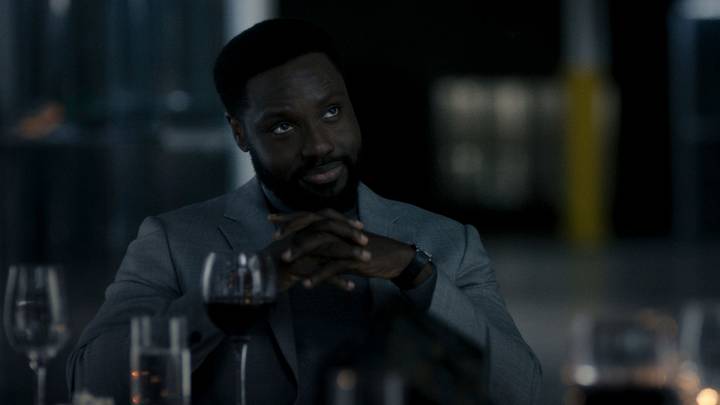
In episode 7, "The Pyramid," Dayo Okeniyi's Leighton Vance reveals that simply hopping into the Box and crossing his fingers isn't good enough for him anymore. He wants to be able to navigate the multiverse with near-certainty, and log each new world as he goes. His plan to enhance the standard of living in them all by encouraging the sharing of ideas and technology makes sense, but it does also start to edge a little into the territory of a traditional sci-fi villain origin story.
Furthermore, a big part of what has long made Dark Matter feel unique among similar projects is that the inability to accurately travel between specific realities and the mindset of being lost and uncertain is one of the story's defining traits. Season 1 successfully championed the source material's core theme of wondering about the paths not traveled in life, and the damage that regret can do. It was a potent and impactful narrative.
Meanwhile, although I am still thoroughly enjoying season 2, it's tough for me to ignore that Dark Matter has struggled to find a suitable philosophy to replace season 1's. Instead, it's resorting to predictable sci-fi tropes like mapping the multiverse, with Leighton labeling other realities with names like "HB-24." The days of scrabbling to come up with a universal name for realities like the one swarmed by enormous hornets are dwindling.
This starts to dispense with Dark Matter's familiar feeling of being without direction, which is how the Box pilots are supposed to feel. Knowing that the characters are refining their method of navigating the multiverse detracts significantly from the underlying emotions. In other words, Dark Matter is quickly becoming almost entirely about the multiverse as a concept rather than using it as a framing device to explore something much more poignant.

Dark Matter's grounded, character-driven storyline prevents it from going too far off course
To use the example of the MCU again, Marvel multiverse arcs don't hinge on the existence of any specific characters. Simply exploring those various realities is the point of its multiverse storylines. There are too many Marvel characters to count when it comes to checking in on what a new version of them looks like. That's not the case with Dark Matter. Instead, the Apple TV series has a small group of characters to focus on, and the differences between their various versions are negligible in most parallel realities.
Note: "The Pyramid" has a great piece of evidence to support this. Even though Leighton wants to double down on exploring the multiverse, Blair's (Amanda Brugel) objections immediately cause character-heavy discord.
If anything, it gets more and more rewarding when it's revealed how many versions of Daniela (Jennifer Connelly), for example, are so similar to each other. Furthermore, when a vastly different version of a character, like Jason2, enters the fray, it's far more impactful. This formula is what really makes Dark Matter so unique. So, even if the show does sometimes dive a little deeper into sci-fi tropes than usual, it has proven that those forays are only ever brief, and that the small group of main characters and their connection to each other will return to the forefront sooner rather than later.
Dark Matter season 2 is streaming now on Apple TV.
 Add us as a preferred source on Google