

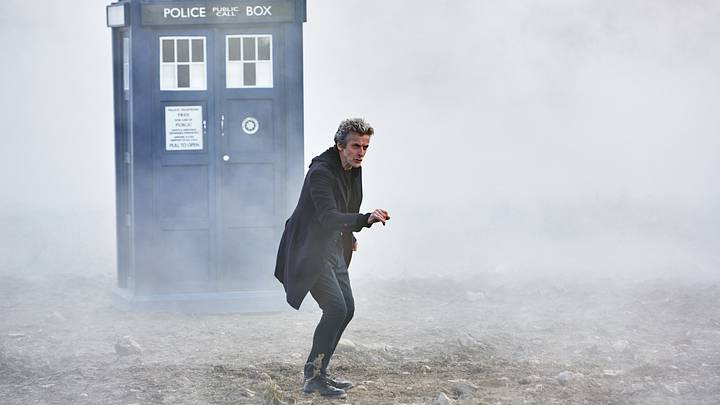
Ever since William Hartnell stepped aside as Doctor Who's first leading man in 1966, the brilliant concept of regeneration has allowed the beloved sci-fi series to endure for decades. It not only serves as a constant reminder of the Doctor's alien origin, but it also allows the show as a whole to constantly refresh itself between eras while also keeping all the previous canon intact.
That being said, the past decade of Doctor Who has started to overwork the figurative dough. What was once a relatively straightforward process of bringing in a new actor to replace their predecessor, and the show's in-universe acknowledgment of the recasting process, has recently been paraded around as a gimmick to be explored to within an inch of its life.
As a result, Doctor Who's other current challenges have combined with this decision, meaning the show has now totally lost its way.
Doctor Who hasn't had a normal regeneration sequence since Jodie Whittaker's debut
Think about it. Ignoring the retroactive installation of John Hurt's War Doctor before Christopher Eccleston's Ninth, the show has lately favored gimmicky regenerations rather than just letting the process happen as part of the natural order of things. That said, Nine's regeneration into Ten (David Tennant) was a straight-up, middle-of-the-road affair.
After that, I could argue that Ten's regeneration into Eleven (Matt Smith) was a little unusual, given how fervently Ten tried to resist the process, but it was otherwise unremarkable. However, Eleven should have been the Doctor's Thirteenth and final form. Doctor Who canon had long established that Time Lords can only regenerate 12 times. Including the War Doctor and Ten's aborted regeneration (which still burned one) in season 4, Eleven was supposed to be the end of the line.
So, his regeneration was strange for two reasons. The first is that it should never have happened at all. He was granted an unknown number of additional regenerations by the Time Lords, and Twelve (Peter Capaldi) was born. The fact that Capaldi had already appeared as a different character before this moment wasn't that weird, though. It had happened before with Doctors in the classic era.
What's odd is that then-showrunner Steven Moffat provided an in-universe connection for why Twelve had the same face as Capaldi's "Fires of Pompeii" character. There was no real need to do that, and it made things overly meta. Thankfully, Twelve's regeneration into Thirteen (Jodie Whittaker) steadied the ship. Sure, it was a franchise first for the Doctor to be a woman, but the possibility had long been established in official lore. It had just taken a little while to happen for the show's central Time Lord.
Since then, the Doctor has experienced four regeneration sequences, none of which have abided by traditional Doctor Who rules. After Thirteen briefly (and confusingly) regenerated into the Master (Sacha Dhawan) in Whittaker's final episode in 2022, her success at returning to look like Whittaker was short-lived before she regenerated into David Tennant's Fourteenth Doctor in the same episode.
A little after that, Fourteen's bi-generation marked a third time in a row that the Doctor's death-cheating process was showcased as a storytelling gimmick. Ncuti Gatwa's Fifteenth Doctor, brought into the show via said bi-generation, then infamously became Billie Piper in the show's most recent finale. The question of whether that was Rose Tyler, or just happened to look like her, hasn't been answered.

Doctor Who's next era needs to return to regular regeneration sequences
Don't get me wrong, I do like it when Doctor Who deviates from the norm, and that includes toying with the rules of regeneration. However, relying on this too often suggests a lack of originality, with more focus on changing the lore than telling strong sci-fi stories. In isolation, most of the quirkier regeneration sequences work well. When they happen in a row, as has been going on since 2022, it all starts to feel more than a little tired.
Furthermore, despite there being four regenerations since Jodie Whittaker's debut, Gatwa is the only actor involved in these sequences who hadn't previously appeared in the show. This limited casting pool also displays a preference for what's familiar rather than what's right for the story at hand. As one of the most trailblazing sci-fi projects of all time, Doctor Who shouldn't be sliding into this level of predictability.
The Doctor's last for regeneration sequences
Regenerated From: | Regenerated Into: | Quirk |
|---|---|---|
Thirteen (Jodie Whittaker) | The Master (Sacha Dhawan) | High-concept (but temporary) erasure of the Doctor |
Thirteen (Jodie Whittaker) | Fourteen (David Tennant) | The return of Ten's face |
Fourteen (David Tennant) | Fifteen (Ncuti Gatwa) | Bi-generation |
Fifteen (Ncuti Gatwa) | Billie Piper | Unanswered Rose Tyler mystery |
So, with the BBC seemingly confident that the show will return in 2028/2029, I wonder if the matter of the Doctor's regenerations will be near the top of the list of things to sort out in the next era. Of course, after one of the more divisive retcons in recent memory, giving the Doctor infinite regenerations rather than being bound to the typical law of 12, there is still quite a lot of freedom in terms of the character's longevity.
That said, one of my biggest hopes is that regenerations once more largely return to a way of handing the baton from a serving Doctor Who star to a brand-new one.
 Add us as a preferred source on Google