

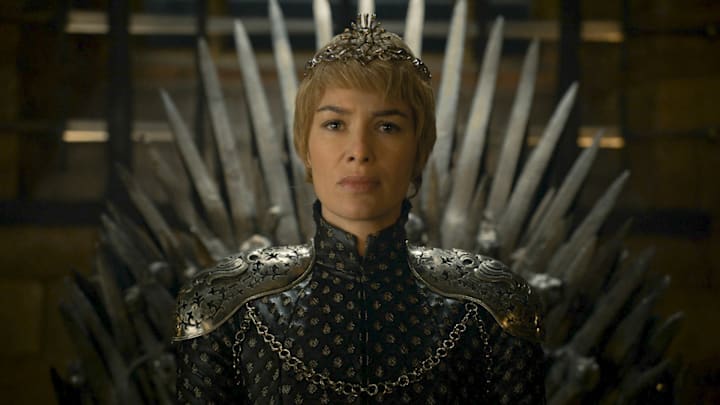
For the longest time, it looked like Game of Thrones was all about the fight for the Iron Throne. Many people wanted it and believed it belonged to them, and it’s a story as old as time, even in real life.
However, when you consider the opening of the series and just how the first five seasons developed, it is clear to see that Game of Thrones was never about the Iron Throne. After all, it’s based on the saga A Song of Ice and Fire, making it clear that this was a story about something much bigger affecting Westeros, and because of that, the final season didn’t work quite the way that it should have.

Game of Thrones was about life and death
When Game of Thrones began, we opened with rangers north of The Wall. We got to see that spiral of corpses, a symbol that would routinely come up throughout the series. And then, we learned that one of the men deserted the Night’s Watch, and he wasn’t even sorry for it. He didn’t desert because of the wildlings or some need to get the Iron Throne. He deserted because of the real danger north of The Wall.
From the very beginning, it was all about the White Walkers. We didn’t know at the time that there was a Night King, but it would eventually become about him, and every now and then, there was a reminder about it. Even when we didn’t go back to north of The Wall in the first season, there were hints that it was all leading to this battle between the living and the dead via Bran Stark.
Bran Stark being pushed from the tower led to him seeing the Three-Eyed Raven in his dreams. It led to the journey north of The Wall to find that Three-Eyed Raven, eventually learning how the Night King was created — along with why.
Sure, the fight for the Iron Throne was another continuous story for multiple players, but it wasn’t as big or as threatening as the idea of the dead building an army. Nobody was safe when it came to the Night King. If you died, you became one of his soldiers, and if you lived, well, you’d need to keep fighting for your life.

The Iron Throne was just a side quest
Of course, there were conversations that happened about the Iron Throne, including who would end up sitting on it at the end. There were the constant theories about Jon Snow being the rightful Targaryen king, and there were discussions about whether Cersei Lannister could be knocked down from power. We had the journey of Daenerys as she found her way back home to a country she was an outsider in, and more.
All of this was just a side quest without any of the main players knowing about it. They were burying their heads in the sand, believing the stories of the walking dead being just a figment of the imagination. The whole reason the number of soldiers at The Wall had dwindled was mostly because the real reason for the Night’s Watch had been forgotten about — a distant legacy.
It was a realistic element of the story, as well. Why would people think that stories from thousands of years ago were true? Just look at how we react to legends and myths of centuries ago. Do we believe them? Not at all. And so, the Night King became a legend, which gave him the power and time to build his army.
When you look at the people who were after the Iron Throne and made it part of their personality, they were nowhere near the north and the way the dead could come back. They had never seen any sign of something bigger going on north of The Wall, so, in their defense, the myth remained a myth. Those who just didn't care about the Iron Throne knew the real dangers, and they knew that the fight for Westeros was more than just a crown.

The Long Night should have been the end of Game of Thrones
I’ve said it once, and I’ll say it a thousand times more: The Long Night should have been the way Game of Thrones ended. Maybe not at Winterfell, but rather at King’s Landing. Winter should have spread across the whole country, leading to a much bigger battle between the living and the dead.
The whole series was based on the saga titled A Song of Ice and Fire, and I can see how many would believe that meant the combination of Stark and Targaryen via Jon Snow. There is certainly that connection there, but it’s about the big battle that was always foreshadowed to come. The Night King and his army were “Ice” and Daenerys with her dragons were “Fire.” There’s even a connection between Daenerys’ dragons, with the undead Viserion being “Ice” and Drogon and Rhaegal being “Fire,” based on the way their flames looked.
It all comes back to this battle that should have been much more epic than it ended up being. The Long Night technically still could have happened at Winterfell, but without the Night King dying. Instead, everyone could have fled, getting survivors to King’s Landing and taking the full battle to there. While those in the south continued to believe that the fight was all about the Iron Throne, Game of Thrones season 8 would have been much better if it ended with the death of the Night King and the loss of the Iron Throne that way.
The start of a show and the small teases along the way always hint that there’s a much bigger threat than the one staring us in the face. The Iron Throne was never the endgame for Game of Thrones, regardless of what its characters believed.
 Add us as a preferred source on Google