

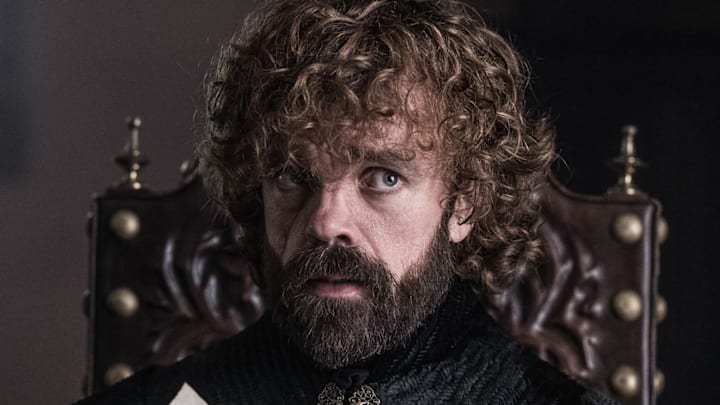
From the very beginning, Game of Thrones positioned itself as a story about moral ambiguity. Heroes sometimes faltered, villains occasionally revealed a semblance of humanity, and the world of Westeros refused to conform to the black and white that define more traditional fantasy. Yet, for all its layered storytelling, there remains a storyline that is difficult to ignore. Beneath the political intrigue and the constant reshuffling of power, one specific family stands as the most consistent embodiment of calculated cruelty and systemic rot, and that is undeniably House Lannister.
This is not to say that the Lannisters were the only villains in the story. Westeros is littered with tyrants, zealots, and opportunists, from the sadism of Ramsay Bolton to the absolutism that eventually consumes Daenerys Targaryen. But where others burned brightly and briefly in their villainy, the Lannisters endured. Their influence shapes the events of Game of Thrones through control instead of chaos, and they are not merely antagonists; they are architects.
At the center of this dynasty sits Tywin Lannister, a man who understands power as something to be cultivated, protected, and even enforced with ruthless precision. Tywin’s legacy even in the novels included not just the military victories and political machinations, but the normalization. He turned Lannister brutality into policy. The orchestration of the Red Wedding, and his willingness to sanction atrocities all point to a philosophy that prioritizes the Lannister legacy, and in Tywin’s world, cruelty is an effective tool.

This ethos trickles down, manifesting in different, often more chaotic forms through his children. Cersei Lannister embodies paranoia weaponized into governance. Her reign is defined by fear masquerading as control. Every perceived slight against her becomes a justification for escalation, culminating in acts so extreme that they destabilize the very system she seeks to dominate. Yet even here, there is a tie back to Tywin. Cersei does not invent her worldview so much as her inheriting it.
Then there is Jaime Lannister, perhaps the most complex of the three, and the one most often cited as evidence that the Lannisters are not purely villainous. His arc leads toward redemption, peeling back layers of arrogance to reveal something resembling introspection. But even Jaime’s story is inseparable from the damage wrought by his family. The act that defines him, the killing of the Mad King, is both a moment of moral clarity and the beginning of his entanglement in Lannister legacy. He saves a city, only to spend years enabling the very structures that perpetuate suffering. His struggle was compelling in that it never fully resolves.
And, of course, there is Tyrion Lannister, the outlier who seems, at first glance, to contradict the notion of Lannister villainy altogether. Tyrion is empathetic where others are callous, and self-aware where others are blind. Yet even he is shaped by the same environment. His wit and moral compass develop in opposition to his family, not in spite of it. The cruelty he experiences under Tywin and Cersei does not absolve him of the Lannister legacy. Tyrion’s journey becomes less about escaping that shadow and more about navigating the scars it leaves behind.

What makes the Lannisters particularly insidious is not just their individual actions, but their collective impact on the structure of power in Westeros. They thrive in a system that rewards consolidation, secrecy, and the shadowy elimination of threats. Where other houses rely on honor, tradition, or sheer force, the Lannisters excel at manipulation. They understand that the overarching game is not won on the battlefield alone, but in council chambers and politicking.
By the time Game of Thrones reaches its conclusion, the question is no longer who the villains are, but how deeply their influence has shaped the world itself. The Lannisters may not be responsible for every act of violence or betrayal, but they are emblematic of a system that makes such acts inevitable. Their legacy is not just one of individual cruelty, but of institutionalized harm, and is perpetuated across generations.
In a story that prides itself on complexity, it is tempting to resist labeling any one faction as the “true” villain. But sometimes, the answer is less about singular acts of evil and more about sustained patterns of behavior. And by that measure, the Lannisters stand apart not as the loudest or most "shocking" antagonists, but as the most consistent. In the end, it is not their gold and riches, their armies, or their cunning that defines them, but their ability to normalize the image of a world where power justifies absolutely anything.

More Game of Thrones:
 Add us as a preferred source on Google