

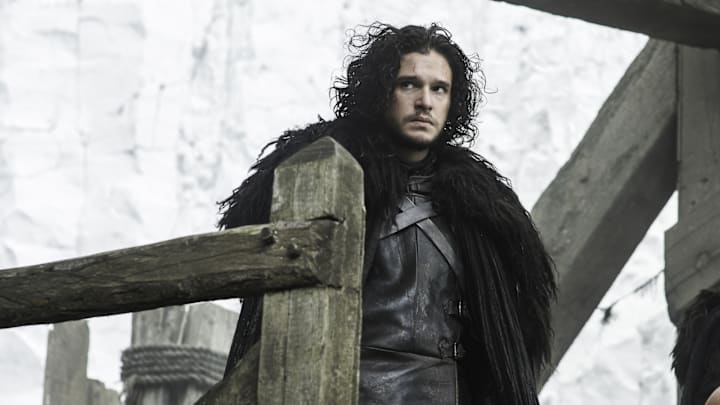
I'm only new to Game of Thrones, which I'm aware is a wild thing to say in 2026. However, I can understand why the show was so widely adored when it was on the air. It was so intensely discussed that I couldn't help overhear vague details and conversations about plot twists that, admittedly, made very little sense out of context.
From what I read and saw of the George R.R. Martin adaptation, I formulated opinions on what the show must be like. I'm pleased to say that I'm now aware I got quite a lot of it right. On the other hand, there's one huge element of the show that I assumed would be present throughout. I was starting to wonder whether I'd misinterpreted what Game of Thrones was all about. By the end of season 2, I had my answer.

Game of Thrones doesn't feel like high fantasy for a very long time
From all the shots of dragons and mentions of magic through the years, I expected Game of Thrones to hit the ground running with all sorts of high fantasy tropes. When all I was met with was a medieval-inspired world as a backdrop to a story about power and revenge, I scratched my head for quite a while. Where were the dragons? Where were all the witches and wizards? Nowhere to be found. What a presumptuous idiot I thought myself to be.
Still, I hunkered down and watched things unfold. Despite being caught off guard by how surprisingly grounded the story was, I started really getting into it. The whispers of dragons and magic were included so infrequently and were so ambiguous that I was starting to believe that even the characters themselves were acknowledging that these fantasy tropes were little more than a forgotten myth. Or, if they had existed, they were now gone from the world forever.
As the show progressed, Game of Thrones began dropping stronger and stronger hints that maybe magic was real after all, and maybe those dragon eggs weren't just ornamental. By the end of season 2, it was impossible to deny that Game of Thrones is a high fantasy saga. It just begins at a point in Westeros' history when magic is sort of just...on a break. I really like the approach, and I feel like I was getting to see the gradual reveal as it was intended. Just like Ned's death. Yes, that shocked me as well.

Game of Thrones' delayed transformation into a high fantasy show provides huge benefits
I like fantasy, but I feel like projects that exist toward the more extreme end of the spectrum can be a bit distracting at times. If the screen is filled with mythical creatures and deadly curses, then I tend to want more of that than anything else. Game of Thrones finds a great balance between telling a great story and making use of high fantasy tropes. That said, it definitely gives the former a chance to take root and flourish before introducing the latter.
Game of Thrones' biggest strength is its characters. There are a whole lot of them, but they all have interesting storylines that deserve to be given attention. If the show had come out swinging with all sorts of fantastical elements while also trying to establish the complexities of who deserves the Iron Throne — along with other subplots emerging alongside this central arc — Game of Thrones would have suffered. As it stands, I had a complete understanding of who everyone was and what they wanted. The addition of the less grounded worldbuilding efforts was then very welcome.
Furthermore, Game of Thrones' initial formula makes it seem little more than a medieval drama set in a fictional location. If someone loves medieval dramas but struggles to get into high fantasy, Game of Thrones is a perfect gateway into the genre. It's kind of like that urban legend about putting a frog in a pan of cold water and slowly increasing the heat so that it won't notice it's being boiled alive. Only the pan is Game of Thrones, the frog is an unlikely fan, and the water that gets gradually hotter is the high fantasy elements of the show becoming more pronounced. It's a little clumsy as a metaphor, but it works.
Game of Thrones is streaming now on HBO Max.
 Add us as a preferred source on Google