

This article contains SPOILERS for IT: Welcome to Derry Episode 6.
The sixth episode of IT: Welcome to Derry, “In the Name of the Father,” gets off to the kind of start that gives you pause. After a stylish if seemingly fairly benign Pennywise-featuring prologue set in 1935, the episode chugs forward into the present and picks up where the previous episode left off: with all of our characters reeling from the massive, game-changing events that took place in the sewers with Pennywise’s proper introduction to the series.
You’ve undoubtedly seen dozens of episodes of television exactly like this; the meager status quo-resetting episode that comes after the big shakeup. This, paired with the fact that two of the very first scenes we get are interpersonal character squabbles escalating to shouting matches for the sake of some cheap-if-effective melodrama had me concerned.
But delightfully, “In the Name of the Father” winds up transforming into one of the most effective episodes of the series thus far, homing in on character, theme, and emotion in a way that some of the earlier episodes failed to. The result is an episode that manages to deliver intimate emotional beats with conviction, while also delivering a couple of big narrative beats that land with resonance to spare. In short, it’s really good.

I have never been a fan of the age-old, ‘the characters need to squabble with one another over a cheap conflict so that they can drift apart and reunite in the third act for greater satisfaction’ trope. There are certainly instances where it’s done well, but I think by and large, it is just kind of a cheap ploy to try and coax a greater amount of affection out of an audience. I found it to be especially garishly employed in Andy Muschietti’s 2017 IT, where the film decides to have the Losers Club break up for all of five minutes of screen-time so it can have a sad montage before they all inevitably reunite for the finale. Even worse, that film pinned the blame for the group’s interpersonal bickering on the titular monster itself, insinuating that Pennywise was working to turn them against one another. I don’t hate this idea in theory, but in execution, it all just felt obscenely lazy. So you can imagine my disdain when this exact same approach crops up not once but twice during the opening stretch of this new episode, “In the Name of the Father.”
In scenes that are back-to-back, Will and his dad Leroy Hanlon have a big disagreement over the way things went down in the sewers in the previous episode, and Lilly and Ronnie have a spat over the same thing. The only real redeeming quality of any of this is the fact that these great performers get to flex their more overtly emotional chops a bit, but it's not in any way that is all that substantially different from things that have already happened previously in the series, so in general, I’m not really a fan of this move. But, I will concede that the episode builds upon this questionable foundation in some genuinely superlative ways, utilizing the split of the characters to further the narrative and themes at hand in interesting ways. Welcome to Derry commits to the bit here far more than the initial film could, and that makes the return on investment that much more powerful.
This is just one of any number of ways that Jason Fuchs, Cord Jefferson, and Brad Caleb Kane’s works to really bring the strengths of this series and its larger ensemble of characters and performers to the forefront in articulate ways. Where earlier episodes in the series felt like they were taking things at a leisurely pace, in a way that would actively deflate the tension or stakes of the show, “In the Name of the Father” feels much more entrenched in character and theme, which is to the episode’s benefit. Here, in the final stretch of episodes, the characters are finally being allowed to grow and change in compelling ways. As such, the slower pace here feels like it is empowering the direction, edit, and performances to really resonate, rather than sapping them of urgency.
Visually, “In the Name of the Father” is also a really well-crafted episode of television, with director Jamie Travis doing a genuinely great job. Not only does he craft a visual language that pulls the audience deeper and deeper into the simmering mysteries behind this episode’s larger beats, but he also delivers some great horror filmmaking. Travis also crams in a couple of really well-earned references to other horror classics, such as The Shining and The Leopard Man, which rules.

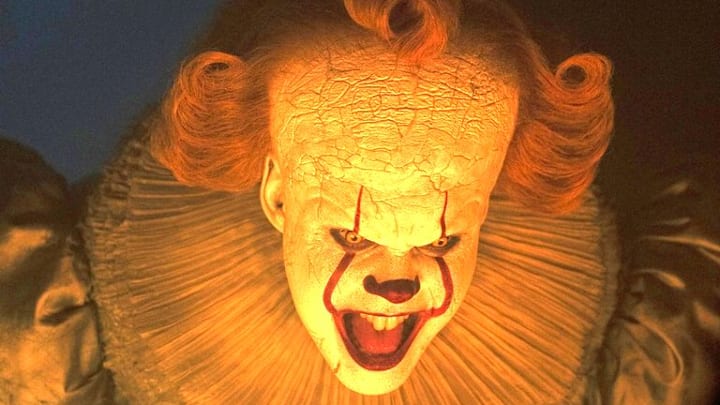
That 1935-set Pennywise setpiece from the opening gets revisited through a different, more comprehensive lens later in the episode’s runtime, and Travis delivers one of the strongest sequences of the entire series thus far. It is vibrant, stark, and genuinely affecting in a way that is surprising. It’s also worth noting that this is a substantial step up, both visually and narratively, from the prior episode’s use of Pennywise. Whereas that episode basically just had him show up to rehash some greatest hits, his role here pushes up against the boundaries of what audiences expect of the character and also gives Bill Skarsgård room to deliver a much more dynamic and entrancing performance.
But considering we’re talking about this sequence, that means we need to talk about the elephant in the room that is the Ingrid twist. Ever since Ingrid suddenly and innocuously showed up in the third episode of the series, it has been pretty clear that something is up with her. In the previous episode, it was revealed that she was the white woman that Hank Grogan has been having an affair with, and now, in this episode, even more is revealed about Ingrid, as played by Madeleine Stowe: she is actually the daughter of the human man who was Pennywise the Dancing Clown, a real person that It now imitates. However, she was so in love with her father, who was killed when she was a child, that she now helps It, in the hopes that she can see her father again.
If that all sounds a bit goofy and contrived, that’s because it is. It’s also a little insane that after last week’s episode featured the twists that Matty was actually Pennywise in disguise and that Ingrid had a secret past, this week’s episode just repackages those a bit and re-presents them both as this. But having said all of that, I think Stowe’s performance and Travis’ direction go a long way toward selling all of this. The episode is able to begin to explore the strange and emotional depths of this relationship in authentically fascinating ways, and seems to promise that there will be more to come. I certainly hope that is the case, and that future episodes don’t simply skimp on these complexities and relegate Ingrid to being Pennywise’s side-kick, because that would be obscenely disappointing.

Elsewhere, the episode also features one of my very favorite scenes of the series thus far, in the form of Dick Hallorann and Leroy Hanlon’s confrontation in the barracks. It’s no secret that I think Chris Chalk and Jovan Adepo are two of the shining stars of this series, and seeing them go toe-to-toe with one another dramatically like this in a sequence that is really well staged, blocked, shot, and edited, is just a joy. Really fantastic stuff, The Shining-indebted push-in from the foot of Chalk’s bed very much included. Also, everything having to do with Black Spot is handled incredibly well, as the series essentially gets to have its cake and eat it too.
If you aren’t familiar with Stephen King’s work and the significance of the Black Spot, then the reveal at the episode’s end is shocking and compelling. But if you are familiar with King’s work, then from the second the location is officially referenced as the Black Spot, there’s an immense sense of suspense surrounding everything that happens there throughout the episode, making the ending inevitable and tragic. It’s really wonderful stuff that plays incredibly well from both perspectives, and that final shot of the mob stepping out in cheap classic monster masks is one of my favorite visuals of the entire series thus far.
Verdict
All in all, “In the Name of the Father” is an episode that features more than its fair share of questionable choices, but they are ones that the craft, form, and performances on display within the contents of the episode redeem or turn into satisfying elements by the episode’s end. By that final shot, the episode has cemented itself as a bona fide standout within the series, something I wouldn’t have guessed from the opening minutes.
Episode grade: B+
 Add us as a preferred source on Google