

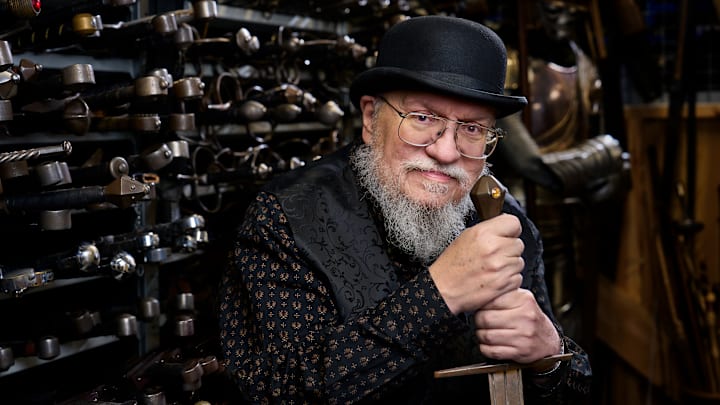
It may seem surprising to many fans, but George R.R. Martin only wrote four episodes for Game of Thrones, the television adaptation of his A Song of Ice and Fire books. One would imagine Martin would have been enlisted to adapt his own works, as who better to craft the series for newcomers? The easy answer is that Martin was so busy with his own writing and needed to let the show take its own direction. There are also his problems with the series changing the storyline, but that’s another discussion.
None of the episodes penned by Martin were season premieres or finales, yet they all somehow turned out to be amazing stories that fit into the overall saga. Martin not only reworked his original writing but, better yet, made good alterations, adding character beats. There were changes from the books that may have been missed, but for the most part, they were faithful to his own work. Let's look back at each of Martin’s Game of Thrones episodes, and break down their place in the show's history.

Season 1: Episode 8 "The Pointy End"
This episode focuses on the fallout from Ned's arrest by Joffrey at Littlefinger's behest. That includes Arya’s escape from the Red Keep with the sacrifice of Syrio Forel. Tyrion meets up with the hill tribes and bribes them to his side, Daenerys saves Mirri Maz Duur, Khal Drogo has a bloody fight, and Jon Snow saves Commander Mormont from a wight.
This is a notable episode, of course, giving Arya her first real action scenes and starting her long journey on her path to becoming an assassin. It is notable for some book cuts, such as Sam talking about how the White Walkers are known to have slept under the snow for thousands of years, highlighting their age. Also, this episode would have had the book scene where Tyrion tells the story of his lost love, Tysha, to Bronn, but the show also including Shae in the conversation.
There is the fun addition of the fight between Khal Drogo and Mago, which was Jason Momoa’s idea, as he wanted the audience to actually see what a top warrior Khal was. That works well in the storyline, but it’s the smaller character beats that Martin captures. Sansa begging for her father’s life, Ned himself wrestling with his fate, Tyrion’s excellent negotiation skills with the hill tribe warriors, Daenerys saving a woman, which shows her inner strength and Robb out to save his dad.
It’s little wonder Martin captures all of these and even seems to enjoy tweaking his own plotlines a bit. The episode may seem a “filler” between the events of the preceding one and the epic season 1 finale, yet it’s just the chapter of the saga Martin was best suited to craft.

Season 2: Episode 9 "Blackwater"
The Battle of the Blackwater. To Game of Thrones fans, this is a watershed moment for the series. The show's first full-on epic battle sequence is still one of the greatest of all time. Martin enjoyed it immensely and added several beats not in the book, such as Tyrion's night with Shae, Cersei getting poison from Pycelle, and a near-fight between Bronn and the Hound. Martin also wisely eases up the darker aspects of the encounter between Sansa and the Hound, and Varys’s praise of Tyrion is genuine.
Some of the best moments are showcasing Joffrey’s cowardice in the battle, while Peter Dinklage gets his first chance to show the heroism of Tyrion leading the resistance against Stannis’ forces. It builds up to the use of Wildfire to blow up Stannis’ fleet, still one of the most spectacular FX sequences in the show’s entire run. Even the elements seemed to agree as the filming was cold and wet, which lent the story a realistic air. The clash on the water was changed dramatically from the version in the book due to the realities of filming, such as losing Tyrion's chain across the harbor, but the end result speaks for itself.
Having Neil Marshal direct it was fantastic, as he ably nailed every aspect of the conflict better than later directors did. It ranks among the 10 best episodes of the entire series, and it's no wonder Martin has often cited it as his favorite of the four written episodes he wrote. Many fans will agree with him wholeheartedly.
Season 3: Episode 7 "The Bear and the Maiden Fair"
Brienne in a dress, fighting a bear. Honestly, that alone would make this a great episode, but there’s also so much added in that helps it stand out. The Talisa pregnancy was a major change, likely to give her and Robb more screen time and only add to the later horror of the Red Wedding. Martin also tossed in a possible Jon/Ygritte/Orell love triangle, which helps explain why Orell despises Jon so much and adds some character depth.
The biggest addition is the discussion between Joffrey and Tywin. At first, it just looks like more screen time for the actors until you get to the meat of the matter, which is that while Joffrey is a twisted, selfish sociopath, he’s shockingly very astute to the danger Daenerys Targaryen and her dragons pose, while Tywin brushes it off as unimportant. It’s a brilliant touch that somehow Joffrey is smarter and more far-sighted than the usually savvy Tywin about this major threat on the horizon.
There’s the dark stuff of Ramsey’s horrific torture of Theon, Osha’s story of a lost love turned into a Wight, and Sansa and Margaery's odd bonding time. Of course, we all loved seeing Jaime leap to help Brienne against the bear, his first truly heroic moment in the show and just awesome in its own right. It’s another great installment where Martin ably managed to improve upon his own work.

Season 4: Episode 2 "The Lion and the Rose"
If any scene deserved to have Martin write it, it was Joffrey’s end. Interestingly, Martin wanted the episode to only focus on the events at King’s Landing, but was urged against it by Benioff and Weiss so that other plotlines weren't left hanging for a whole episode. There’s also an in-depth Vanity Fair story about the early script with some interesting differences, such as setting up a storyline with Jaime going to the Riverlands, revealing Joffrey was behind the attempt on Bran’s life in season 1, and more foreshadowing of events like Arya's future as a Faceless Man, all of which ended up being altered.
As for the episode itself, there are far more character interactions than in the book, along with some omissions and changes such as the Ironborn and Northern plotlines. The additions aren’t too distracting, especially considering the chemistry between actors whose characters never met in the books. The main event is Joffrey’s death, with Jack Gleeson giving the audience exactly what they wanted for the terrible end of this horrific figure. Tyrion is arrested, kicking off what many consider the best season of the show.
Yet when one compares what the script was going to be and the final product, as detailed in Vanity Fair, it’s evident this was when Martin realized the show was going to deviate more from his work, and had to make peace with it. Thus, it makes sense this is the final episode Martin wrote for Game of Thrones, adding another facet to the show’s unique legacy.

April is the 15th anniversary of Game of Thrones, and we're celebrating all month long with deep dives, retrospectives, quizzes and more! Want more Thrones content to accompany you on your rewatch? We've got you covered!
More Game of Thrones:
 Add us as a preferred source on Google