

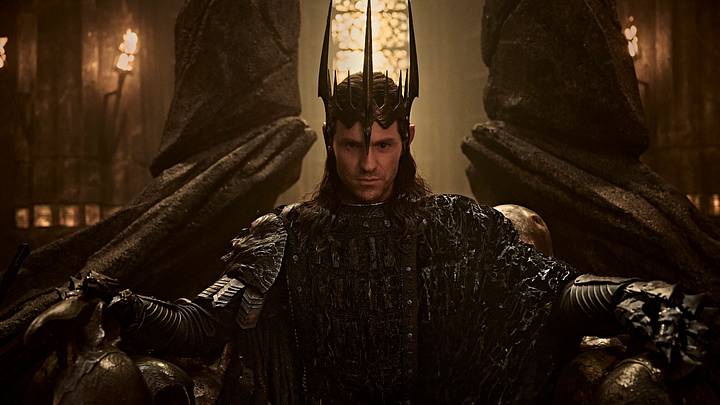
Next month, Prime Video premieres the highly-anticipated third season of its fantasy series The Lord of the Rings: The Rings of Power. While the show has had some speed bumps along the way, season 3 is set to be its most propulsive yet, launching viewers ahead five years into the thick of Sauron's war against the peoples of Middle-earth. And yes, he will forge the One Ring, something which stands to potentially become the single most iconic scene from the series.
While The Rings of Power isn't a part of Peter Jackson's Lord of the Rings film universe, the two share a lot of sensibilities, owing to the fact that they're both adaptations of J.R.R. Tolkien's beloved fantasy world. Some of the fantastical races like orcs and elves bear similarities to the way Jackson depicted them, while others, such as the dwarves, are fleshed out in ways the films never had a chance. It makes for an interesting parallel between them.
Yet Middle-earth lives on even outside of books, films, and television. The property has had a long history of video game adaptations, some of the most notable being the Middle-earth duology, consisting of Shadow of Mordor and Shadow of War. These two games from Monolith Productions put players into the shoes of a Gondorian ranger named Talion who bonds with an Elf wraith — none other than Celebrimbor, the Elven smith played by Charles Edwards in The Rings of Power. The two use Sauron's odious powers against his own forces, leading to a climactic clash with the Dark Lord.
While none of that makes much sense in the larger continuity of The Lord of the Rings, the Middle-earth games were extremely fun and very well received, and pioneered the universally lauded Nemesis system, where certain characters in the games would actually remember their previous interactions with Talion and change their behavior accordingly. Act mercifully, and they might be less aggressive. Be a bloodthirsty tyrant, and you were out to make a lot of enemies.
These games still very much have their fans...and surprisingly enough, one of them is Bear McCreary, the composer of The Rings of Power along with many other fantasy and sci-fi projects like Outlander, Battlestar Galactica, and more. McCreary recently revealed on X that he even included a nod to the Middle-earth games in the score for The Rings of Power.
Also, I loved their scores by my buddy Garry Schyman. FUN FACT: I hired some of the same musicians for TROP, as a nod to these games!
— Bear McCreary 🐻🎶 (@bearmccreary) September 30, 2026
"I enjoyed them both. Maybe loved them. Until I realized the true ending of the second one was locked behind what seemed like 20 hours of needless grind. Makes it hard to go back," McCreary wrote. "Also, I loved their scores by my buddy Garry Schyman. FUN FACT: I hired some of the same musicians for [The Rings of Power], as a nod to these games!"
This is a cool little bit of connective tissue between the sonic profile of The Rings of Power and the Middle-earth games. It also shows how much McCreary is truly one of us nerds, that he went out of his way to include this kind of a deep cut connection in the first place.
As for that "true ending" he referenced and how it damaged his love of the games, it's fairly infamous at this point. When the second game, Shadow of War, launched, it included an epilogue act where you had to defend your fortresses against repeated enemy assaults. This was so badly received by players that it was eventually patched down, from 10 waves of assaults to a mere 3 in order to see the true ending. So suffice to say, McCreary wasn't alone in his frustration.
You can hear Bear McCreary's work on The Lord of the Rings: The Rings of Power when it premieres on November 11 on Prime Video.
 Add us as a preferred source on Google