

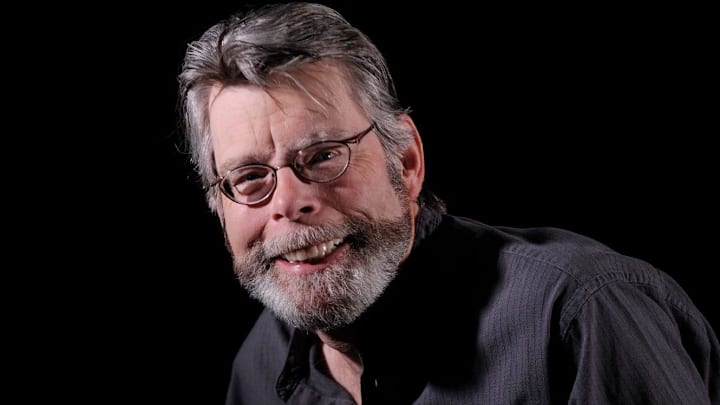
Mike Flanagan is a ludicrously talented writer, director, and filmmaker. Over the course of the past several decades, he has worked his way up the ranks and become one of the premium names in horror, having delivered a veritable multi-course feast of great works, from Hush to Ouija: Origin of Evil, Gerald’s Game, The Haunting of Hill House, Doctor Sleep, and Midnight Mass.
To this end, it is no real surprise that he has become one of horror legend Stephen King’s favorite working filmmakers and collaborators. With Gerald’s Game, Doctor Sleep, and The Life of Chuck under his belt and with adaptations of both Carrie and The Dark Tower in various stages of production, Flanagan is already neck-deep in the Kingverse. So the most recent Flanagan/King news, that the filmmaker will be helming a new adaptation of King’s novel, The Mist, may not be surprising but it is a bit odd.
For one, I don’t think it’s ever a good thing when any single filmmaker becomes so ubiquitously associated with a given author or adapted story. Diversity is a good thing, especially when it comes to adaptations of such vastly different styles, tones, and tales, and having just one voice be the one to lead this many different takes on King’s material (no matter how good that one voice is) is a little disheartening. It can’t help but remind me of when Peter Jackson, fresh off of the gobsmacking success of Lord of the Rings, tackled The Hobbit. While that project could have been a shining point of differentiation, just as the books were, the result was instead Lord of the Rings-lite, and something that sullied both Jackson and the overarching saga’s formerly immaculate reputations.
The other element at play here is that I just want to see Flanagan, one of the most talented filmmakers of his generation, get the opportunity to do more original things. No one is forcing him to do all of these King adaptations; they’re clearly something he’s passionate about taking on. But my favorite things the filmmaker has ever done are original projects, such as his single-season Netflix series, Midnight Mass. That show is an astonishing accomplishment that came directly from Flanagan’s own imagination, and I hate to think that audiences are somehow missing out on other such projects in favor of further King adaptations.
And then, of course, there’s the snake-eating-it’s-tail element of the whole thing. Flanagan’s first King adaptation was Gerald’s Game; an absolutely insane book to attempt to adapt to film, that no one had dared even touch before. And yet Flanagan pulled it off with aplomb. Then, he pulled the exact same trick again with Doctor Sleep, a sequel to The Shining, that Flanagan managed to make feel authentically true as both a successor to King’s novel and Kubrick’s iconic film.
Even Life of Chuck took a very off-kilter, lesser-known King story and turned it into an incredibly moving, distinct cinematic work. But Carrie, The Dark Tower, and The Mist? These are all projects that have been adapted before, so what exactly is the point of doing them again? The Dark Tower is understandable, as that film was a disaster that missed out on pretty much everything good about King’s novel(s), but Carrie and The Mist are each revered as high-water marks of the King adaptation canon, with each having been made by acclaimed filmmakers, Brian De Palma and Frank Darabont, respectively.
So what exactly do Flanagan, King, or audiences stand to gain by taking another run at these stories, which have already been adapted several times over? I suppose money is the obvious answer; Stephen King is an IP unto himself, so maybe these are just the kinds of safe bets that Flanagan can experiment under the umbrella of while still working with a larger budget.
I genuinely hope to eat my words, and find Flanagan’s upcoming projects as emotional, horrifying, and revelatory as I have found his previous works, but the fact that the man is now working on three different Stephen King projects simultaneously has me feeling a bit skeptical.
 Add us as a preferred source on Google