

The first season of Pluribus may have come to an end last week on Apple TV, but we'll be sifting through all the implications of its finale for some time yet. Coming from the creative mind of Vince Gilligan, the man behind the hit shows Breaking Bad and Better Call Saul, it was no surprise that Pluribus had the same sort of attention to detail and gradual, intentional storytelling. But this series was a marked leap from Gilligan's previous works in that it is hard science fiction, with all the alien complexities that entails.
Over the course of nine episodes, viewers followed chronically miserable romance author Carol Sturka (Rhea Seehorn) as she contended with an alien virus that turned the entire human population of Earth into a blissful hive mind — except for Carol and a handful of other survivors. Carol is a different sort of protagonist than appears in Gilligan's other shows, just as the alien threat she faces is a marked departure from the grounded criminals of the Breaking Bad universe.
There are many ways that Pluribus sets itself apart from Gilligan's previous works, even though they share much of the same DNA and many of the same creative crew members. One crucial way that the sci-fi series charts its own path is with its music, which is far more experimental than Breaking Bad despite the fact that it was all composed by the same musical mastermind: Dave Porter.
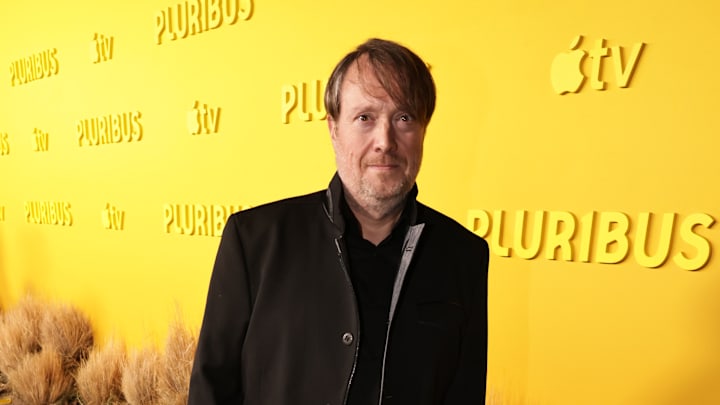
We had the opportunity to speak with Porter about his ongoing creative relationship with Vince Gilligan, bringing the alien sounds of Pluribus to life, the ways this show sets itself apart from Breaking Bad sonically, and more. Read on for our full extended interview, edited for length and clarity.

WINTER IS COMING: Pluribus reunites you and Vince Gilligan, for I believe the fourth project now. Do you remember what his original pitch for to you for this show was? Because it's a pretty weird show compared to the previous ones you've collaborated on.
DAVE PORTER: I came on pretty late in the process. Music tends to be sort of towards the end of things, so I think by the time anybody had bothered to tell me much about anything, they had a lot of stuff figured out, which is great. It's a good thing. But I think the real mandate from Vince, not only to me, but basically to all the creative partners on this project, was to reframe everything, to start all over again, take how we used to work down to the studs and rethink about how we're gonna approach everything. Because if you think about it, even though we've been working together for nearly 20 years, which is mind-boggling to me, this is the first time since the pilot of Breaking Bad that we're starting completely and totally fresh with a whole new universe. So it's such an exciting opportunity for us, to spread our wings a little and do something very different, and hopefully we've accomplished that.
WiC: I would say so. Pluribus definitely doesn't feel like Breaking Bad, in a good way. Along those lines, are there any things you've had to differently with your approach to the music for Pluribus compared with those previous shows in the Breaking Bad universe?
DP: Well, certain things remain the same. I think our general ethos about how we like to use music and the very sort of thoughtful process we put into how much music we put in our shows and what kind of music that is, remains the same, but the music itself is very, very different, and that brought on all kinds of new challenges and new exciting opportunities.
For example, in the Breaking Bad universe, I was steering clear of large orchestral music, classical symphonic stuff, by design. There were certainly a lot of live performances in it, but they tended to be soloists, small groups, ensembles, and a lot of it was done in this room by me. This project has a different scope entirely, and of course this gets deeply in our sci-fi world here, it needed a scope that was beyond that. And so we had the ability to employ a big orchestra for the show, and a choir, and meld that with all of the stuff that I like to do here in the studio. That of course requires more time, more planning, more back-and-forth in the process, and just kind of having a little bit more foresight into what we're going to do a little sooner, because there's obviously a lot of planning that has to be involved with recording that many folks.

WiC: The Pluribus score uses the Royal Scottish National Orchestra as well as a nine-piece choir. How did you arrive on that particular instrumentation? Because there are some really interesting, quirky sci-fi things happening here that stand out, like the eerie vocals of the opening title card.
DP: Well, I think just because we wanted to have the ability to lean into some of the historical usages of score in sci-fi. To me, that was what put the spotlight on the orchestra. That, and that we really wanted to tell a global story here. It really felt like the scale and the scope for the orchestra was a given. And because it was a right turn from what we've done in the past frankly, and that was important to us, too.
The vocal stuff is, I think, very tailored for Pluribus, because I knew even from my very earliest conversations with Vince Gilligan about the show, that one of the things that I anticipated that the score was going to have to be able to do was tell not only the story of Carol, our protagonist, as an individual, but also the story of the Pluribus, of the Others, as we call them.
What is so special about the show to me personally, and I'm just speaking for myself here, but as Vince has been saying in some interviews, you know when you see many zombie style stories, it's very clear that you don't want to be the zombie, right? And there may be some fascinating interactions between survivors, and we have that on Pluribus too, but what is unique about Pluribus to me at least is, and part of the story I wanted to be sure to be able to tell with the music, is that there's a lot of positives about the Pluribus. They're seductive, they're interesting, it's not all a bad thing, what they're pitching, right?
And the conundrum of that, the dichotomy of that, and how I think the story is going to take us back and forth between how we feel, both about Carol, who is a hero, yes, but she's not lovable and so we have mixed feelings about her, and the Pluribus, which obviously we have mixed feelings about...and so to be able to do that kind of gymnastics musically [was important].
But really at the core of it for me, the story is about being human and what it means to be human, and what's important to us about being human. And the human voice...there's nothing more human than that, and there's nothing we all share more than that. And so to me it felt like an obvious choice.
And it's very adaptable. The main title theme you mentioned, for example, is a two-part vocal piece, at least the first 20 seconds of it that we use over the main title...and it's two different parts that are very different, one melodic and beautiful, and one sort of more rhythmic and propulsive, but very specifically, and importantly, sung by the same woman. So you're hearing both sides of that coin from the same voice, and that was very intentional. You could look at it in many ways. You could look at it as Carol versus the Pluribus. You could look at it as, you know, the angel on one shoulder, the devil on the other, all of those things. But the point of it, of course, is to narrow in on the dichotomies that we're showing here.
WiC: I'm glad you brought up the opening. We only hear the first 20 seconds or so in the show typically, but there's also a full two minute and 48 second version of this song. Walk me through creating it. Did you intentionally design that first 20 seconds to stand on its own, knowing that was going to be the opening title card, or did you create the full song first?
DP: Just like in Breaking Bad, actually, the first and foremost goal was that first 20 seconds. Since Breaking Bad, we've always done that on our TV shows with Vince Gilligan. Even though, you know, we did that for Breaking Bad before there even was streaming really, the thought process for us, especially now, is that we love a main title that is long enough to give you an instant sense of the show and get you into the show, but by the time you've found the remote to skip it, it's over. That's our goal, and so that was always the thought process here.
But of course, for many other reasons it's nice to have a longer version of it too. So I always had the rest of that piece, we do play as the end credits in the first episode, and so they had always been designed to work together and then we found a way to merge them into the longer version that you will find on the soundtrack release.

WiC: As we've mentioned, you've worked with Vince Gilligan on all of these shows. My impression is he's obviously a pretty meticulous writer and showrunner. So I'm curious, what is your working dynamic like in terms of how you approach the music on a macro and micro level, and has that changed at all over the years?
DP: iI has developed over the years, I think consistently. First of all, yes, absolutely, everybody on our team, starting with Vince is very thoughtful and meticulous, and one of the things that he said has been so great about working with Sony and Apple on Pluribus is that we've had this gift of both trust and time, and that those things matter. It enables him to be a part of every part of the process.
So for example, Vince and the writers write while nothing else is happening, and then they shoot and nothing else is happening but shooting, and then we go into post and that enables Vince and our producers to available and a part of every step of the process, which means that their vision, which started in the writer's room, continues all the way through. Music is one of the last things that happens in post. The beauty of that for me is that so many creative decisions have been made before they get to me, that dictate tone and balance and objectives and what we're trying to accomplish with the story. In a best case scenario for me, and I know Vince feels the same, the best use of music in these shows is to help tell the story.
And so I work with him. It sounds maybe a little cliché, but I do with him sometimes like you would think of an actor asking questions of Vince, right? What's the motivation of Character A here? What is both the short term and long term, because one of the tricks and the unique details of working on a series is that you have to think not only about what we're doing in this moment, but you have to think about next episode, next season. All those things have to be a little bit in your mind at least, about where you're gonna go. And thankfully he's very patient with me, and our writers as well, but I ask a lot of questions because I really want to understand and get as deep as I can into understanding both that micro and the macro of all these moments, and how music can help — and by the way, where music can't help, which is equally important.
WiC: One thing that really stands out about Pluribus is how effectively you use silence to mount tension. Can you talk a little bit about your approach to choosing which sections get the silent treatment and which get score?
DP: So we have what's called a spotting session, which is where myself and our amazing music supervisor of all these years, Thomas Golubić, whose job is to work with all the pre-existing music that we might use in the show, we have a meeting with the picture editor and Vince and whoever the writer was or possibly the director of that particular episode, and we sit down and we watch it meticulously, every scene, and talk about what music could or shouldn't do in any of these particular scenes. These meetings can last hours. So we will talk them through to great length. And then from there I leave and Thomas leaves with a roadmap of what we're gonna try, and we always go into it knowing that we're probably gonna offer more music than we're gonna use because it's obviously much better to have it and not use it, than need it at the 11th hour and not have it.
But in general, I think, just because we've been doing it for a long time, we have a pretty good sense now, in the way that we like to tell stories, about where music can be most advantageous. And that has changed a little in Pluribus. We're using more score than we have in our previous shows, which is fun for me, but also, there's a reason for it. It matches the story better. I think when you get into a sci-fi world, there is a little more of a desire to have a little more of that suspension of disbelief, that help, that music is really good at. Whereas, for example, Breaking Bad, we by design often wanted that to be very stark, very cold and clinical, and it was very effective in that way. And that's true in moments of Pluribus too, but we are a little more openly emotional in Pluribus because we have a character that is a hero, which we haven't had before. Granted, she's flawed. But we have heroes, and we also have this sci-fi world that we're building, which is pretty fun and unique and it has these opportunities to tell the different sides of the coin of the Pluribus, and all the traditionally fun horror/sci-fi moments as we learn about this crazy world we've created here.

WiC: I didn't even think about the fact that this is essentially the first story you and Vince Gilligan have done that has an actual heroic protagonist, versus someone who's on a descent into darkness. Were there any things in particular that you wanted to do differently or that that opportunity afforded you to do with the music?
DP: Yeah, I think it allows us to feel a little more for her and root for her a little, and feel her downs and her ups a little bit more, and we can be tied to that as an audience a little more emotionally and a little more concretely than we could with a Walter White, for example. I mean, there's plenty of people who rooted for Walter White till the very very end, but the truth is, of course, there's nothing positive about [him], right? He's an anti-hero. The beauty of the way Vince writes all of these stories, both Pluribus and all the Breaking Bad universe stuff, is that there really is no black and white to any of this. It's all different shades of gray, and that's certainly true of Carol, too. She's not likable. There's a lot about her that rubs you wrong. But in our exploration of what's human, there's nothing more human than that.
And so yes, I've been able to do some music and use it in a different way. some like very overtly, emotional music, for example, for her and Helen. Which is such an important backbone to this first season, the amount of loss, and that Carol's left alone. Really totally alone here more than the other survivors, who have family members, although they're not the family members they used to be, at least there's a more immediate support system for those folks. But Carol and Manousos [Carlos Manuel Vesga], these are characters that are true individuals striking out on their own.
WiC: How are songs that stand out from the score, like Sumac by Loris, which accompanies Manousos' introduction, chosen? How does the show approach finding those pieces, from the concept phase of where they go in each episode, to selecting the artists for them, to making sure the variety is large enough to fit scenes like that one as well as the more whimsical jazz-style songs that crop up in some of Carol's scenes?
DP: For example, the amazing moment in the Sprouts supermarket, right?
WiC: That's exactly what I was thinking of, yes.
DP: So these again, are conversations that start during the editing process in picture editing, but really comes to a fore in our big spotting session. And the finding and the employment of all the licensed music is typically the job of the music supervisor, which would be Thomas Golubić in this case, but we work together very closely in that sense. Sometimes more than others, depending on the moment. The Sprouts scene, for example, was always built to be a standalone moment where we're really looking for something that's gonna stand out from the score. It's going to be different from the score. It has some relation because we're always thinking about overall tone and balance in the show, so it's got this vocal quality that my score does as well.
So there's paths that connect them, but it's very obviously meant to be something different, whereas the other moment you mentioned is a piece that has to meld with the score very well because we really wanted to introduce Manousos with a score that's gonna be something that hopefully we're going to evolve with him, a specific sound for him. But then when we get into the more montage-y section that follows, and we're learning more about him and he's searching for food and all that stuff, it felt fun to have this propulsive piece, that again, worked very well with the socre but wasn't [score], and drove us forward in a new way.
And then of course there's all kinds of other licensed things that are less story drive, like just music backgrounds and things in the diners and things like that. Believe me, a lot of thought gets put into [those], and Thomas is amazing at that stuff and the tone of those things, however subtle, really has a big influence on the scenes. There's an artistry to that, and music supervision is a world that I respect enormously, and I try not to delve into too much other than where they need to overlap, because it's its own art and science, and those folks, they do amazing work. Thomas has been with Vince just as long as I have, and so we've grown up together, learned how to become better at what we do together over all these years, and it's a privilege to work with him.
WiC: I remember reading about why this show was set in Albuquerque, and essentially it boiled down to that a lot of the crew members that Vince Gilligan had been working with for all these years were based there, so that's where the show ended up being based because the team is there.
DP: And Vince values that, to his enormous credit, and he's been amazingly loyal to so many of us. And we in turn are always going to give him our best effort. What's unique about this group, especially I think in Hollywood, is that we've been together this long. And that has created a shorthand between us and a familiarity and an understanding of working together. And, you know, a little bit of pressure too, because the last thing you want to be is the weak link in a Vince Gilligan show, right? So we're all striving to do our best work all the time, and we're pushing each other in a very supportive way all the time. And hopefully that shows. I think you can argue all you want about which is your favorite of all these shows, but there's no denying that our craft and our ability to make them has gotten better naturally. We've all just been doing it longer and we've been doing it together longer, so we've just had this amazing and unique opportunity to do that, and push ourselves to do hopefully better work every step.

WiC: You mentioned earlier that you use the opening sequence to emphasize the alien nature of the Others with discordant vocal lines. Are there any other specific ways in the score you tried to emphasize the mind-bending nature of the Pluribus and the alien invasion aspect of the show?
DP: Yeah, there are a number of ways, I think particularly in the first couple of episodes when we're really creating this universe. We were intentionally harking back to some old school sci-fi, mixing them with enough of my modern sensibilities to make it unique to us. But definitely paying homage to some of the classics, and wanting to, especially in that first episode, just really enjoy the insanity of what's going down.
But as the story has evolved, I think what I'm working towards is using the ensemble nature of my orchestra and choir all together in ways that are in unison, and working together in this large group to bolster our Pluribus. And I think you're gonna see there's more and more small ensembles or single solo instruments, that particularly in quieter moments, [are] going to portray our individual protagonists.
And working with everybody else...we had a lot of fun at the end of Episode 4, when [Carol's] drugged Zosia [Karolina Wydra] and is trying to get [information from her], and all the Pluribus folks start coming out towards her. It's super tense and fun, and we had the opportunity to work really closely with the sound team and build these layers that start with the actors on screen, and then build as more actors appear and more extras appear, and then we're adding on to that with loop group additional voices from our post-production team, and then the choir takes it over too. It starts out very out of sync and kind of crazy, but as they kind of get themselves together it's syncing up, it's syncing up, into this powerful plea to Carol. It's stuff like that, it's just a unique thing that this show affords us to be able to do because it's such a unique world that's been created. A s Thomas Golubić would say, it's a super fun sandbox to play in.

WiC: Last question! If you were in the world of Pluribus, and you had the choice, would you choose to join the Others or not?
DP: It is tempting, isn't it? I mean...I think I would be Manousos, of all the characters we've met so far. I would be very bitter and angry. I think as a composer by nature, I spend so much time by myself in a dark studio and I'm used to it, and I think that would be my safe place, is my guess. And I would be angry and I would be in full-on self-defense mode, and not trust anything. But that's just me!
But that's just me! I could totally see...obviously, what's fun about the show if you think about it, is you'd love to spend a day in each of these positions to see what it's like, right? I'd love to be part of the Others for a day and just sense that, and have an idea of what that's like. I'd love to be our character in Las Vegas, living it up with supermodels and living his dream with no holds barred on any fantasy. I mean, you'd think that would get old quickly, but it would be fun for a day. So I think that's what's neat about it. I could see myself in any of those shoes. But I think, in the long term, if I had to pin one down, I would end up being Manousos.
A massive thank you to Dave Porter for taking the time to talk with us about his work on Pluribus!
All 9 episodes of Pluribus season 1 are now streaming on Apple TV. The show has already been renewed for a second season, though no filming date has yet been set for it. Regardless, you can rest assured that there's more for Carol Sturka, Manousos, and the otherworldly music of Dave Porter on the way as you binge through all of Pluribus season 1, whether it's your first time or a rewatch to catch all those hidden details.
 Add us as a preferred source on Google