

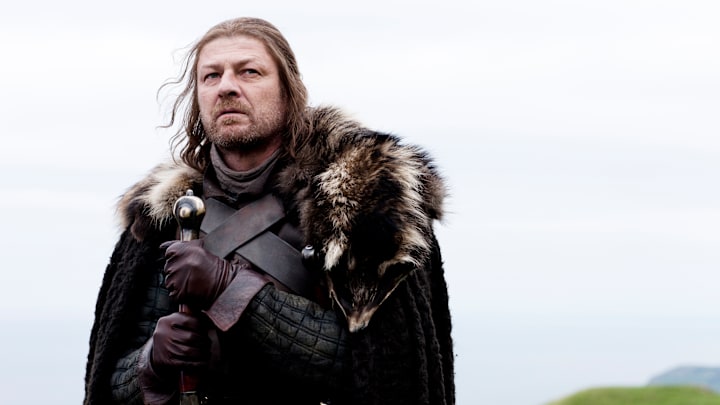
As Game of Thrones reaches its 15th anniversary, rewatching those first episodes has a far different feeling than it did when they first premiered.
It’s always fascinating rewatching the first seasons of long-running TV shows. Fans of Star Trek: The Next Generation often note how terrible the first two seasons were before the series improved. Then there are scores of shows that had stellar first years only to swiftly go downhill, so that first season remains a promise never fulfilled.
With Game of Thrones, the debate about its final season can last all day. However, it cannot be denied that when you rewatch that first year today, the viewing experience is so much different. From the material to the way it connects to the overall saga to even its place in history, rewatching season 1 of Game of Thrones in 2026 is a revelatory experience.
The foreshadowing is more evident
Back in 2011, so many plot beats that fans didn’t realize were so critical are now far clearer. A great example is how the fates of the direwolves echo how each of the Stark children will face their fates later in the series. There’s Cersei telling Jeoffrey it’s a bad idea to send troops to conquer the North in the winter, which is exactly what happens to Stannis in season 6. Theon is also eager to kill a dire wolf, the Stark symbol, which reflects his own conflicted journey early in the series.
A striking one is the very first scene when Ned is about to behead the Night's Watch deserter and says “in the name of the rightful king,” and the camera cuts to Jon and Bran nearby. Looking back at those first years, it’s astounding just how many little lines or seemingly throwaway comments ended up becoming key parts of the overall storyline.

The characters feel completely different
When you see how our story began, the transformations of every character are stunning. Some are mostly the same, such as Ned remaining the flawed hero, while Joffrey’s madness was always there, along with Littlefinger’s scheming. Yet the rest seem like completely different characters. Jaime Lannister is seemingly the pure villain of the piece after he pushes Bran out a window without any signs of the complexity that would make him more of an anti-hero later in the show. Cersei is just a scheming and bitter wife, not the twisted sociopath we’d come to know and loathe.
Tyrion comes off as more of a comic relief character with his drinking, joking, and womanizing even in the face of death, rather than the beloved heart of the series. As for the Stark kids, Arya is the wide-eyed tomboy, Sansa is a brat, Bran is mostly in a coma, Robb is set as the heir and Jon is the outsider. Even Daenerys Targaryen seems weak and lost for some of the first season. Rewatching these beloved (and not-so-beloved) characters from that first installment makes their evolutions and transformations all the more striking.

Knowing the future gives the story more pathos
When you know where the story is going and how the characters evolve, the first season has far more meaning. Seeing Ned trying to be a good man in a dark world hurts when we know it all leads to his death. Likewise, Robb, trying to emulate his father as “King in the North” with Cat backing him, hits harder when the images of the Red Wedding dominate your mind. There’s also watching Daenerys slowly coming into her own, looking forward to how she’ll rise even when it’s overshadowed by her controversial final fate.
On the flip side, we can feel better about Sansa, Arya and Bran when we know things turn out better for all of them. It’s also heartwarming to see the start of the Tyrion-Bronn bromance, especially when Tyrion will one day be the only survivor of his family. And as reprehensible as Joffrey is in this season, it’s tempered by imagining his fitting destiny. It is striking how knowing where the tale is going changes how you view each character in that first year.

The stakes feel smaller
There are hints of the larger threats to come in the saga with the White Walkers, the talk of “winter is coming,” and the building toward the civil war that will tear apart the land. But when you rewatch the first season of GOT, it hits you how small the scale feels. There’s far more talking (and infamous love scenes) than real action, with Ned dueling Jaime serving as one of the few real fights we get.
The lower budget was a factor, as there's an intimacy to some scenes we don’t get in later years. Some of season 1 can actually come off as downright dull, leaning more on politics than supernatural threats, even though what we do get was different from the rest of TV fare at the time. Even the landscapes and locations feel more grounded than the Game of Thrones most imagine from its later episodes. It’s downright quaint to see how low-key the first season was.

It’s a much different culture
There’s no denying that much of the gender dynamics of GOT’s first season haven’t aged as well in 2026. Today's culture is more sensitive to issues surrounding how women are treated on screen, and even in this medieval fantasy setting, the way some female characters are written can be cringe-inducing. It’s become such a joke how the series uses "sexposition" scenes to sneak in explanations during sex that it’s easy to forget how distracting they are when they happen.
There's also how this carries the aura of "prestige TV" of the decade rather than the more comfortable "binge-watch" standard we know today, and that reflects in the pacing. Too often, twists are just for shock value and the 2010s aura is clear in the pacing and how it’s filmed. It may be unfair to judge the show by today’s cultural and production standards, yet it’s far more evident on a rewatch.

It’s a model for worldbuilding
Despite those flaws, season 1 of Game of Thrones is a blueprint for how a genre TV show does worldbuilding right. It benefited from Martin’s established plan, yet it’s remarkable how the showrunners were able to make the series so accessible to viewers. They ably detailed the various kingdoms, the political and power player families, the legacy of dragons and the history that feels so natural that you think it’s a show you’ve been watching for years. That should be studied by any other fantasy or genre show as the perfect way to craft a fictional world correctly.

You judge better by its copycats
Maybe the most unique way of rewatching Game of Thrones season 1 is judging it by its numerous imitators and copycats. True, some shows have managed to do well, like the Thrones spinoff House of the Dragon, while there have been scores of failures. All that does is prove how the first season was a show like no other before or since. It’s not just the epic cast, the mature themes and the storytelling itself. There’s a care in it, a real heart and passion that sets it apart from the imitators.
This wasn’t made as a cash-in on a trend, but to blaze a new path on its own. That care and the time taken to make it all work is why the first season is so magical. 15 years later, to watch Game of Thrones season 1 is to be more impressed than ever at how the show took off as it did, and in many ways, to find it better on the rewatch than it was seeing it for the first time in 2011.
Game of Thrones is streaming on HBO Max.

Winter Is Coming is celebrating the 15th anniversary of Game of Thrones all month long with retrospectives, deep dives, quizzes, hot takes and more. Come with us on a return journey to Westeros!
More Game of Thrones:
 Add us as a preferred source on Google