

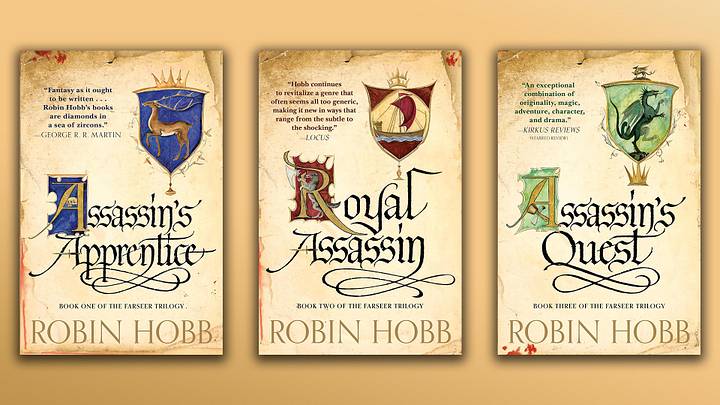
Robin Hobb published the first book of her Farseer trilogy, Assassin's Apprentice, in 1995. More than 30 years later, the series is still a must-read for all heroic fantasy fans, and for good reason.
Earlier this year, Diego Pineda Pacheco included the Farseer trilogy in his list of fantasy series that are better than Harry Potter for Collider. N. E. White, for SFFWorld, named the Farseer series as the 10th-best for “The (unofficial) Top 20 Fantasy Series of SFFworld.com.”
There are plenty of other lists where you can find praise for the series, and it is well deserved. There are several aspects to these books that make them a treasure, and easy to recommend for any fan of the fantasy genre.

Why Robin Hobb's Farseer trilogy remains a must-read for heroic fantasy fans
The three books of this series are told from a single, first-person perspective. That, in itself, is rather a unique writing style for the genre. Most modern fantasy novels jump between multiple points of view and more often employ the limited third-person perspective that has become so prevalent in today's fantasy landscape.
The reluctant hero of Farseer is also one of the early flawed heroes of the genre, which have become so common in modern fantasy in the years since Hobb's trilogy was published. FitzChivalry is spoiled, impulsive, short-sighted, often selfish, and lacks self-awareness and willpower. He is also loyal to a fault and caring.
The fact that readers follow this character through all three books and feel everything he feels helps develop a strong bond with Fitz. The reader knows his every thought, his every ache and pain, and all of his doubts. We can see when he is about to make a mistake or is out of control. This relationship is intimate, and it brings us closer to Fitz than it would be possible with multiple viewpoints.

The series is also heavy on character, world, and magic development. There are episodes of action throughout the series, but it is much more about Fitz's journey, from being a six-year-old royal bastard to a true, mature, unrecognized hero in the end.
Fitz's tale is a slow burn, but the pace flows easily through the first two and a half books. Hobb takes her time in slowly building the magical aspects of her world, building upon the possibilities slowly. The pace does lag at times, most notably during the second half of the third book. However, when Fitz finally reaches the full realization of the magic at hand, it is fulfilling in every way.
Something else that might be appealing to modern fans is that there is a small degree of gender fluidity with one of the main characters. This strand is developed slowly throughout the books but never becomes a distraction. Hobb is subtle with this underlying theme, and it isn't fully resolved by the end of the original trilogy. There are 16 total books that take place in this extended world, called The Realm of the Elderlings, and some main characters return in many of them. Look for there to be resolution to this thread at some point.
These books are a must-read for those who enjoy patient character development. Hobb took her time in sculpting Fitz and the characters who surround him. She also molds the world in which these characters live with great care. It is the development of the magic, however, where she does her finest work.

Farseer's magic is a standout element of the series
The magic of Hobb's world is unveiled with patience. It isn't nearly as important to the narrative in Assassin's Apprentice. In the second book, Royal Assassin, that magic's importance grows and grows, and the reader begins to understand it more and more. By Assassin's Quest, magic is as big of a character as Fitz and his friends and enemies. That magic has been around for far longer than the people of Hobb's world know, and there is much more power to it than anyone realized.
The magic of Farseer is unique and two-fold. It deals with the ability to communicate mentally from near or far with others with the ability. There is much more to it than that, but much of the knowledge has been lost or secreted away. The second aspect of Hobb's magic is a similar ability to communicate with animals. Usually, it's more of a sense of an animal's mood or feelings than directly communicating, but people with this ability can bond with a specific animal and communicate directly with them.
That magical communication with animals has many drawbacks and dangers for the unwary, but again, Hobb takes her time in revealing all the details. Nothing is rushed in these books. Seldom is anything what it seems at first glance, either.
The Farseer Trilogy is unique for fantasy in its narrative style and its magic, and deserves all the accolades it's gotten for being an incredibly influential story in the genre. It's held up very well over the course of decades, and was far ahead of its time in so many ways.
If you enjoy heroic fantasy but haven't yet taken the leap on the Farseer Trilogy, add it to your list and enjoy. It's one of the most iconic works in the genre for a reason.
 Add us as a preferred source on Google