

Starfleet Academy manages to be a celebration of the entire Star Trek franchise, even from such a distant point in the overall timeline. Being set in the 32nd century should really limit how many references Starfleet Academy can make to the other Star Trek properties. But, if anything, the far future has opened up countless avenues in that respect.
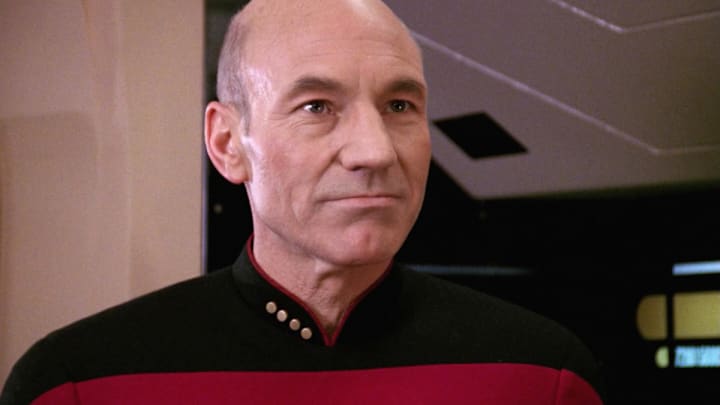
There are actually a handful of nods to The Next Generation in the Starfleet Academy pilot, but one of them in particular feels like an incredibly direct acknowledgement of the era that was led by Patrick Stewart's Captain Jean-Luc Picard. While noticing said reference doesn't really change the moment in question, it does feel pretty cool to spot it at all. Especially because it's combined with the lore of another Star Trek show.
MINOR SPOILERS ahead for Star Trek: Starfleet Academy season 1 Episode 1, "Kids These Days."

The Doctor's reason for his visible aging in Star Trek: Starfleet is a tribute to Data's
I don't know what this says about me as a person, but I have a special affinity for Star Trek's artificial lifeforms. Characters like Robert Picardo's Doctor and Brent Spiner's Data are immediately more interesting to me for their respective journeys toward humanity. However, there is often an unavoidable quirk with live-action sci-fi characters: they shouldn't really age, but they look gradually older as the show progresses.
Starfleet Academy wastes no time explaining why Picardo's character looks older in the new show compared to when he last appeared onscreen in Star Trek: Voyager's 24th-century setting — and, I guess, Star Trek: Prodigy. When Sam (Kerrice Brooks) points out that the Doctor looks "more mature" than she expected, he explains why. "About 500 years ago," he says, "I added an aging program to my matrix to put organics at ease."
So, after riding it out for a few centuries of looking exactly the same after Voyager's return to Earth, the Doctor eventually took it upon himself to blend in. Granted, it must be disconcerting for someone to read about a centuries-old Starfleet legend like the Doctor, meet him, and realize he looks no different now than he does in the history books. So, the Doctor's reasoning is sound, even if it took a while for him to get there.
This is very similar to Data's aging journey. Spiner's android character came pre-programmed to physically age so that he could more seamlessly integrate with humanity. So, when the Starfleet Academy writers were looking for a reason that would explain the Doctor's older look, they probably didn't need to look very far. If any of them were TNG fans, which I'm sure they were, Data's backstory likely served as a very handy blueprint for the Doctor's current stage of life.

The Doctor & Data's aging explanations aren't similar enough to feel lazy
The truth of the matter is that actors are human beings, and human beings age. That's fine. Still, artificial characters create a unique problem for live-action sci-fi writers, so things like this become necessary. While some may call using such a similar explanation across two characters a bit lazy, Starfleet Academy hasn't exactly cut-and-pasted from The Next Generation. Instead, the former used the latter as a jumping-off point, and the differences between the characters did the rest pretty organically — if you'll pardon the pun.
For starters, Data was always intended to age like humans. It was part of his original design when Dr. Noonien Soong (also played by Brent Spiner) built him, and Data's aging wasn't accelerated or decelerated in any real way. Inversely, Picardo's character, designed by a man with the same face called Dr. Lewis Zimmerman, was never intended to be anything more than a short-term addition to a Starfleet vessel's medical personnel.
The Emergency Medical Hologram MK I, as the Doctor was originally known, was only ever meant to be used in times of crisis. As it stood, Voyager's trip home was one big crisis, and the Doctor's unexpected ascent to Chief Medical Officer pushed his program to its limits and beyond. This allowed him to grow, learn, and change in ways that were never anticipated. In short, because he was designed as a temporary measure, Zimmerman never thought it necessary to make his creation visibly age.
If anything, the Doctor's decision to make himself age, albeit very slowly, was a reluctant one. It sounds as though it wasn't something he particularly wanted to do, but that he was frustrated by how organic beings acted around him due to his unusually consistent appearance. He is proud of being a hologram, so it seems like this was a notable concession for him. By contrast, Data's overarching storyline was a desire to become more human, so his aging served him well in that respect — unlike his Star Trek: Starfleet Academy counterpart.
Star Trek: Starfleet Academy is streaming now on Paramount+. A new episode drops every Thursday until the season 1 finale on March 12, 2026.
 Add us as a preferred source on Google