

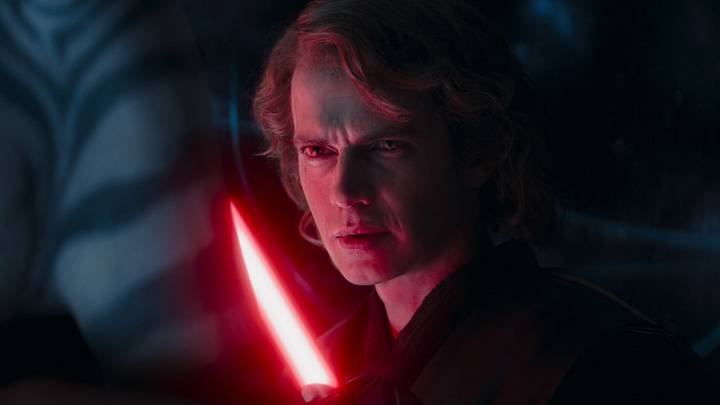
For decades, Star Wars was primarily the vision of one guy: George Lucas. Lucas wrote and directed the first film, Star Wars, in 1977 and then stayed on as a writer and producer for the two follow-ups, The Empire Strikes Back and Return of the Jedi, even as directors Irvin Kershner and Richard Marquand stepped in behind the lens. Years later, when Lucas returned with his long-awaited Star Wars prequel trilogy, he would ultimately write and direct all three installments on his own.
This made it extremely notable when Disney purchased the rights to Lucasfilm from Lucas in 2012 and effectively set about striving to make Star Wars content sans the creator. In getting numerous film and television projects off the ground in the years since, the now Disney-owned Lucasfilm heard pitches from all kinds of filmmakers from across all kinds of backgrounds, many of which were ultimately never made, but several of which did make it through to completion. This is how audiences got new Star Wars content across the past decade-plus from filmmakers like J.J. Abrams, Rian Johnson, Leslye Headland, Rick Famuyiwa, Bryce Dallas Howard, and Tony Gilroy. However, as the new slate of Star Wars films begins to take shape, an unfortunate trend has emerged leading to an increasingly narrow range of creative perspectives shaping its films.
This is not just about diversity as a political issue (that’s a much larger conversation that is worth having some other time when we can devote the necessary heft to it), but rather more succinctly about diversity as a creative issue. The most recent announcement relating to the Star Wars franchise is that Jon Watts has been brought on for the new trilogy of Star Wars films in the Skywalker Saga, which is being written by Simon Kinberg. This will put this proposed Episode X film in line behind Jon Favreau’s recently released Star Wars: The Mandalorian and Grogu and next year’s Shawn Levy-directed Star Wars: Starfighter as the third consecutive Star Wars film to be directed by a middle-aged white man who has a background in making Marvel movies of varying quality.
When George Lucas was making Star Wars, he was always interested in bringing in outside influence, both in terms of the actual creative output of the projects themselves and in terms of who he brought into work on them. Despite his role as the series’ architect, he brought in people like Lawrence Kasdan and Irvin Kershner, people he respected and even learned from, to bring greater levels of craft to the work. For his prequel trilogy, he deliberately set out to channel influences that were vastly different than those that powered the original trilogy, actively integrating political, mythical, and even religious texts in a much more overt way. Contrast this with something like Favreau’s The Mandalorian and Grogu, whose only sources of influence seem to be other Star Wars projects.
Even earlier Disney Star Wars projects, like Rian Johnson’s The Last Jedi or Tony Gilroy’s Andor saw creators taking the lead who were interested in tackling the franchise in a different way and bringing out additional dimensions within it. But in order for that to happen, you have to take chances on creative individuals who have experience bringing their own unique visions to projects, rather than simply carrying out executives' orders. Johnson was coming off his fiercely original science-fiction action film, Looper; Gilroy made the ever-enduring modern classic Michael Clayton. Compare this to someone like Watts, whose last films were a Spider-Man movie and a widely derided Apple streaming release, in Wolfs.
I say all of this to say the news that Jon Watts is going to help shepherd in a new era of Star Wars storytelling with a script from Simon Kinberg (he whose sole directing credit is on the disastrous Dark Phoenix, a film he also got sole writing credit on) is bleak news that just sounds like Disney shrinking away from a challenge in the lamest way possible. The Mandalorian and Grogu drastically underperformed at the box office earlier this year, showing that audiences are very much not jiving with this uber-safe and insular take on Star Wars. And yet, rather than reading that failure as a rallying cry to do something artistically invigorating or exciting with the franchise once more, just like George Lucas would have, they are still following the same bland blueprint and expecting to reap different results.
 Add us as a preferred source on Google