

When it was announced a few years back that the DCEU was being canned altogether in favor of an entirely new approach to an interconnected cinematic universe spearheaded by James Gunn and Peter Safran, known simply as the DCU, there was reason to be hopeful.
Safran had been working as producer in the business for decades, and had been behind one of the most successful and viable cinematic universes to Warner Bros’ name at the time: The Conjuring films and their litanies of spinoffs. Gunn had become a renowned creative specifically within the genre space, having written and directed films like the Guardians of the Galaxy trilogy and The Suicide Squad.
Sure, there were some hiccups along the way, like Gunn inexplicably referring to the just-about-to-be-released 2023 film The Flash at the time as, “one of the best superhero movies I’ve ever seen.” But by and large, things got off to a pretty strong start, with Gunn writing a highly praised season of animation with Creature Commandos, writing and directing the successful and well-received theatrical DCU debut with Superman last summer, and then immediately following it up with a stellar season of Peacemaker.

Supergirl is just another standard superhero movie you’ve seen before
The first projects out of the gate were all varying levels of good, but they all also featured Gunn’s direct creative involvement in one way or another, something he would not be doing for every single project under the DCU banner. So what does a DCU project without Gunn’s explicit creative involvement look like? Well, if the just-released Supergirl is any indication, the answer is not good.
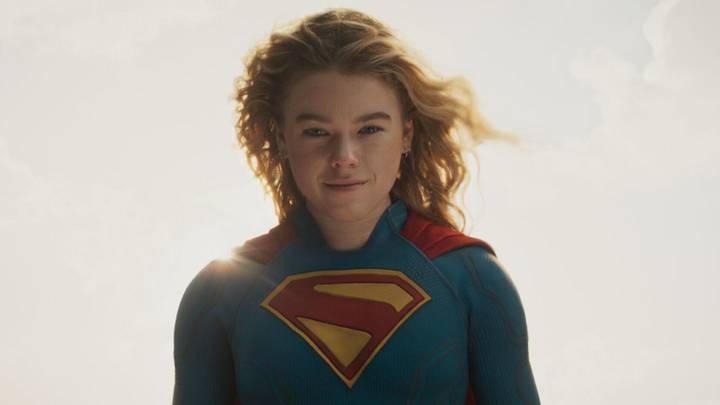
Written by Ana Nogueira and directed by Craig Gillespie, Supergirl is an obscenely lackluster superhero film that falters right when DC Studios needed it to fly. Despite a more-than-game cast and a flat-out fantastic lead in the form of Milly Alcock as the titular superhero, Supergirl is an utter slog.
This is the kind of thing that would have been seen as less than subpar even a decade-plus ago, during the halcyon heyday of the comic book movie boom, but looks outright atrophied in the harsh light of day in 2026.
Last year, Gunn’s Superman managed to resonate with modern audiences thanks to its uniquely prescient political messaging and the sheer charisma and charm of its central cast and characters. Intentionally or not, it was a film that outright encouraged audiences to give into the unbridled optimism required to watch a Superman movie in modern America, and it was all the better for it. Supergirl, however, had no such meta-textual element or cleverness to its proceedings, instead playing like a woefully stock-standard superhero movie that you’ve seen countless time before.
The reason for that is that it is incredibly likely that the bones for this very film were actually initially laid down several years ago. In that aforementioned Flash film from 2023, there was actually a Supergirl character (I say actually because I’m assuming the vast majority of you haven’t seen The Flash, judging by its box office) and the film was originally poised to set her up for her own spinoff.
Of course, that was before Gunn and Safran took over and opted to wipe the whole slate clean, but screenwriter Ana Nogueira was in place for that initial version of the movie and then just stayed onboard, even through all of the changes. I say all of this to point out, while many surface level elements of Supergirl’s script undoubtedly changed throughout the process (a different Supergirl, a different Superman, different comic influences, etc.) much of the foundations of the thing very much feel like they remained the same.

Thus, nothing about Supergirl feels driven by passion, but rather by obligation. The film exists because it was already vaguely in-motion, and Gunn saw it in-progress and decided that he’d like to do an adaptation of Tom King’s Woman of Tomorrow comic, flesh-out Supergirl and the planet of Krypton, and introduce Jason Momoa as Lobo.
So the film does all of those things, but with all the gusto of someone crossing out items on a shopping list. Technically, the film does all of these things, but it all feels so limp and underwhelming that it left me wishing that it hadn’t, and had left these elements unblemished for when someone with an actual creative vision for them comes along.
The story is a mish-mash of elements, but the central hook of Alcock’s Supergirl getting dragged on a True Grit-esque (their words, not mine) adventure is a solid one, especially when paired with kind of raucous science fiction action that the marketing leaned into so heavily.
In theory, this is the kind of project that makes perfect sense for Gunn, leaning into his established penchants for gonzo creatures, otherworldly locales, and needle drops. But the execution could not feel more underbaked or misshapen.
Even the action falls unbelievably flat. Inexplicably, every action sequence in this movie suffers from ludicrous amounts of breaking of the line, failing to follow even the most basic levels of cinematic craftsmanship. In short, it results in action set pieces that are loud and full of things jangling around, but suffering from a severe lack of clarity, geography, or impact. When screen direction is just thrown out the window altogether, it makes it incredibly difficult for the audience to even begin to follow along with the action, and that’s not to even mention the drastically over-cranked editing in these scenes that only serves to make these issues even worse.
On top of all of that, the musical choices throughout are so haphazard and bizarre, that it makes it makes it incredibly difficult to believe that Gunn ever even set foot in the editing room to check in on this thing. All of his films from the past decade have become renowned for their use of music, in one way or another, but from the musical score to the copious amounts of gratuitous needle-drops featured here, Supergirl’s music only serves to hamper the film.

At the risk of taking the sheer shock value of it all away, I’ll confide in you, dear reader, that there is a moment smack-in-the-middle of the climax of this movie where everything goes into slow-motion, and it really feels like an emotional and critical piece of musical score should be playing, elevating the moment. Instead, the film takes this moment to inexplicably slot in an acoustic cover of Jimmy Eat World’s “The Middle,” and it sucks any and all oxygen out of the whole thing. I spent the entire rest of the film still reeling from the sheer stupidity of this choice, trying to even begin to understand how or why this idea was ever even suggested, much less incorporated into the final cut.
And all of this is a tremendous shame, because Alcock, whose breakout role came in House of the Dragon season 1, is doing great things in the brief moments she gets to really show off her performance as Kara/Supergirl. I’ve been a Supergirl comics reader for a minute, and have long loved the ways in which the character can be such a sharp contrast to Superman’s optimism. To see that brought to life here so thrillingly through Alcock’s performance, and even more specifically, through her scenes with David Corenswet, is a treat. But that accounts for approximately five minutes of Supergirl’s runtime, and so much of the rest of the film is just such a chore to get through.
All in all, I unfortunately feel like Supergirl is kind of a worst-case scenario for the DCU. After Superman got general audiences invested in this new take on the universe and characters in a way that felt surprisingly current, Supergirl squanders all of that goodwill and instead delivers a lukewarm-at-best rendition of this character that makes you kind of regret ever looking forward to further explorations of this version of the story.
There’s more to come, like the currently in-production Man of Tomorrow, and I genuinely hope that Alcock gets a lion’s share of screentime in that and that the film is of far better quality than this, so that she can get the win she so rightfully deserves. Because Supergirl sure as hell ain’t it.
Grade: D
 Add us as a preferred source on Google