

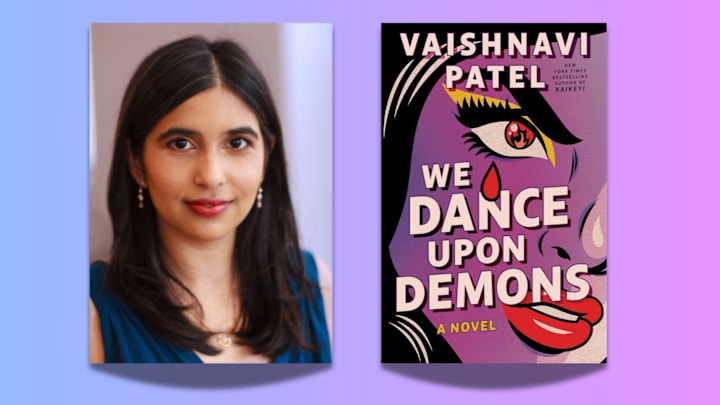
May 2026 is a huge release month for fantasy books, and one that should be on every reader's radar is Vaishnavi Patel's We Dance Upon Demons. Out on May 12, We Dance Upon Demons instantly sets itself apart with its premise. The book tackles the ongoing fight for women's reproductive freedoms in the U.S., blending that backdrop with a story about a clinic worker accidentally inheriting power from the demon of ignorance — and finding herself at odds with supernatural threats pursuing it.
As Nisha, We Dance Upon Demons' heroine, tries to keep the power from their grasp, she's faced with increasing attacks on the reproductive health care clinic where she works. The rolling back of abortion access and reproductive freedoms, along with her experiences at the clinic, offer plenty of reasons to despair. We follow Nisha as she grapples with depression and questions whether it's even worth fighting for her beliefs. This leads to poignant revelations about the nature of social justice movements, the importance of individual action, and the need to find those small nuggets of hope.
With novels like Kaikeyi and Goddess of the River under her belt, Patel is no stranger to writing compelling, hard-hitting fantasy. Her knack for that shines through in her latest novel. However, the conflict covered in We Dance Upon Demons feels closer to home, and in large part, that's because Patel's latest comes from feelings of hopelessness many of us have felt, the author included. But while Patel's novel stems "from a place of pain," she also wants readers to find positivity and purpose within its pages.
We had the opportunity to discuss the book with Patel, covering the influences behind We Dance Upon Demons, her approach to painting its central conflict, and what she hopes readers will take away from Nisha's journey.
AMANDA MULLEN for WINTER IS COMING: We Dance Upon Demons presents such a unique concept for a story. What inspired you to blend real-world reproductive-rights issues with more fantastical elements, like demons?
VAISHNAVI PATEL: The reason is twofold. I wanted to add fantastical elements in part because I wanted to add some levity and fun to the We Dance Upon Demons. The story centers around a depressed abortion clinic worker struggling to save her clinic and community, which is a very realistic but heavy topic, so having opportunities for magic and learning and exploration added a bit of lightness. But the fantasy in the story comes from demons in particular, which also represent a deeper theme: the idea that there is an easy fix. I think we all want to find an easy fix to big social problems, as though there is one election or one court case that will solve it all. The demons in the story represent that desire, because the main character thinks that maybe the demons are the root cause of all her problems. But humans and our systems of oppression are the true villains, so there is no easy answer.
WIC: The day-to-day interactions and challenges at the clinic feel so vivid and realistic, and the information about reproductive health care is very thorough. What sort of research went into getting those elements right? And did your own experience as a civil-rights lawyer shape those aspects of the book at all?
VP: I have been an abortion clinic escort at clinics around the country, both before and after Dobbs. The daily atmosphere of the clinic is drawn from my own experiences talking to patients, helping patients access the clinic, dealing with anti-choice protesters, and helping inside of the clinic with various tasks. My experiences as a civil rights lawyer really came through for the scaffolding of the story, from explaining how we got here to exploring the biggest issues facing reproductive rights today. I also did research, especially reading memoirs of abortion providers and reading scholarship about the Christian nationalist groups that shape and fund the anti-choice movement.
WIC: The mythology in this book is fascinating and rooted in real cultures and religions. How did you go about using those influences to shape the supernatural here?
VP: I thought it would be fun to have a Christian demon and a Hindu demon and to play those forces against each other. I’m not Christian, so I had to do a good amount of research into the Christian myths about Asmodeus, the main Christian demon in the story. When it came to the Hindu demon, Apasmara (Muya), I did some research to make sure that I knew his origin story well, but then I did a modern spin on him. I got to play a little bit with how a demon of ignorance would behave today—for example, he’s pretty tech savvy because of course a demon of ignorance would get on the Internet and enjoy some misinformation. And ultimately the demons represent how these respective religions have dealt with abortion rights, so they help heighten the core conflict of the story.
WIC: Generational struggles and the passing of wisdom are both crucial to this story. What made you decide to include the perspectives from the past, and what do you hope readers take away from them?
VP: I always wanted the story to include perspectives from the past, because women have always fought for bodily autonomy, and it has never been easy. Archeological analysis of early human history shows evidence of midwifery, cycle tracking, and the use of various herbs and plants to manage pregnancies. There are also countless records of women being persecuted for these things. The moment we have today is undoubtedly bad, but it is not unique. It is part of an ancient struggle for autonomy, and including perspectives from the past helps situate our modern problems within this wider context. I hope readers see how much every individual person has mattered—it is a collective movement, and we can take courage from those who came before us to fight for those who come after.
WIC: This book does an incredible job of capturing how insurmountable and hopeless the current political landscape can feel, yet it still infuses hope into the story and drives home the importance of making a difference where you can. How did you go about striking that balance narratively? How do you walk that line in your own life?
VP: The idea for We Dance Upon Demons began when I was really depressed about the state of the world and how hopeless defending civil rights seemed. I wrote this book from a place of pain, wondering what the point of fighting was when terrible things still happened. I think this is a feeling that is shared by a lot of people who care about justice, so as I recovered my passion for the fight and my drive to keep going, I wanted my writing to reflect not just hopelessness but the journey back to hope. It’s really hard to accept that there is no easy fix, but helping even one person still matters. It’s a balance I still have to remind myself of on occasion, which is why it was so important to me to put it on the page.
WIC: It would be all too easy for Nisha to use her powers to stoop to the opposition’s level, but We Dance Upon Demons embraces redemption, forgiveness, and mercy as themes throughout. Why was maintaining this humanity so important?
VP: Fighting for justice while maintaining your integrity is hard. There is always a temptation to stoop to the other side’s level for the “right reasons.” I wanted to give Nisha that temptation and for her to resist, because if we spread misinformation and ignorance, if we cash in on fear, if we harm others preemptively, we’re starting down a slippery slope that ends where the other side is. Nisha still fights, and fights hard, but with her morals and compassion intact.
I also wanted to highlight in this book the capacity of people to change. I know people who have changed their minds and become pro-choice, and while it is important that they take responsibility for their old beliefs, it is also important to embrace their transformation. It is so difficult to admit you’re wrong, but I believe humanity’s capability for change is its greatest strength.
WIC: What was your favorite thing about writing We Dance Upon Demons, and what was the biggest challenge of this book?
VP: My favorite part of writing We Dance Upon Demons was getting to include dance. I have been an Indian classical dancer for 20 years, and I love how it connects me to my culture and heritage. In the book, I got to use dance as a way to literally unlock the past, and I loved writing about dance and movement and the importance of that connection.
The hardest part of writing this book was figuring out how to infuse hope while still being realistic. It’s a hard time for reproductive rights, but there are still people doing extraordinary things to help others. Finding the right balance between pain and hope was challenging, but the I’m hopeful that readers will find that there is light at the end of the tunnel.
 Add us as a preferred source on Google