

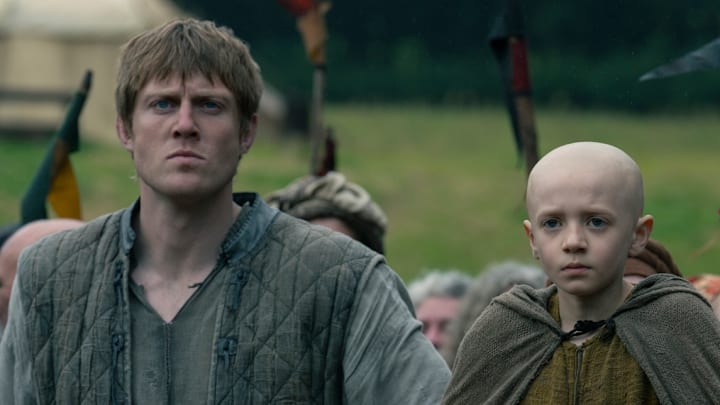
In just six episodes, A Knight of the Seven Kingdoms has cemented itself as one of the best fantasy shows in years—and the Game of Thrones spinoff embodies an ideal that even the original show couldn't achieve.
There's no denying that Game of Thrones is a difficult series to top, even in a single area. Many other fantasy projects have failed to match its success, but A Knight of the Seven Kingdoms could in time. Its first season certainly sets it up to rival its predecessor in terms of quality and popularity.
And part of what makes A Knight of the Seven Kingdoms compelling is that it's not trying to be like Game of Thrones. While House of the Dragon tends to emulate the gritty tone and larger scope of the original show, AKOTSK leans into the qualities that set it apart from the prior series. The merciless world of Westeros still serves as the backdrop, but the more personal story gives it a different feel. That shift allows the spinoff to reach a level of optimism that just isn't present in Game of Thrones.
A Knight of the Seven Kingdoms has an optimism that's missing from Game of Thrones

A Knight of the Seven Kingdoms boasts an optimism that Game of Thrones couldn't achieve, particularly during its early seasons. Both series explore what it means to be an honorable man, and in Westeros, it's usually a dangerous game.
Ned Stark serves as the earliest proof of that in Game of Thrones season 1, but there are numerous examples of characters with good intentions being punished for seeing them through. Just look at what happens to Jon after making peace with the Wildlings, or what happens to Theon Greyjoy once he's finally loyal to the Starks.
And you could argue that A Knight of the Seven Kingdoms follows that formula to some extent, as Ser Duncan the Tall is put on trial for defending the innocent from Prince Aerion. Baelor Targaryen also perishes while fighting for Dunk, another example of chivalry gone terribly awry.
It'd be easy to write these twists off as cynical messages about doing the right thing. However, that's not what they are in Game of Thrones or A Knight of the Seven Kingdoms. The true takeaway is that it's worth taking the righteous path...even if the benefits aren't realized right away. Ned starting the rift between the Starks and the Lannisters, Jon welcoming the Wildlings past the Wall, and Theon's sacrifice all have larger impacts on the realm, despite what they cost.
And A Knight of the Seven Kingdoms makes a similar point, but it gets it across better—mostly because there's a heavy emphasis on the legacies people leave behind. Ser Arlan of Pennytree's story drives that home, as he's not known for heroic feats or even for being an upstanding knight. Arguably, the best thing to come of his ideals is Dunk.
And it's already obvious that the biggest difference Dunk is likely to make is through Egg. Yes, he manages to save people in A Knight of the Seven Kingdoms season 1 and the other Dunk and Egg novellas. But the way he influences his squire will have more long-term effects, especially with Egg being royalty.
With all of this in mind, A Knight of the Seven Kingdoms' tragedies have clearer silver linings, even if they continue to highlight the brutal realities of Westeros. The show leans into the long-term optimism more obviously than Game of Thrones, and it's not the only way it manages to strike a more hopeful tone.

A Knight of the Seven Kingdoms' optimism goes beyond its central message
In addition to having a clearer and more direct message of hope, A Knight of the Seven Kingdoms plays up the humor and lighthearted day-to-day moments, which adds to its optimism. We get to see the characters forming connections with each other, and there's true loyalty in bonds like Dunk and Egg's or even Dunk and Raymun Fossoway's.
Additionally, while the characters are still as complex as those in Game of Thrones, they experience joy more frequently. Most of our favorites suffer throughout the original series, only gaining some ground in the later seasons—and even then, they're consumed by their struggles for power.
By contrast, A Knight of the Seven Kingdoms' ensemble gets to enjoy themselves, adding a levity to their story that isn't in Game of Thrones. We get to see Lyonel Baratheon and Dunk drinking, dancing, and cracking jokes. We get to see Dunk and Egg enjoying jousts and puppet shows. Raymun and Rowan tie the knot—and don't die!—and even Sweetfoot gets a worthy send-off.
These happier moments balance the spinoff's darker scenes nicely, which is something Game of Thrones never achieved. Its realism was part of its appeal, but A Knight of the Seven Kingdoms is winning with the opposite approach. Perhaps it's a sign of the times, but it's clearly working for the newest Game of Thrones show. The optimistic refresh is precisely what the franchise needs.
 Add us as a preferred source on Google