

The 2007 film adaptation of Philip Pullman's The Golden Compass had a $180 million budget, Nicole Kidman, Daniel Craig, and a bestselling source novel. It pulled a limp $70 million domestically against that enormous budget, killed New Line Cinema as an independent studio, and never got its sequel. The books were great. The cast was great. So what happened?
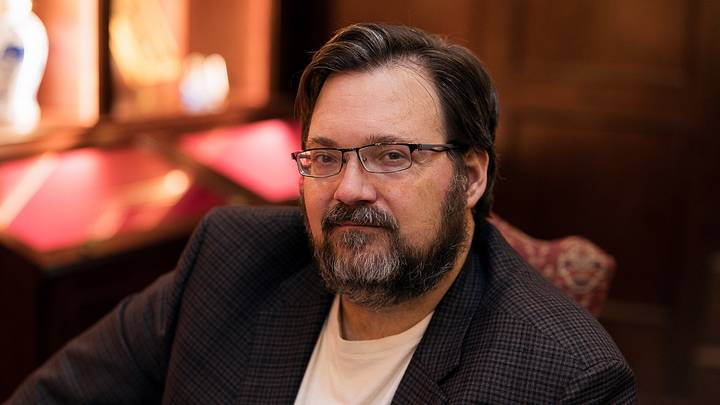
Brandon Sanderson, one of the biggest fantasy authors in the world, put his finger on it at a recent event in Atlanta talking with fellow sci-fi author John Scalzi. Sanderson himself currently has multiple adaptations of his own in various stages of development including a Mistborn feature film he's almost done writing the screenplay for.
Addressing the adaption of The Golden Compass, Sanderson described the film as a cautionary tale about what happens when filmmakers are too scared to actually adapt a book. "It's a really bad movie where everyone cared passionately and were too afraid to edit the source material. If you watch that movie, to get across everything that happens in the book, why it's a bad movie is that the characters have to step up and explain everything," he said.
The adaptation failed because everybody tried too hard to preserve everything, cut nothing, and offend no one. The result was a film that somehow managed to be both overstuffed and hollow at the same time.
Sanderson framed this as what he calls the "too precious" trap of being so protective of the source material that you forget the job is to make a film and not a filmed recitation of a book. "It turns out to be a disaster," he said. "It's a tragic disaster because it's well cast, beautifully made, and great director. And it didn't come together because they were too precious."
He's right on every count. Director Chris Weitz is genuinely talented. The visuals were stunning. The cast, Kidman especially, did some real work. But the movie buries all of that under an avalanche of plot mechanics and world-building exposition because it couldn't bear to leave anything out.
Now Pullman's novel is dense with theology, philosophy, parallel universes, armored polar bears, and a decades-spanning conspiracy involving the Church. You cannot fit all of that into 113 minutes without turning your characters into tour guides. And that's kind of what happens in the film. Characters constantly explain to each other what things mean and what is happening and why it matters, because there's no time to show any of it.
Also, Pullman's first novel ends on a devastating note. Weitz had filmed a more faithful ending and the producers decided to scrap that entire sequence for a feel-good ending instead, rather than a devastating and darker one as originally intended.
Why? The general consensus seemed to be that it was far too dark for the casual viewer, and so Weitz chose to remove it rather than include it in a compromised or "prettied up" form. The intent was to open the next film with it. Of course, the next film never came.
Weitz disowned the theatrical cut due to all the executive meddling it went through. He later called working on it a "terrible experience" and confirmed it was "recut by the studio." A longer 150-minute cut exists but has never been released publicly.
Brandon Sanderson names his standard for adaptation done right
Sanderson's reference point for the other extreme of adaptation done right is The Lord of the Rings. He shared that he has thought about this carefully, and his take is worth sitting with.
"Lord of the Rings movies I think are the perfect adaptations. Wherever they could preserve Tolkien's lines, they did. Wherever they can get one of Tolkien's scenes in, even if they have to move it around, they do. And then there's a few places where they have to expand. Helm's Deep is like three pages in the book, in the movie it's enormous," Sanderson said.
That's perhaps the key distinction. Peter Jackson's team made ruthless cuts including Tom Bombadil, the Scouring of the Shire, and huge chunks of backstory. But everything they kept, they committed to fully. And where the book was thin on cinematic drama, they built something new that served the spirit of what Tolkien wrote.
Sanderson went further with the view. "In so many ways, I think that Jackson told the story as a story better than Tolkien. Tolkien made the world. Tolkien was amazing," he opined.
The crowd at the Atlanta event actually applauded that. Because at some level, fans of adaptation know it's true. The job of a filmmaker is to find the film inside the book.
 Add us as a preferred source on Google