

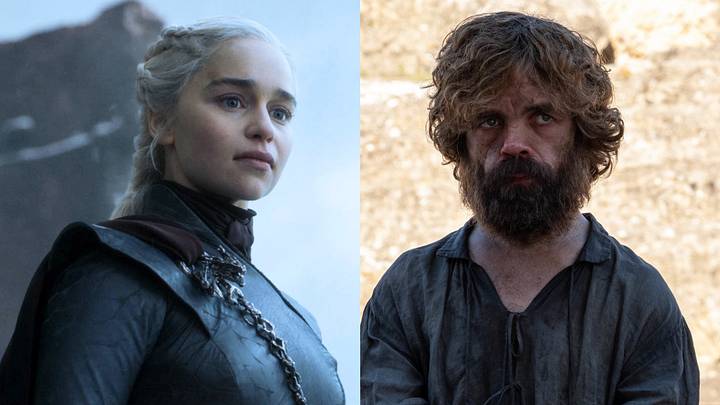
After the Game of Thrones series finale, “The Iron Throne,” aired, there was something of a collective grief session. Over a million people signed a petition demanding HBO remake the entire final season. Critics called it hacky and rushed. The show that had spent eight years rewriting the rules of prestige television ended with a dragon melting a chair.
Seven years on, the question isn't whether the finale was good. The jury delivered its verdict a long time ago on that one. The real question is whether it's gotten worse, stayed the same, or whether time and distance have allowed us to find something worth salvaging in the ashes of King's Landing.
A reminder for the repressed

By the time the finale aired, the previous episode "The Bells" had already detonated the fandom. After seven seasons of being framed as a liberator and hero, Daenerys Targaryen turned her dragon on a surrendered King's Landing and incinerated tens of thousands of civilians. The city had already rung its bells of surrender. She burned it anyway.
The finale picked up in the rubble. Jon Snow, Tyrion Lannister, and Davos Seaworth walked through the ash-covered devastation. Daenerys, newly victorious and increasingly messianic, gave a speech promising to "liberate" the entire world the same way she'd liberated King's Landing which was, to be clear, by turning it into a charcoal sketch. Tyrion, horrified, resigned as Hand of the Queen and was thrown in a cell.
It fell to Tyrion to convince Jon to do the unthinkable. Jon, loyal almost to the point of self-destruction, resisted right up until the moment he didn't, meeting Daenerys in the ruined throne room, embracing her and stabbing her while they kissed. Her dragon Drogon, apparently more philosopher than attack beast, responded by melting the Iron Throne itself, a piece of on-the-nose symbolism so heavy it hardly worked.
With the throne literally gone and Daenerys dead, the surviving lords and ladies of Westeros gathered to decide who would rule. Samwell Tarly suggested democracy. He was laughed out of the room. Tyrion, in a speech that will live in infamy, argued that the person with "the best story" should be king. His nomination was Bran Stark, the emotionally detached, seemingly omniscient Three-Eyed Raven who had spent most of the final season staring into the middle distance.
Bran became king. The Iron Throne was gone. The Seven Kingdoms became six when Sansa Stark insisted the North remain independent. Jon Snow, revealed earlier in the season to be Aegon Targaryen, the rightful heir to the throne, was exiled beyond the Wall as punishment for killing Daenerys. He ultimately walked away from even that exile and disappeared into the frozen north with the Free Folk. Arya Stark sailed west to chart unknown lands. The Starks victorious but dispersed.
And that was it. Eight seasons of dragons, betrayals, prophecies and political intrigue, and the world was handed to a boy who said almost nothing and a council of nobles who laughed at the idea of letting ordinary people vote.
It felt like betrayal to the fans

The fury the finale was subject to came from this feeling of utter betrayal to its fans. For years, Game of Thrones had operated on a covenant with its audience. It would be brutal, yes. It would subvert expectations, absolutely. But it would earn every twist.
Ned Stark's execution in season 1 worked because it recontextualized everything the audience thought the show was. The Red Wedding worked because it had been seeded with dread for episodes beforehand. These were the product of meticulous, patient storytelling.
Season 8, compressed into just six episodes, shattered that contract at almost every turn.
The Daenerys problem was the most painful because it involved the show's most beloved character. The argument for her villain turn, that it was always foreshadowed, is not entirely without merit. There were hints. Her capacity for righteous brutality was documented throughout the series. But there is a meaningful difference between foreshadowing and development and the show collapsed the distance between them into a few rushed episodes.
Audiences were upset that she became a villain so fast, so completely and with so little interiority shown on screen. Emilia Clarke herself admitted to struggling with the arc, saying she still stands by the character even as the writing left her behind.
The Jon Snow problem was almost the inverse. His Targaryen heritage (the R+L=J reveal that fans had theorized about for decades) turned out to be functionally irrelevant. It gave Daenerys another reason to spiral. It cost Jon everything. And then he ended up walking into the snow, his story not really concluded so much as abandoned.
The Bran problem was, in a way, the most philosophically interesting and the most dramatically inert. On paper, there's something almost elegant about the all-seeing, memory-keeper of humanity becoming its ruler. In practice, Bran had spent entire seasons barely registering as a character and Tyrion's "best story" argument felt more like a writer who had run out of options.
The show had spent enormous time building up Jon, Daenerys, Sansa, Tyrion and handed the throne to the one character audiences had been actively trained to not really care about at all.
The structural problem behind the final stretch of GOT

The deepest issue with the finale was that the show, by the end of season 5, had run out of George R.R. Martin's source material and the difference in quality was stark.
When showrunners David Benioff and D.B. Weiss had Martin's books to adapt, Game of Thrones moved with so much precision. Cause led to consequence. When they were left to their own devices, the show increasingly moved characters like pieces ignoring logistics, and resolving in hours what should have taken seasons.
HBO reportedly offered to extend the final season, but Benioff and Weiss declined. Whether that was artistic conviction or exhaustion (it’s worth noting they had signed a massive deal with Netflix), the choice condensed a story that needed room to breathe into a sprint that left everyone gasping.
The result was a finale that contained the right ending wrapped in the wrong journey. Most fans now agree that the destination with Bran as king, Jon beyond the Wall, the Starks scattered to their respective fates, was probably what Martin intended. The bones were sound but the flesh had been stripped away.
What holds up seven years later

The performances, particularly Peter Dinklage's Tyrion, remain remarkable throughout. The final Tyrion-Jon scene in the cell, where Tyrion lays out the logic of killing Daenerys and Jon resists until he can't, is genuinely devastating if you allow it to be. Kit Harington's Jon, for all the character's narrative frustrations, is played with quiet consistency. A man of honor destroyed by his own virtue.
The imagery holds up. Daenerys emerging from the smoke with dragon wings spread behind her in episode five. Drogon, grief-stricken, melting the throne and carrying his mother's body into the sky. The final shot of Jon walking into a greening north, the world's most expensive anti-climax somehow also its most visually perfect.
And there's an argument increasingly made by revisionist critics that Daenerys's arc, rushed as it was, actually says something true about power and the messiah complex that the show had always been circling. The problem was the execution.
Some things that seemed bizarre in 2019 look different now. Jon's irrelevance to the throne, post-reveal, reads less as a narrative failure and more as a quietly bitter joke. The rightful king, stripped of everything, choosing a frozen wilderness over political power. In a show about the corrupting nature of authority, maybe that was always the point?
The House of the Dragon test

Seven years later, the franchise is still alive, and that itself a verdict of sorts.
House of the Dragon arrived in 2022 and opened to the biggest premiere audience in HBO history, drawing audiences who had every reason to stay away. Its first season was widely praised as a return to form, proving that the creative ambitions of the original Game of Thrones were not impossible to recapture.
The show's existence is, in some ways, the most coherent response to the finale's failure. HBO and the creative team clearly understood what went wrong. They chose a story (the Targaryen civil war, the Dance of the Dragons) that was fully documented in Martin's source material. They gave Daenerys's ancestors room to breathe, and in doing so, retroactively recontextualized her arc.
Daemon Targaryen's volatility, Rhaenyra's slow radicalization, the "flip of a coin" nature of Targaryen instability—all of it makes the original finale's tragedy feel more inevitable in retrospect, even if it was poorly staged.
Season 2 of House of the Dragon drew criticism of its own. The series still hasn't found its footing as a permanent cultural fixture, and it may never fully replicate what the original Game of Thrones was at its peak. But it’s kept the lights on in Westeros, and that is not nothing. It also paved the way for the most recent spinoff, A Knight of the Seven Kingdoms, which premiered earlier this year to positive reviews and impressive viewership numbers.
The honest verdict

Seven years later, the Game of Thrones finale hasn't aged into something good. The structural problems are the same. The pacing is still compressed, the Daenerys turn still too fast, and the R+L=J revelation still underutilized. Rewatching it now, the sting of Bran's election is if anything more pronounced.
But it has, perhaps, aged into something understandable. The ending's sin was haste. Perhaps, a meal with good ingredients burned by a chef who ran out of time?
Tyrion's line to Jon feels almost unbearably apt in retrospect: "Ask me again in 10 years." We're seven years in. The wound has scarred over without quite healing. Most fans have found a kind of exhausted peace with it. Not forgiveness, exactly, but the recognition that what was lost was actually two or three additional seasons that might have made it great.
The Game of Thrones finale is a reminder that in storytelling, as in Westeros, how you get there matters almost as much as where you end up.
Three years to go until Tyrion's 10-year deadline. The answer hasn't changed. But the anger, at least, has mostly turned to a kind of melancholy for what might have been, and the sneaking suspicion that somewhere in a house in Santa Fe, George R.R. Martin is still writing the version that gets it right.
 Add us as a preferred source on Google