

George R.R. Martin writes in A Dance With Dragons, “Prophecy is like a half-trained mule. It looks as though it might be useful, but the moment you trust in it, it kicks you in the head.”
Martin's mindset regarding the popular fantasy fiction trope informs the way divination features throughout his work. The prophecies in A Song of Ice and Fire exist less to allow the reader to predict the ending and more to shape the characters who think they know what's to come. For example, the main narrative purpose of the Azor Ahai prophecy to date is arguably not to herald the coming of a great hero, but to establish why Melisandre (Carice van Houten) is so devoted to Stannis' (Stephen Dillane) cause.
In the translation from book to screen, the Game of Thrones creative team slightly tweaked one hugely important A Song of Ice and Fire prophecy. Since the books have yet to conclude, it remains to be seen whether this prophecy will come true in the same way in the novels as it did on the show. Regardless of its validity, its small change in Game of Thrones completely alters the motivations of one of the franchise's most important characters.

Cersei meets Maggy the Frog
In the fourth A Song of Ice and Fire book, A Feast for Crows, Cersei Lannister finally becomes a POV character. Since book four picks up shortly after the death of Cersei's son, King Joffrey Baratheon, Crows sees Cersei in a vulnerable place. She eventually recounts an encounter from her childhood with a sorceress known as "Maggy the Frog,” who predicts her future.
When Cersei asks if she'll marry "the prince," referring to her childhood crush, Rhaegar Targaryen, Maggy corrects her, saying that she'll marry the king. In the moment, Cersei mistakes this as meaning she'll marry Rhaegar after he takes the throne, but in actuality, Maggy's claim means that she'll go on to wed King Robert Baratheon.
Maggy warns that Cersei would be queen until a "younger and more beautiful queen" would replace her. She then predicts that the king would have 16 children, but Cersei would just have three, which confuses her, since she does not take into account the possibility of infidelity and bastards. Maggy then hauntingly proclaims that Cersei would outlive each of her children before dying herself at the hands of the "valonqar," a High Valerian word for "little brother" (or more accurately "little sibling," since High Valerian is not a gendered language).
Shortly after this encounter, Cersei's friend Melara, who Maggy predicts was close to death, does indeed dies young, solidifying the accuracy of her prophecies. This instills a deep fear in Cersei, who spends her life wary of her own "valonqar," her younger brother, Tyrion.
Cersei had hated Tyrion from the moment he was born, as she blames him for their mother Joanna's death, who died in childbirth. Cersei's loathing of Tyrion turns into paranoia after he flees Westeros, since she so strongly suspects him to be her prophesied killer that she doesn't even consider any other candidates that audiences have theorized about for years, including Arya Stark, Daenerys Targaryen, or even Jaime Lannister, her twin brother.

No valonqar? No problem!
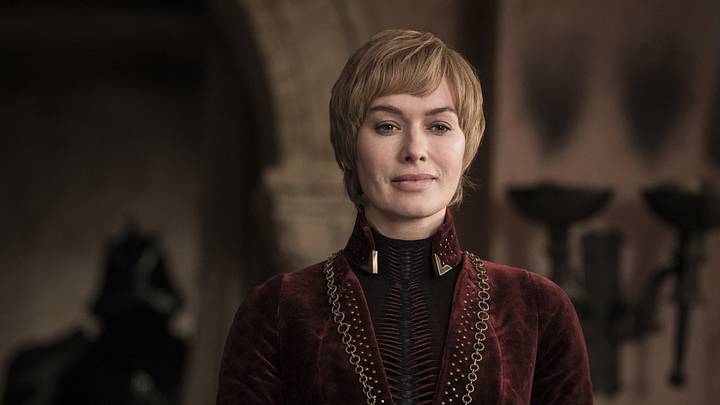
Game of Thrones season 5 opens with the series' first flashback, recounting a young Cersei's (Nell Williams) meeting with Maggy (Jodhi May). In bringing this scene to the show, Game of Thrones omits the line about the valonqar, instead ending their encounter after Maggy predicts that Cersei would outlive all three of her children.
This omission completely changes the relationship between Cersei (Lena Headey) and Tyrion (Peter Dinklage). While book Cersei both fears and hates Tyrion, show Cersei has far less of a reason to fear him, removing a layer from one of the most nuanced dynamics in the entire franchise.
Had Game of Thrones kept in the valonqar prophecy, Cersei's relationship to Tyrion would likely have resembled her dynamic with Margaery Tyrell (Natalie Dormer), who Cersei believes to be the "younger and more beautiful queen" that Maggy mentioned. Headey does a spectacular job of injecting Cersei's interactions with Margery with the perfect touch of jealousy, not simply out of a dislike or distrust for her, but because she knows that Margaery has the potential to take everything from her.
Towards the end of Game of Thrones, Cersei dies not at the hands of a little sibling, but instead, finds herself crushed by the crumbling rubble of the Red Keep. Perhaps this is why the Thrones writers removed the valonqar prophecy. But since the prophecy's outcome is far less relevant than Cersei's reaction to it, keeping it in would have resulting in Cersei's interactions with Tyrion resembling her interactions with Margaery, giving two of the show's strongest actors even more drama to play with in their scenes together.
 Add us as a preferred source on Google