

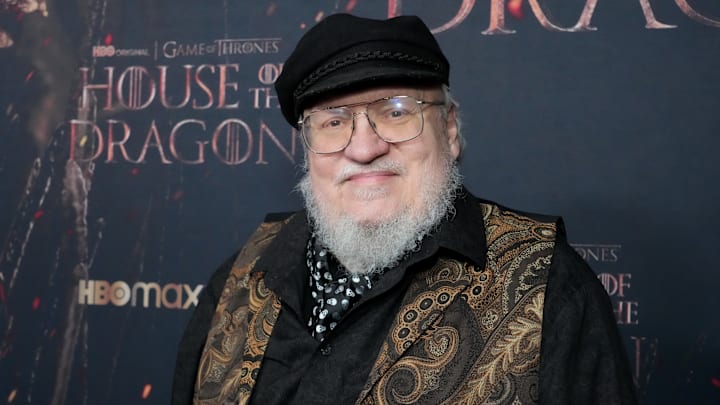
For more than a decade now, George R.R. Martin’s unfinished novel, The Winds of Winter, has been treated as a punchline, a grievance, and, by some fans, a broken promise. But the obsession with assigning blame has obscured a more uncomfortable truth: the delay isn’t just about Martin's struggle as an author to finish a book. It’s about a fandom that has turned anticipation into pressure, pressure into entitlement, and creativity into a no-win scenario where is has become impossible for Martin to finish the book.
At some point over the years, fan excitement surrounding seeing the release of The Winds of Winter turned into a demand to remedy the shortcomings of the show’s own ending. For many fans, the novel is no longer viewed as an anticipated next chapter in the Song of Ice and Fire series, but rather a piece of work they view as the opportunity to correct the failures of Game of Thrones and craft an ending that is more suitable for the series than what the show delivered.
Fans expect The Winds of Winter to validate their arguments about the shortcomings of Game of Thrones’ ending and restore faith in the franchise. They’ve spent the last several years projecting unresolved grievances onto a book that hasn’t even been published. This level of expectation hasn’t just raised the bar for Martin, it’s made it unreachable for him – and created a mountain of pressure that would be crippling to any writer in his position.
A novel can withstand disappointment, readers can argue with choices, debate themes, even reject an ending. What it can’t survive is the demand to function as a cultural apology, a narrative retcon, and a universal crowd-pleaser all at once. The Game of Thrones writers fumbled the ball so badly, that fans have made it clear that The Winds of Winter has to be better than the show’s ending and anything less than perfection will not be accepted.
Imagine trying to write under this level of pressure. Every delay to the book has been framed as a failure and shortcoming on Martin’s part. Every update he’s tried giving over the years gets twisted into an excuse and sees his name dragged through the mud across social media, Reddit and in the headlines with cries that he’ll do anything but write the book. Even when he says nothing or is simply trying to fulfill the other responsibilities he has in his life, he somehow is vilified for dragging his feet on The Winds of Winter and “not having his priorities straight.”
And let’s talk about Martin’s work outside of The Winds of Winter, since that’s such a point of argument among fans. Any time Martin seems to promote or work on another project, the fans can’t help but to call him out and frame these projects as distractions, but the reality is that it’s far more likely a survival mechanism for Martin.
Creativity is not a single-lane road, and forcing an author to stay locked inside one story, especially one this highly anticipated and scrutinized, invites burnout rather than productivity. A Song of Ice and Fire isn’t just another series and The Winds of Winter isn’t some small indie project, it’s hands down the most anticipated and discussed novel in development. Now imagine carrying that weight around on your shoulders day after day and trying to not get in your head about every little decision you’re making.
We as a fandom have created an overly toxic environment for Martin to try to write.
Instead of showing excitement and support for the novel, the conversation around The Winds of Winter has shifted into a sense that Martin “owes” readers the novel. There is this sense that we’ve been waiting long enough and that Martin owes us not only a completed book, but one that offers better payoff than what the show’s ending provided.
Readers and fans of Game of Thrones are absolutely entitled to feel disappointed by the wait. Feeling frustration is understandable. What we are not entitled to is the suggestion that Martin owes us anything, especially when the fans can’t even show him common decency these days.
What began as impatience has evolved into mockery. The fandom is so quick to toss out jokes about Martin’s age, his work ethic, and even his mortality and act as though this is normal and acceptable behavior. Just last year, Martin was confronted in person at a convention about handing off the book since he can’t seem to finish it and will probably die before he does. This type of thinking and behavior is simply unacceptable.
Even when Martin tries to give us positive updates on the book, his updates are overly dissected, weaponized, and used as fuel for outrage. You can’t demand transparency and progress from someone you’ve turned into a target, who now second-guesses not only their writing choices, but questions their own self-worth.
It’s time for us to look in the mirror and realize, at some point along the way, we became the villain of this story and became the biggest reason for The Winds of Winter’s delay. But there is still time for our redemption arc.
If fans truly want The Winds of Winter, the answer isn’t further pressure: it’s patience. Fans need to stop placing the weight of the world on Martin’s shoulders in expecting him to redeem Game of Thrones. They need to stop berating him at every opportunity or questioning his decisions to work on additional projects. In short, fans need to give space.
Creative work doesn’t respond to shame or ultimatums, and books aren’t finished because an audience is loud enough or angry enough to will them into existence. If The Winds of Winter is ever released, it won’t be because fandom demanded it into existence. It will be because George R.R. Martin was given the room to finish it despite the noise, not because of it.
 Add us as a preferred source on Google