

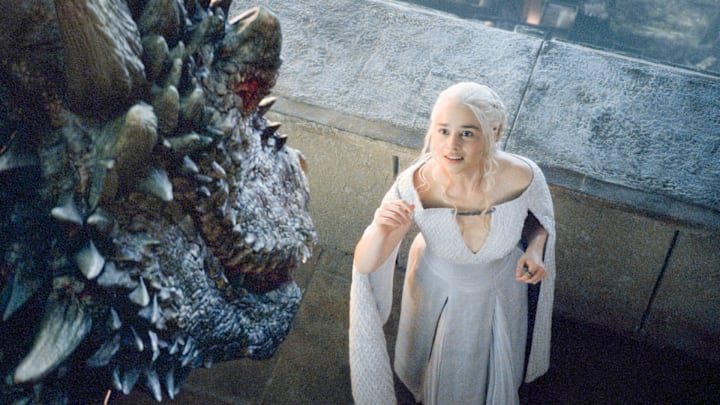
As Game of Thrones prepares to celebrate its 15th anniversary, it’s time HBO finally shows fans what could have been with the original pilot episode!
Looking back, it’s frankly amazing that Game of Thrones worked as well as it did. There were so many ways this could have gone awry, as adapting George R.R. Martin's daunting A Song of Ice and Fire saga was a massive challenge even for HBO. Keep in mind, in the 2000s, fantasy was still a tricky sell to mainstream audiences despite the success of The Lord of the Rings films. A show based on a darker work was more challenging.
All one has to do is look at the long list of horrible adaptations of fantasy classics to know how the producers could have stumbled. They could have completely changed everything from the book, cast the wrong actors, rushed or ruined storylines and more. Yet Game of Thrones overcame such issues to become an Emmy-winning smash that changed the entire fantasy genre forever.
With the 15th anniversary of the show about to hit, it’s long past time for HBO to finally give fans what they’ve long wanted: The original Game of Thrones pilot, which has been locked in the network's vaults for a decade and a half and would give a very different view on the start of the series — one that nearly silenced the show before it ever got to air!

What happened with the Game of Thrones pilot?
The original Game of Thrones pilot has become as legendary as the series itself. Kit Harington had a running joke that whenever he annoyed showrunners David Benioff and D.B. Weiss, the pair would threaten to release the pilot on YouTube and let everyone see how bad it was. From all reports, it nearly killed the show before it even started.
Filmed by Tom McCarthy in October and November of 2009, the pilot differed significantly from the actual series. For a start, Daenerys Targaryen was played not by Emilia Clarke but by Tamzin Merchant, while Jennifer Ehle took on the role of Catelyn Stark. Merchant alone would have had a completely different air as Daenerys than Clarke brought, while, Ehle was unable to commit to reshooting the pilot episode due to personal reasons despite being a fan of Martin's books. Tellingly, Merchant herself has acknowledged hating filming the wedding scene with Khal Drogo and agreed with producers that she didn’t have much chemistry with Jason Momoa.
It’s hard to tell the exact differences between the pilot and the finished show. The crew has mostly been quiet aside from some tidbits, and while a supposed script has circulated online for years, its authenticity has been questioned. Some details have been leaked in various audio commentaries as well, revealing a very distinctive start for the series.

What’s different about the Game of Thrones pilot?
Putting together the various stories, it does appear the pilot had significant differences in its storylines and presentation. For a start, it would have opened not with that iconic “model map” intro but rather a raven flying over the kingdoms. That lacked the magic of the final series' iconic opening credits.
The opening scene would have featured Jon Arryn on his deathbed, with John Standing in the role. He would have been affected by his poisoning, frantically trying to write a note to Ned Stark, likely a warning of the secrets he was carrying and his suspicions about the Lannisters. He finally collapsed and died with Cersei watching. So rather than just some off-screen name and a corpse, which was also played by Standing in the reshot episode, the audience would have gotten to see Jon Arryn himself.
One thing that’s made clear is that the pilot had to spend a lot of time on exposition. It reportedly ranged from establishing who was related to whom and a long talk between the Starks and Jamie that explained the backstory of the Mad King, complete with brief flashbacks to the executions of Rickard and Brandon Stark. Unlike in the final series, these all came off as clunky and crammed too much information at once into a messy outline of events, rather than a dive into Westeros' history.
One scene that was interesting is when Robert leaves a feather at Lyanna’s tomb, and a jealous Cersei burns it. There would have been a talk between Jon and Benjen Stark, and Catelyn would have encouraged Ned to go to King’s Landing to help find a good marriage match for Sansa. In other words, it’s actually closer to the book’s Catelyn, who cared more for her family than the wider political considerations of Westeros.
It also sounds like the more adult themes, involving steamy scenes, would have been darker and more explicit than we got (shocking, I know), while the White Walkers' attack kept them more hidden from viewers. To top it all off, Martin himself had a brief cameo at Daenerys and Khal Drogo's wedding.
So why was this not the version seen by audiences? Well, it comes down to one blunt fact: It wasn’t very good.

Why was the pilot changed?
To their credit, Weiss and Benioff were quick to acknowledge how poor the pilot was due to their inexperience in television at the time. You can check it out in the must-read Fire Cannot Kill a Dragon oral history of the series. They had to learn a bit more on the job as they screened the pilot for their friend Craig Mazin (showrunner of The Last of Us), expecting some constructive criticism, only for him to hand back the script with “MASSIVE PROBLEM” in bold. That was kind compared to the reception when they screened it for HBO, whose reaction was worse.
The issues ranged from how everyone looked silly in the wigs to how the series looked far cheaper than it actually was. There was no King’s Landing, no feel of scope for Winterfell or abroad; it felt far more like it was shot on soundstages, lacking the grandeur and wonder the studio expected. Then there were bits like no one kneeling to Robert Baratheon, which meant audiences wouldn’t get that he was the king, or clarifying Jamie and Cersei’s relationship to make Bran's discovery of their sordid affair land correctly. More than one person involved has said it was less a fantasy adventure and more like Downton Abbey.
Both Weiss and Denioff have spoken on how it felt after four years of work, millions of dollars spent and the challenges of filming, to be told their dream project was horrible and was a nightmare. They seriously believed they had blown their one shot at bringing this work to life. Luckily, the execs still saw the potential in the show. They just had to almost completely refilm the pilot, changing actors, directors, pacing, and tightening up the screenwriting. No pressure there.

Why now is the right time for HBO to release the original GOT pilot
As everyone knows, it all worked out to start an iconic TV show. The producers have half-joked that they would much prefer the original pilot remain locked away, much like George Lucas prefers to pretend the Star Wars Holiday Special never existed. However, there’s long been a fan-led push to release it, and this coming anniversary is a good time to do so.
It’s likely the episode is still in rough shape with unfinished special effects, tricky editing, etc. That would add to the poorer quality, nowhere near the high-definition adventures viewers would love. But that's why fans would want it shown. It doesn’t have to be spruced up too much, as the point is to experience the episode just how it was back in 2009. To show how, for all its many flaws, the DNA was there to build on and that, with a few tweaks, it could become magic. It’s more the historical context that would make it a fine choice for the show’s anniversary.
HBO could easily sell this as an event. They could pair it with a new documentary on the making of the pilot with new interviews with the cast and crew. Maybe they could even talk Merchant and Clarke into meeting on screen to compare their two performances as Daenerys. Martin would obviously have a lot to say on his feelings then and now with how the series could have changed thanks to these and other differences.
To see how the series overcame this horrible start to become a landmark achievement for television would be a triumph for the creators and HBO itself. Much like the dragons, Game of Thrones survived a seemingly terrible birth to blossom into a beast that redefined a genre. In other words, there’s no better way for Thrones to celebrate a decade and a half of existence than to finally reveal the ordeals it took to get there.
All eight seasons of Game of Thrones are streaming on HBO Max. We're celebrating the show's 15th anniversary all throughout the month of April at Winter Is Coming, so join us for this deep dive into the world of Westeros!
 Add us as a preferred source on Google