

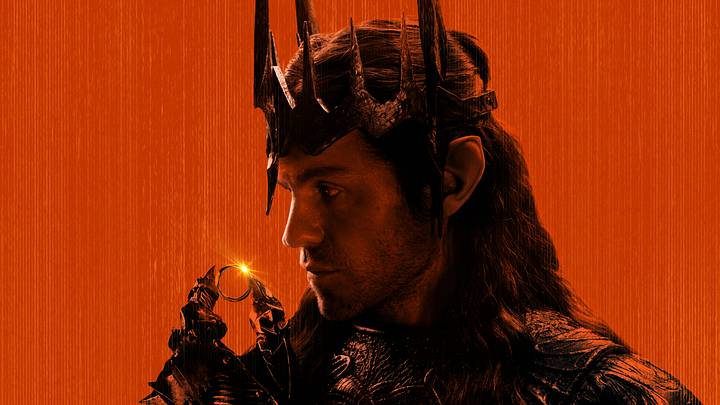
After two long years, Prime Video's Lord of the Rings television series The Rings of Power has returned — and Middle-earth has changed a great deal since we saw it last. The Dark Lord Sauron (Charlie Vickers) is intent on forging his One Ring to rule them all. The Elves, led by the Lady Galadriel (Morfydd Clark) and High King Gil-galad (Benjamin Walker), fight a desperate campaign to withstand his inexorable march, aided by their own three Rings of Power. The Dwarves, ruled by King Durin IV (Owain Arthur) and Queen Disa (Sophia Nomvete), have cloistered themselves in their Halls of Stone, hoping to wait out the war as they deal with their own succession crisis. Across the sea, the isle of Númenor teeters on the brink of civil war, as the followers of Ar-Pharazôn (Trystan Gravelle) and Tar-Míriel (Cynthia Addai-Robinson) vie for power and safety. And in the deserts of Rhûn, the wizard Gandalf the Grey (Daniel Weyman) seeks a way to stop the conflict.
If you can't tell from that opening description, there is a lot going on in The Rings of Power season 3. But unlike the show's first two seasons, where that sprawl oftentimes made the show feel a bit unfocused, it all feels much sharper here. All plotlines are guided by Sauron's quest to forge the One Ring to some extent, and that clarity makes for a much better season of The Rings of Power than anything that's come before.
I've watched the first seven episodes of The Rings of Power season 3, and have returned from Middle-earth to tell you about what I saw there. Let's take a glimpse into the Palantír and discuss what lies ahead.

The Rings of Power season 3 spoiler-free review
Over the course of its first two seasons, The Rings of Power has always been a show that has struggled a bit with consistency. At times, it can be utterly breathtaking, such as when it pans out for incredible visual effects shots bringing the world of Middle-earth to life, or when it zooms in close to follow characters through its labyrinthine sets for locations like Númenor and Lindon. At others, it has felt staler than one would hope for a story based on the works of fantasy's greatest writer, especially when it leans into nostalgia for Peter Jackson's iconic Lord of the Rings film trilogy — a property that this prequel series, set thousands of years beforehand, actually has no behind-the-scenes ties to whatsoever.
All of that is still on display in The Rings of Power season 3, but the flaws are much quieter than before, while the highlights shine even brighter than in the first two seasons. Much of that is of course thanks to Sauron, who is played to utter perfection by Charlie Vickers. Sauron's hand is felt across the breadth of the season, and I don't think it's a stretch to say that if there is one performance on this series that is destined to become iconic in the same way as Jackson's Lord of the Rings cast, it is Vickers as the Dark Lord. From subtle changes in his demeanor and movements to dizzying shifts between playing Sauron as sympathetic or an unhinged terror, Vickers never misses the mark. He is simply a delight to watch, more so now than ever.
Having Sauron be such a central focus gives the season as a whole a stronger narrative thrust, which goes a long way toward making it more watchable. Even when he's not physically present, such as in the Númenórean storyline, he's still often a topic of conversation. The show never lets us forget that he now stands as the greatest threat to Middle-earth since his former boss, Morgoth, was defeated in the First Age.
That's not to say that the rest of the cast isn't also pulling their weight. There isn't a single weak link in The Rings of Power's season 3 cast, and many of the characters we've been watching all along are now at their best. True, some don't get quiet the spotlight I would have liked, but that's unfortunately how the cookie sometimes crumbles with an ensemble cast this vast. Others emerge as unexpected standouts; there were more than a few times that a character I previously didn't care overmuch about suddenly became one of my new favorites in the series. For many characters, especially those in Númenor, Mordor, and the Elven sanctuaries, the show doles out some of its best developments to date.

The Rings of Power still struggles with balance
Despite how good the cast is and how much the overall writing for the show has generally improved, the inconsistencies I mentioned do still crop up this season in some unexpected ways. Númenor was my least favorite plotline in season 2, largely because it felt like the coherence of it fell apart somewhere on the editing room floor, especially compared to the much stronger storytelling happening in places like Eregion and Khazad-dûm. In season 3, that has flipped, with this latest Númenor storyline standing as one of the absolute best parts of the series, period. Meanwhile, the Dwarven succession crisis somehow managed to make Durin and Disa, two of my prior favorites of the show, into the characters I was always the least excited to see. I wish we could get a season of The Rings of Power without the ups and downs, but on the whole, I found the ups to be so much stronger this time around that I enjoyed myself much more than season 2.
The tendency to lean on Jackson nostalgia also sadly does crop back up, and in perhaps the most egregious example to date. One episode features a sequence that is essentially a beat-for-beat copy of a beloved Lord of the Rings storyline, and it jarred me completely out of my immersion. It's all the more frustrating because The Rings of Power is so good this season that it didn't need it. The show is almost always at its best when it does its own thing, taking the time to develop those narrative strands in ways that make them compelling on their own rather than relying on nostalgia bait. It's a shame that it's not confident enough to fully embrace that. The storyline I'm referencing here, which involves Galadriel, Arondir (Ismael Cruz Córdova), and the new Orc character Marnûkh (Adam Young), is totally fine on paper, and if it had sought its own path, I can say without a doubt that I would have enjoyed it much more than I did as an imitation of a more original piece of filmmaking that came before.
There are other, much less egregious ways the inconsistencies pop up. The sets are stunning in this show, but some of the props, like the blinged-out Rings for Nine Mortal Men, look almost comically out of place. In some episodes, the cinematography and direction take daring moves that pay off in spades; in others, they totally kill the tension of scenes. The grandness of certain storytelling beats is undercut by a reliance on beefing up crowds with CGI rather than simply employing a few dozen more extras at key moments. The list goes on. Thankfully, most of the flaws are on the smaller side, but once you start noticing them it's hard not to.

The Rings of Power is a stronger production than ever
While that may sound like I had quite a lot of issues with The Rings of Power season 3, I do want to be clear: this is the most fun I've ever had watching this show. There are some genuinely excellent moments to be had here, bolstered by wonderful performances, incredible costuming, often jaw-dropping sets, thrilling action, and immense musical work from composer Bear McCreary. The second episode in particular is one of my favorites, and I'm not kidding when I tell you that it made me gasp out loud: "Wait, is The Rings of Power actually doing political drama better than House of the Dragon right now? What is happening?"
Several new cast members also add a lot to the series at this key juncture: Jamie Campbell Bower as Galadriel's long-lost husband Celeborn, Eddie Marsan as Durin IV's conniving brother Thráin, and Andrew Richardson as Anárion, the brother of Isildur (Maxim Baldry) and son of Elendil (Lloyd Owen). Each shines in their own way, from immediately likable like Celeborn to unsettling in the extreme, like Thráin. The show is richer for including these newcomers. At the same time, mainstays like Gravelle as Pharazôn, Clark as Galadriel, Tyroe Muhafidin as Theo, Walker as Gil-galad, and Addai-Robinson as Míriel also get some of their best material to date, allowing them to stretch their acting into new territory for the series. Elrond also deserves a special shoutout. Around mid-way through the season, the writing really hits its stride as it explores the character's backstory and how it informs his present experiences, and actor Robert Aramayo did an exceptional job capitalizing on that extremely compelling material.
As you might guess, with a cast this size, adding new members means there are probably some major deaths on the horizon as well. The Rings of Power doesn't disappoint in this regard. There are more than a few shocking moments ahead, some of which totally floored me. Those don't just come in the form of deaths, either; the much-discussed five-year time jump also changes some characters in surprising ways, which starts things off on a riveting note. There's a feeling that there's no going back from this crucial juncture in The Rings of Power, for the characters, for the production, or for us as audience members. And that's just right for the storylines that the show is tackling in its darkest, most brutal season so far.

Verdict
Ultimately, if you enjoyed The Rings of Power seasons 1 and 2, you are going to really enjoy season 3. If you were mixed on those early seasons, there's a very good chance you'll enjoy this season more, because it is objectively just better television with a lot going for it. If you already made your mind up to dislike the series, why are you even reading this review? You already know what you think. But here, more than ever, that bias stands to be challenged. The Rings of Power season 3 is not flawless — no creation is, as Sauron himself learns all too well — but it is a vast improvement on what's come before and a worthy addition to the on-screen legendarium of The Lord of the Rings.
The first four episodes of The Lord of the Rings: The Rings of Power season 3 premiere Wednesday, November 11 on Prime Video.
 Add us as a preferred source on Google