

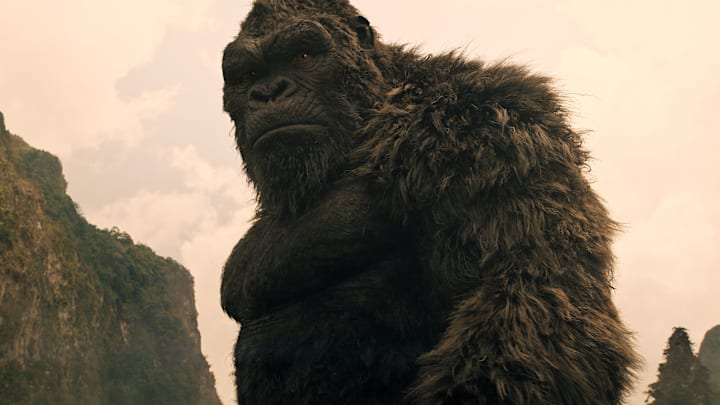
There is an unintentional sense of tension that has come to pervade the entirety of Apple’s MonsterVerse series, Monarch: Legacy of Monsters. The show has been heavily marketed as a MonsterVerse show, one whose second season heavily spotlights the involvement of monstrous and iconic characters such as Godzilla and Kong. And yet, it is now and has been from its very inception, a show which aims to explore the human perspective within this world. While this unique form of dissonance between general audience’s desires for the series and the meat of what the show has actually set out to explore has been present from the very beginning of the series, it has grown profoundly more palpable over the course of this second season. And nowhere is it more apparent than in Episode 6, “Requiem.”
Written by Maria Melnik and directed by Jeff F. King (who was also the hand behind last week’s episode), “Requiem” should, at least theoretically, serve as a major demarcation point for this series as a whole. The final few minutes of the previous episode, “Furusato,” saw Hiroshi Randa (as played by Takehiro Hira) die in an ensuing attack from Titan X as a direct result of the actions or inactions of numerous of the main players within the series. This major character death was given sufficient weight there, and really felt like it could be a turning point for the series and its characters moving forward, providing some much needed momentum and emotional heft to their actions. And on paper, “Requiem” does at least attempt to follow through on that promise. The problem is that it does so without allowing such progressions room to breathe, thus making them feel rushed, unnatural, and ultimately unbelievable.

The worst offender of all of this are the character arcs themselves, echoing an issue that became prevalent in the previous episode as well. There, when key characters such as May (as played by Kiersey Clemons) or Hiroshi himself experience fairly extreme about-faces in their beliefs, they felt as if they had undergone entire substantial character evolutions that we as an audience had simply not been privy to. Here, the same thing happens with different characters, most specifically with the older version of Lee Shaw (as played by Kurt Russell). To have this character, who has been nothing but unconditionally supportive of his once-and-future love interest Keiko (as played by Mari Yamamoto) suddenly have such a distinct break from her in terms of beliefs and priorities is a truly interesting idea.
But Monarch does nothing to build to it whatsoever; it’s just something that suddenly happens apropos of nothing midway through this episode. Kurt is as terrific as ever, but the show gives him so little grounding that his performance has little chance to land. Suddenly, Lee is at such odds with Keiko that he practically becomes a secondary antagonist, and it just plays as such an abrupt and entirely underbaked heel turn that it’s hard to buy into it at all.

Pair this with the fact that the flashback portion of the storyline, set in the 1950s does finally make a return this week after several episodes of absence, and things become even stranger. It’s great to have this part of the story back, as the production design is always exemplary here and Wyatt Russell (as the younger Lee Shaw) is consistently riveting. That remains true here, though its implementation in terms of how it is used to very abruptly try to highlight some of the more troubled elements of Shaw’s past is questionable at best. There is a surprise reveal at the end of this episode that hints at a far more complex and interesting relationship between these two halves of the timeline of the series, and I really hope the series commits to it full-hog. In many ways, it does feel as if they’ve kind of painted themselves into a corner narratively with this set up, and nothing would be more exciting, stakes raising, or frankly liberating than to see them break out of that mold in that fashion. So here’s hoping.
But elsewhere, many of the same troubles that have plagued several of the episodes this season remain; the narrative feels malnourished, there is lackluster editing and ADR galore, and it all feels ineffectively insular for a show with such consistent global stakes. Of course, chief among these is that aforementioned unintentional tension, which it would seem to me really is the driver of many of the show’s biggest problems this season. “Requiem” is the first episode in several weeks to feature Kong at all, and the first of the season to feature Godzilla, but these inclusions feel shoehorned in, as if the series has been fretting viewers tuning out altogether.
Through this lens, the pitfalls of the last few weeks at least make a bit more sense; rather than taking the time needed to provide meaning and resonance to this series of would-be character-driven episodes, the show has felt the need to constantly attempt to keep the energy and pace up, and this has all been to the detriment of the series as a whole. If they had allowed the previous handful of episodes to really function on their own dramatic terms, then the monster stuff would hit that much harder. But alas, that grounded reality has instead been traded out for a lot of hand-waving shenanigans that have actively diluted the characters and themes of the work. The result is a story that is still light on monsters, but is also failing its characters and performers.

The piece of this episode that really clicked this perspective into place for me personally was what has to be the single cheapest of stunts Monarch has pulled in its entire run, which is when a distraught and somewhat drunken Kentaro (as played by Ren Watabe) finds himself wandering the streets when a surprise Godzilla attack occurs. It comes out of nowhere, but seems thrilling and off-kilter at first; an unexpected injection of adrenaline that seems to be paving a path toward some truly exciting story developments… and then Kentaro wakes up. Surprise! Turns out the multi-minute long Godzilla sequence was all just a dream that the character was having! How fun, right!?
It’s such a bizarre and deflating creative choice that just sucks all the life out of Kentaro’s whole subplot here, which is especially a shame given how underserved the character has been up until this point. Finally, Watabe was being given something to work with, but once again, the show’s attempts to plug up this perceived dissonance take precedence over the actual drama at hand, and make things all the weaker for it.
Overall, there’s plenty of good stuff to be found in “Requiem,” but I can’t help but feel like tuning in weekly is just watching Monarch shoot itself in the foot time and again. There are solid characters, compelling ideas, and flat-out great performers in this show doing genuinely great work; so why is the series itself so routinely falling flat and failing to provide them with a firm foundation to stand on? With four episodes left to go this season, I remain eternally hopeful that things can turn around. If the cliffhanger reveal is teasing what I hope it is, then things could get a good deal more heady and surreal in the coming weeks. I just hope the series has the courage to commit to these ideas and its characters as it moves forward, so that audiences can really invest in them once more and feel more than the fleeting sensation of forward momentum without anything to back it up.
Episode Grade: C-
 Add us as a preferred source on Google