

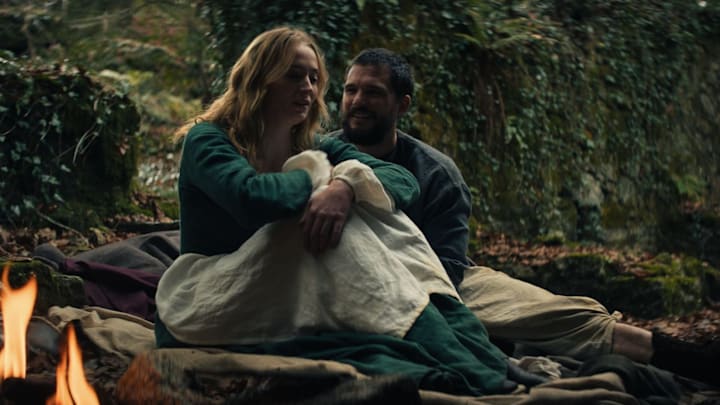
Natasha Kermani's The Dreadful had everything going for it on paper. A medieval horror film inspired by the Japanese folk tale behind the 1964 classic Onibaba, reuniting Game of Thrones stars Sophie Turner and Kit Harington in a dark story of desperation and supernatural terror.
Released Feb. 20, 2026, The Dreadful delivers gorgeous period atmosphere and impressive cinematography, but the pacing and an unfocused story drain it of life. What could have been a tense survival tale turns into a beautiful but somewhat hollow experience.
The story follows Anne (Sophie Turner), a devout young woman barely surviving with her controlling mother-in-law Morwen (Marcia Gay Harden), during England's Wars of the Roses. With Anne's husband fighting at war, the two women struggle in their isolated cottage. When Jago (Kit Harington), a childhood friend turned soldier, arrives with news that her husband has died, Anne finds herself torn between awakening feelings and Morwen's increasingly dark schemes. Somewhere in the shadows lurks a cursed armored knight, a supernatural force supposedly drawn by envy and violence.
Kermani transplanted the Onibaba legend from feudal Japan to medieval Cornwall with clear ambition. She wants to create this slow-burning folk horror focused on psychological tension instead of the jump scares, although there are a handful. The problem? The deliberate pacing just becomes slow, and the supernatural elements stay vague when they desperately need to feel urgent and real.
Where's the horror?
For a horror movie, The Dreadful rarely scares, and that's the fundamental issue with the film. The mysterious knight who is supposed to terrify us barely appears.
When horror elements do show up, they're usually dream sequences. Kermani uses this trick so many times, and it loses all impact. By the third nightmare wake-up scene, most will stop investing in the scares entirely.
At just 94 minutes, the film should move quickly, but it actually drags. Scenes linger without building anything, conversations circle without landing anywhere, and the story drifts when it should accelerate. The supernatural curse never becomes concrete enough to create real stakes, which forces the character drama to carry everything.
Unfortunately, that drama can't hold the weight largely because of a casting choice the film never overcomes.
The uncomfortable Game of Thrones reunion
Casting Sophie Turner and Kit Harington as romantic interests created the ultimate problem Kermani couldn't solve. After eight seasons playing siblings on Game of Thrones, asking audiences to see them as forbidden lovers requires chemistry powerful enough to override years of that association. That chemistry simply doesn't exist.
Turner has been candid about how uncomfortable both actors felt during intimate scenes, calling it "vile" and admitting they were both "retching" between takes. You can see a bit of that discomfort on screen, in my opinion, and it kills almost any romantic tension the film tries to build.
Turner plays Anne with earnest devotion. Though displaying her religious faith and inner conflict, the performance never achieves the depth her journey demands. She looks too modern and polished for someone supposedly living in desperate poverty. Harington brings his natural presence to Jago, with the battle-worn soldier act. His inconsistent accent kept pulling me out of the story, though. Both actors can do better work than this, but the script gives them little to work with beyond moving the plot forward.
Marcia Gay Harden deserves a better movie
The film's only saving grace is Marcia Gay Harden. As Morwen, she transforms from a seemingly helpless grieving mother into something genuinely dangerous and unhinged. Harden understands the Gothic tone Kermani wants and commits completely. She brought an intensity that recalls classic horror films.
Her raspy voice and wild-eyed intensity provide the film's most genuinely unsettling scenes. She's working at a different level than everyone else around her. Watching her performance makes you wish the entire film matched her energy. Harden's work here deserves stronger material.
All style, little substance
One can't deny that The Dreadful looks stunning. The production was shot entirely on location in Cornwall during December 2024 with harsh weather, rain, mud, freezing temperatures, and weak winter sunlight. Cinematographer Julia Swain and Kermani created a "gothic storybook aesthetic" with sweeping landscape shots and dreamlike intimate sequences that feel genuinely immersive.
The production design impressed throughout. The medieval cottage built for the film feels authentically cramped and primitive. The costumes almost maintain historical accuracy. The cinematography draws clear inspiration from films like Justin Kurzel's Macbeth and Ingmar Bergman's The Seventh Seal with striking compositions. Technically, Kermani and her team executed their vision beautifully. The tragedy is that all this gorgeous craft serves a story that never really justifies the visual investment, at least not on screen.
Now, folk horror works when it builds dread through specific details, like particular rituals, clear rules, and escalating understanding of what the supernatural force actually does. Here, everything stays frustratingly unclear.
The film never establishes what's at stake or what rules govern its supernatural elements. What triggers the curse? What does the knight want? How can anyone stop it? These questions almost go unanswered because the script hasn't worked them out. Without this foundation, the horror feels arbitrary and somewhat impossible to invest in the outcome.
The film also gestures toward bigger themes like violence against women during wartime, survival in oppressive systems, and what desperation does to people. Sadly, it never develops these ideas into anything meaningful. Why set this story during the Wars of the Roses specifically? What commentary is Kermani making about this historical moment? The setting feels decorative rather than essential, which wastes the careful period detail that the production worked so hard to achieve.
Final verdict
The Dreadful is a frustrating case of wasted potential. The film had everything it needed, but what's missing is the clear storytelling and emotional connection required to make most of its elements cohere into something memorable.
Some viewers will appreciate the Gothic atmosphere and patient approach and find value in the mood Kermani creates. Most will struggle with the glacial pacing, thin characters, and horror elements that never deliver actual scares.
For a film called The Dreadful, it should make you feel dread, discomfort, or at least sustained tension. Harden's committed performance and Swain's beautiful cinematography deserved a stronger story supporting them. Turner and Harington deserved material that played to their strengths.
The Dreadful will find a small audience among folk horror completists and those who value visual craft above narrative substance. For most viewers seeking real scares or emotionally engaging drama, there's too little beneath the undeniably gorgeous surface. I'd score the film 2.5 out of 5 for its meticulous visual detail and a lack of narrative backbone worth caring about.
 Add us as a preferred source on Google