

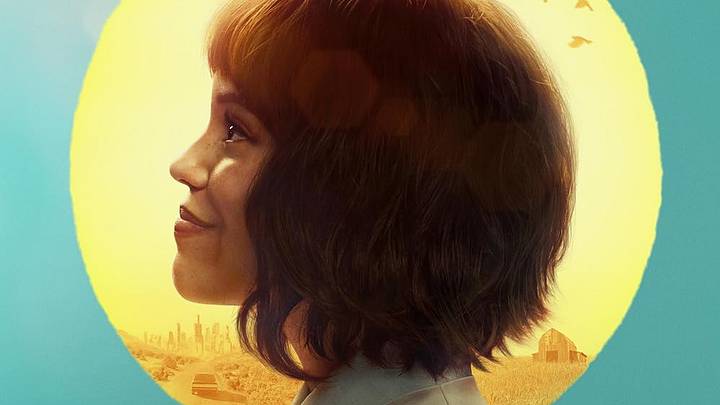
Taika Waititi is a chronic lampshader, making him (in retrospect) an odd choice for a Kazuo Ishiguro adaptation full of bizarre concepts meant to be taken 100% seriously. The Nobel Prize winner’s 2021 novel Klara and the Sun is an impossible web of dilemmas about parenthood, love, hope, and the natural world.
Anxiety about AI is an especially precise plot point in the book, while in Waititi's movie, it is merely the primary gimmick for sale and an excuse for an out-of-place Star Wars reference. Yet this tonally inconsistent feature starring Wednesday's Jenna Ortega as Klara, an artificial person designed to be a teenager's companion, still has its surprising, gleaming moments.
Klara and the Sun is too bright and bubbly
Despite being an outdated AF (Artificial Friend) model, Klara is plucked from her store and saved from being melted down for parts by Josie (Mia Tharia). So, Klara finds herself navigating the precarious situation between the sickly teenager and her mother, Chrissy (Amy Adams), in their rural home.
Klara is largely happy in this new situation, though she is worried for Josie and asks the Sun often to help her friend get better. There was great potential for Klara and the Sun to be a heart-wrenching tragicomedy, enhanced by the bright visual worldbuilding that Waititi opted for.
But the film runs afoul of the age-old page-to-screen problem early: how to translate internal musings from a first-person POV on the page to spoken dialogue. What were profound observations made by Klara are now hokey conversations between her and other AFs, thus, the moments lose most of their magic.
There is also a nonchalant exposition dump early on about being “lifted” (parents can have their kids surgically altered for academic brilliance), with the sinister implications falling flat. In fact, the movie suggests that it was just bad luck that something went wrong with Josie’s procedure, rather than there being widespread, recognized risks.
It was always going to be difficult to cover the full breadth of themes tackled by the book in movie format, but some changes are just too kooky and actively work against the story’s ethos. One mention of the internet’s abolition has no further purpose. The initial conflict between Klara and the housekeeper Melania (Rachel House) is exaggerated, petty, and pointless.
The worst of it comes when Josie and Chrissy host a gathering for other lifted young people. These characters are so comically awful, their designs straight out of Thor: Ragnarok, that the lesson about their collective superiority complex is entirely lost. Everything from pollution to robot death is cartoonified, lest we misunderstand Klara's feelings about it.
Jenna Ortega as Klara should have been her moment
Ortega hopefully won’t be pigeonholed into the role of deadpan horror heroine for the rest of her career. Klara was a shot for her to wow the critics, giving her something complex to chew on. Her performance isn’t bad, but unfortunately, Klara was turned into a goofy Waititi character with outwardly odd mannerisms.
She is “different” because of the most visible reasons possible, tending to stand on one leg like a flamingo and stare at Josie intensely while making a weird face. But the few awesome scenes include those where Klara converses with the Sun, in which Ortega, despite having to deliver some cutesy dialogue, conveys a vital sense of awe.
The opening solar shots, with Ortega’s gentle voiceover, make you think for a second, “Mabe they will get this right" When Klara goes to the barn she believes is the Sun’s resting place, she calls it a beautiful home, and we can see what she means as light pours into the space through windows and holes in the roof. The lullaby-like score is perfect in these moments.
Tharia, however, gives the powerhouse performance as Josie, essentially pulling the whole film together into something worthwhile. If the choice was made to boil it all down to Klara’s relationship with Josie, then we have to feel for Josie. And Tharia is heartbreaking as this snarky but morose girl frustrated with her mother’s absence and facing an early death.
Klara and the Sun is a feel-good sci-fi flick that ends up being largely about an AI character’s capacity for love, but the world around the girls is nothing more than wacky set dressing, no matter how sweet their relationship is. Waititi doesn’t handle the bigger themes with any modicum of nuance or sophistication, but I’ve found that low expectations can do wonders in enjoying a film such as this.
 Add us as a preferred source on Google