

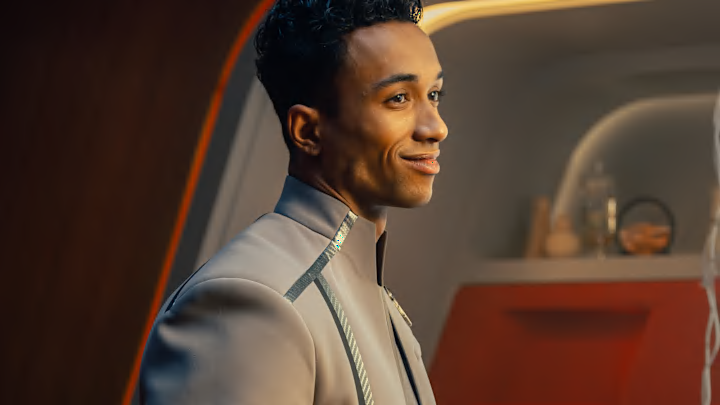
Starfleet Academy's third episode, "Vitus Reflux," is a jarring change of pace for Star Trek's newest show. Rather than explosive starship battles or sensitive political issues, the show pivots to a more cadet-centered storyline. The sport of Calica is, regardless of the show's denial, just spicy laser tag. It's a relatively cinematic sport that's sort of fun to watch. But I can think of a way "Vitus Reflux" could have been far more engaging.
Calica is an original Star Trek invention that never featured before Starfleet Academy. It's unclear if it existed during earlier points of the franchise timeline, but it's more likely to be a sport that has developed in the huge unaddressed period between the 24th and 32nd centuries. It's used as a vehicle in "Vitus Reflux" to teach the cadets about the value of teamwork and the importance of authority and/or leadership. It's an effective, if not almost child-like, lesson. Still, Star Trek missed a glaring opportunity to improve the episode.
FULL SPOILERS for Star Trek: Starfleet Academy season 1, Episode 3, "Vitus Reflux."

Starfleet Academy should have given Parisses Squares its live-action Star Trek debut
Time has moved on in Star Trek since the 21st century. New or adapted sports have come along to replace the old, including some that have been adopted from alien cultures. They don't tend to have a huge part in the franchise's storytelling. After all, sci-fi tropes are often more entertaining than just watching someone bat a ball around. They fit in better with Star Trek's overall formula, too.
However, the sport of Parisses Squares has ascended to almost legendary status among Trekkies. It has been alluded to since The Next Generation, but details about the activity have largely been drip-fed to fans. It's still unclear exactly how Parisses Squares is played, despite being part of the canon for almost four decades. All we know for sure is that it's a highly physical sport involving mallets, ramps, and two teams of four.
Star Trek: Prodigy did surprise everyone by showing a Parisses Squares court on-screen, but the animated series didn't focus on the sport long enough to provide much more insight than was already available. All of this is to say that Starfleet Academy should have seized the opportunity for Star Trek to show its first complete Parisses Squares match, not Calica. Parisses squares does, after all, have a strong connection to the Academy. There was no point in inventing Calica when a superior alternative already existed.
Granted, Parisses Squares would only have allowed four of the Starfleet Academy cadets to be in action at any one time, whereas Calica means they could all be involved at once. I don't think that's a good enough reason to invent Calica, though. It would have been a very easy workaround to just have certain cadets come off the bench at various points for optimal narrative impact.

What makes Starfleet Academy's neglect of Parisses Squares even more surprising
Because the new Paramount+ show is a key part of celebrating Star Trek's 60th anniversary, Starfleet Academy has been filled with Easter eggs so far. At least, the first two episodes were. The double-episode premiere was wall-to-wall references to all corners of the Star Trek franchise, and it was really cool trying to spot and listen out for them all. By comparison, "Vitus Reflux" is a barren wasteland in this respect.
Sure, there is the occasional reference that made me point at the screen, like another mention of the "Talaxian Fur Fly," which I assume is going to bloom into a much larger storyline. But other than that, "Vitus Reflux" was a hyper-focused affair. The episode's primary goal is to get the cadets to function better as a team. I understand the need for this development. I'm sure it'll be vital down the line.
Unfortunately, the decision to functionally abandon those fun references to other Star Trek shows results in a stark drop-off in how well Starfleet Academy serves as a 60-year celebration. While I get that "Vitus Reflux" was a pivotal episode that couldn't dedicate as much of its time to Easter eggs, using Parisses Squares would have been a brilliant way to pay homage in an effortless and organic way. Oh well, let's hope the rest of Star Trek: Starfleet Academy doesn't have any more of these blind spots.
Star Trek: Starfleet Academy is streaming now on Paramount+. Expect a new episode every Thursday until the season 1 finale on March 12, 2026.
 Add us as a preferred source on Google