

The Rings of Power showrunners have responded to one of the biggest criticisms the Prime Video show has faced over the years ahead of season 3.
With the first four episodes dropping on Wednesday, Nov. 11, the internet is sure to light up with debate once again on the creative choices of showrunners J.D. Payne and Patrick McKay. The common criticism they addressed in a recent interview with Signum University was the timeline compression applied in the show, which is due to continue throughout the upcoming seasons.
“I posit that if Tolkien were to write the novel of the Second Age, he would have condensed the timeline," McKay said.
McKay may be too polite to sass the show’s detractors outright, but the playful frustration in his voice spoke to his many years of explaining a simple truth: there is no one “faithful” adaptation of a timeline.
And it is a timeline that the showrunners are adapting, for the most part. They have the rights to The Hobbit, The Lord of the Rings, and its appendices, and the only part of that which really covers the Second Age is the timeline in the appendices. But even so, the showrunners rightly state in their interview that the parts of Tolkien’s legendarium that do go into more detail on the Second Age are few and far between compared to those that cover the First and Third Ages.
In the extended interview, Tolkien scholar Corey Olsen and the showrunners also discuss how keen Tolkien was to include more detail in his appendices, while he was forced by various external constraints to cut much of it out.
"We took all these little clues and thought of them as stars in the sky that we then connected to write the novel that Tolkien never wrote about the Second Age," Payne said while speaking to Vanity Fair in 2022.
Adapting challenging material
The show has managed to get one-off instances of rights to other parts of Tolkien’s work, so rights haven’t been the issue, for the most part. McKay and Payne are confronting the criticism that their show’s timeline compression isn’t faithful to Tolkien’s Second Age by asserting the fact that they are simply adapting material without TV-level detail. Tolkien’s work on the Second Age is wide-ranging, as the showrunners acknowledge, but it is big on broad strokes of narrative and not very detailed in terms of dialogue and character psychology.
If Tolkien had written a novel about the Second Age, he may well have condensed the timeline so as to write a gripping story that kept readers caring increasingly about one consistent set of characters. A novel is far closer to the TV format, and that would have been easier for The Rings of Power showrunners to adapt.
But they didn’t have a novel. They had Tolkien’s entirely unique and generation-spanning legendarium, composed of the archaic Silmarillion, medieval poetry, drafts, and notes. While some argue they should have adapted something more suitable, the downside of that is less Middle-earth on our screens.
How the show alters Tolkien’s timeline
Rings of Power season 3, starting five years after the events of season 2, will see the rise of Sauron’s dark tower, Barad-dûr. But in the books, this was built a full 200 years before Sauron reached Eregion and manipulated the Elves there into making the Rings of Power, which already happened quite decisively in season 2.
Sauron actually spent 300 years in Eregion before he even started forging the Rings of Power with Celebrimbor, which, perhaps wisely, the show skipped over. The Rings of Power season 2 launched straight into the creation of the rings after Sauron arrived, and ended with the sack of Eregion, which happened in the books nearly 500 years after Sauron arrived.
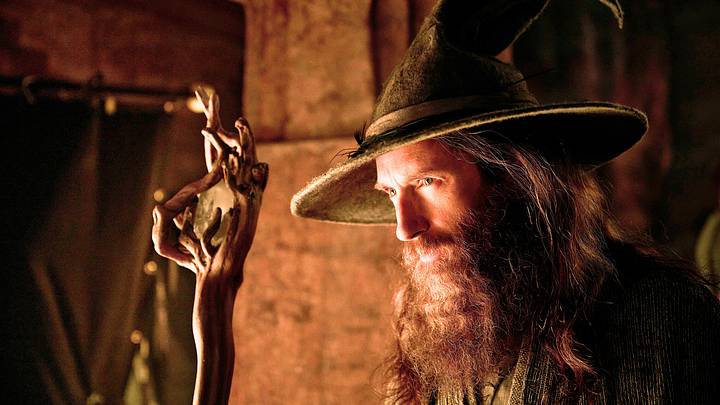
The show’s Númenor storyline takes place thousands of years after Sauron arrives in Eregion to make the Rings of Power, which fans pointed out in season 1. Some also pointed out that Gandalf arrived in Middle-earth in the Third Age, not the Second, as the show depicts. That is more of a timeline scramble than a compression. Although in late writings Tolkien never published in his lifetime, Tolkien toyed with having some of the Wizards arrive in the Second Age.
The Lord of the Rings: The Rings of Power season 3 premieres on Prime Video on November 11, 2026. Stay tuned to Winter Is Coming for all the latest Middle-earth news.
 Add us as a preferred source on Google