

Nothing can prepare fans for the wrecking ball that is AMC’s The Vampire Lestat. This gem of a series — written, produced, and acted out with nothing but the utmost care and love for story and characters — is poised to be the show of the summer and, possibly, the best piece of television to hit our screens in the entirety of 2026.
The rebranded season 3 of Interview With The Vampire wastes no time showing its true colors. This isn’t Interview With The Vampire (Lestat’s Version) (From The Vaults). Forego all your expectations of tonal continuity. The show is utterly unparalleled, for lack of a better term, sui generis, and strong enough to be in a class of its own. The only thing the show has in common with its predecessor is that the titular vampire is narrating his life story, although through and for different media.
This season is more deeply rooted in our society, mocking current affairs, acknowledging the crucial power of the internet, namedropping celebrities left and right… I’ve lost count at how many times the likes of Taylor Swift and Florence Welch were mentioned. In seasons 1 and 2, Louis tended to disappear into the narration, while here Lestat has a pungent comment for everything, not sparing anyone, not even himself. It’s IWTV on steroids, it’s campy and whimsical.
It's Lestat de Lioncourt’s prerogative to reset the narrative. It’s tabula rasa and welcome to what Lestat describes as a “rewrite.” As Lestat bares himself, his id, his past, gives it up for dissecting, we are invited to abandon every scrap of detail about Lestat’s life we know from the first two seasons. As anticipated by showrunner Rolin Jones, “Even if you know the story, you don’t know the story.” We are thrown into a tale that is equal parts mesmerizing and tantalizing.
Down memory lane we go. The present is intermitted with the past, both remote and near. It’s narration within a narration, and the fourth wall is constantly shattered by Lestat directly addressing viewers — meta doesn’t even begin to cover it. No fodder, the show goes straight for the throat; I’m glad that the writers chose not to go over events we already know from past seasons, even if we are aware that many things we saw were wrong — either because of fallacious memories or a deliberately warped version — so we don’t get a repeat of moments of Lestat’s life that were recounted in Interview With The Vampire. It’s up to the audience to connect some dots or understand where the truth lies.
Thankfully, there are countless things Louis didn’t know about Lestat, so there is ample room for the writers to astound. The narrative does every possible thing to surprise us and trick us into believing one thing or another until the truth brutally reveals itself, leaving us bereft and reeling. This happens twice in Episode 1 alone, and more times as the season progresses.

At this point, it would be sloppy of the show to repeat a trope, so we aren’t led to question the truthfulness of Lestat’s version of events like we were Louis’s. In the few instances where it’s clear Lestat is being deliberately omissive in his account to Daniel, the story itself — or rather, a ghost from Lestat’s past — forces its way onto Lestat’s memory and our screen, giving us the unabridged version of the facts he may not be ready to recount.
The overarching motif of the season are Lestat’s failures; not just his mistakes, but how those defining moments shaped his persona, his understanding of the world and of himself. Lestat’s past demands a reckoning. Every episode Lestat is, essentially, re-living his life story and only sometimes trying to make sense of it, oftentimes leaving it for the audience to judge.
The tone is always whimsical, meant to make you laugh even when dissecting tragic or troublesome events. There is a deep dissonance between the story we see and the way Lestat tells it. This goes back to what makes Lestat truly great as a character and even more so as a narrator: his ambivalence for being both a deeply tragic character and a highly comedic one. Lestat the character is doomed by the narrative, stuck in a helpless loop where everyone he loves abandons him, but Lestat the narrator wants to make fun of the Greek tragedy that is his life.

He doesn’t let himself be shaped by the horrors, what he wants most of all is not to be painted as a victim: so he is stuck in this vicious circle where he suffers, he endures, he copes by distracting himself with cheap thrills, he bounces back, and he laughs about his pain. He amasses traumas and sweeps them under the rug without processing them. This season is all about him learning that this pattern is not sustainable. His biggest development as a character will be to unlearn and break that cycle and to truly allow himself to be vulnerable, through unfiltered introspection — therapy might help, along with some well-overdue honest conversations with the people closest to him, his mother and Louis most of all.
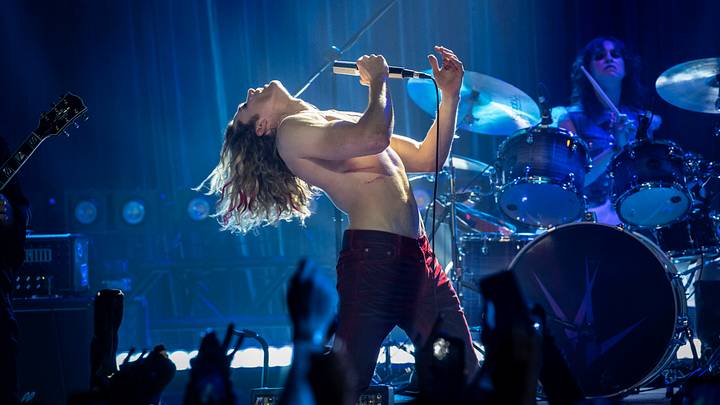
Lestat is touring and living his rockstar life now; in what is surely a tribute to Hedwig and the Angry Inch, every city, every stop on the Devil’s Road in the present gifts us with a new song, a new memory, a new stop on the train of Lestat’s past. The songs are certainly a good first attempt at exorcizing his demons, but most of them do not serve a self-analytical aim. They are about his relationships, not himself, and they spin tragic events from his life in a palatable way he can market to his fans. Lestat writes for all his muses — not just his past lovers, but everyone who had a defining hand in shaping him and the story of his life. Some songs are tributes, some are no more than sops, some others are a way to ragebait and provoke. The most heart-wrenching songs wiggle their way out of his heart.
As we get a privileged front row seat to Lestat’s traumas, an amalgamation of pain and wounds that never quite get too close, we truly see that his biggest weakness is the cursed loneliness that has haunted him all his life. It’s pure torture on him and us watching, because no amount of adoring fans seem to fill that chasm in his chest. More than once during the season, in his desperation, in his desolation, Lestat utters questions that echo Lucifer’s in Paradise Lost, and the creature’s in Frankenstein. His desire to be loved, to be known, overpowers every other need. The poetry of it all is beyond precious.
Obviously, while he is the titular and most central character, the season is not just about Lestat. Every character is living their own tragedy and chasing after something. Not wanting to sideline the show’s other protagonist, the creators wrote Louis an original arc. We get to see him try to explore and grapple with his grief, which will break the audience’s hearts just as much. Daniel, now a vampire, is in search of answers. Answers seem to be all Armand has to offer. The new characters will manage to carve a space for themselves in the grand scheme of things. Gabriella poses the show’s most problematic question — but she is certainly not written to appeal to everyone, nor is she, the character, in the business of appealing to anyone, really.

The cast stuns with their performances, but I would be remiss in not giving a virtual standing ovation to this season’s leading man, Sam Reid. Apart from embodying every last one of Lestat’s emotions (and there are many), he turned himself into a true rockstar this season, going above and beyond for this character. More clapping for our other main actors, Jacob Anderson, Eric Bogosian, Assad Zaman, Delainey Hayles, Jennifer Ehle, and to all the supporting cast. The show’s creators, producers and writers deserve formal recognition too. Daniel Hart, the series’ composer and now also in the writer’s room, has contributed immensely to making this season unforgettable. Give it up for Rolin Jones, Hannah Moscovitch, all the writers and directors, for every single person who’s contributed to this season, from the make-up artists to the geniuses behind every costume worn by Lestat. This season is truly Emmy-worthy, and I sincerely hope it will be considered for award season.
The Vampire Lestat’s greatest feat is the way it all comes together organically, in a series that has reinvented itself, that perfectly embedded the musical element, that flirts with the concept of structured narration, and plays with the medium itself.
This isn’t entertainment. It’s the most layered —and yet raw — form of storytelling. No other show is coming even remotely close to this.
The Vampire Lestat debuts on Sunday, June 7 on AMC and AMC+.
 Add us as a preferred source on Google