

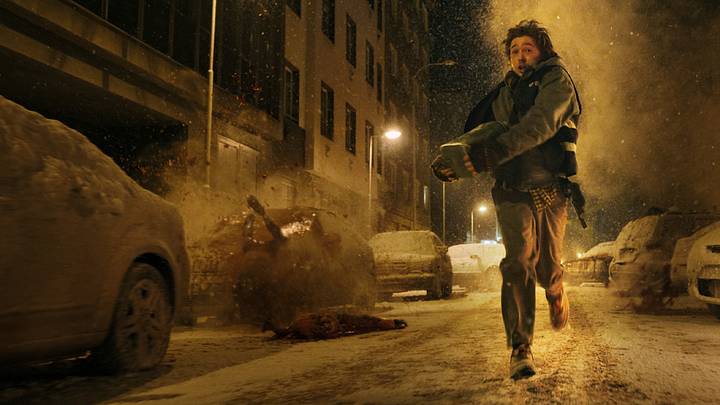
There was a time when video game adaptations seemed fated to be met with an underwhelming critical reception long before their release. Multiple films tried to crack the code behind how to adapt the gameplay experience to the big screen, and one by one, they failed to leave a mark on cinematic history. Fortunately, after many years of trial and error, the curse has finally been lifted.
Movies like Sonic the Hedgehog, Werewolves Within, and Mortal Kombat II managed to win over audiences' hearts in astounding fashion. However, there's no better example of a success story than Zach Cregger's Resident Evil (2026). Fans of Capcom's franchise were skeptical of the horror adaptation at first, especially since it seemed to take a huge departure from the games by featuring a completely original character and a story that isn't "canon" to the source material.
Despite the doubts, the horror thriller was released to critical and commercial success, and it did so by replicating the experience of playing a Resident Evil game rather than trying to be a 1-to-1 retelling of any of the games.

Video game adaptations can't cram a huge story into two hours
Part of the reason why shows like The Last of Us and Fallout have been so successful is that they have longer runtimes to bring events from the source material to life. This gives them more room to replicate the games' pacing while remaining faithful to their characters, stories, and mythologies. Movies, on the other hand, have a much more complicated task due to their shorter runtime.
The Resident Evil saga itself has deep lore filled with twists and turns that, to this day, is still being expanded upon. Multiple shady corporations have different roles to play, while countless characters have all tried to save the day in this horrifying world. Good guys can often have antagonistic roles in some games, and some villains find redemption by the end of their arcs. If you've played and completed Resident Evil Requiem, you know Capcom's iconic title gives players a huge report file that explains in detail all the events that have transpired in the franchise so far. But even then, some mysteries are still left unanswered.
Resident Evil (2026) doesn't try to go over all of the games' lore in one hour and 30 minutes. Instead, it settles for briefly referencing some of the experiments made by the Umbrella Corporation (which is perhaps one of the biggest players in the games' lore). Granted, one of the added benefits of horror movies is that they don't need to explain every detail of their story, given that ambiguity and mystery can also add to the fear factor. However, other upcoming video game films should try to follow this strategy.
The Legend of Zelda, Death Stranding, and Clair Obscur: Expedition 33 have massive stories that are often the subject of multi-hour videos and analyses. So their respective adaptations should try to follow the Resident Evil route and replicate the feeling of playing the source material, rather than copying the events of a specific game.

Films should try to replicate the experience of playing a game
The Resident Evil video game franchise has multiple trademark elements: ammo management, weapon upgrading, underground sections, a third act set in a laboratory, backtracking, and an unkillable monster that chases players throughout most of the campaign. The reason that Resident Evil (2026) successfully respected the source material despite forging its own unique path is that it also featured all these franchise staples.
Once audiences leave the movie theaters, they'll feel the horror and genuine fun of playing a Resident Evil game. In a similar manner, other adaptations should try to break down the iconic elements from their respective games and give them the spotlight on the big screen. Sagas like The Legend of Zelda have even been reinvented in the video game world over the last few years while still retaining their essence, and they accomplished this by keeping most of their core features intact. So, why shouldn't movies try to do the same?
Adaptations of very specific games could work better by doubling down on the lore, such as Elden Ring. After all, FromSoftware's latest title features a pretty ambiguous narrative that isn't directly explained to players on their first playthrough. So, a live-action adaptation could shine by presenting a clear prequel story and letting audiences meet some of the characters before the Shattering.
However, in most scenarios, it's enough for a film to stay true to the essence of a game, regardless of the lore implications. The Mortal Kombat II movie reinforces this idea, as it found success by featuring the trademark elements of its source material, like iconic combat arenas, a fighting tournament, and relentless (and very R-rated) action sequences with polished choreography.
Even if a video game adaptation features new characters or takes some creative liberties, it can find success by feeling like a new installment in the saga that honors everything that came before it. Resident Evil is a perfect example, and other films should try to replicate this success formula.
Resident Evil (2026) is now playing in theaters.
 Add us as a preferred source on Google