

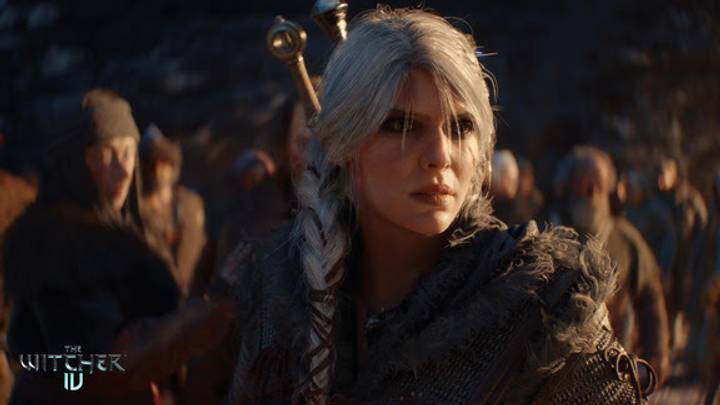
The Witcher franchise was dormant for nearly a decade in the video game world, but it has finally reawakened. CD Projekt Red's fantasy masterpiece, The Witcher 3: Wild Hunt, will get a free remaster this September that will introduce many quality-of-life improvements, including an overhauled combat system. Furthermore, an upcoming DLC titled Songs of the Past will be released in 2027 and will mark Geralt of Rivia's last adventure before he passes the torch to Ciri. But perhaps the most anticipated release in this mesmerizing world is The Witcher 4.
CD Projekt Red hasn't shown much about its upcoming video game, which is set to begin a new trilogy with Ciri as the main protagonist, but the little glimpses we've seen look absolutely stunning. Unfortunately, The Witcher 4 is set to come our way in 2028, and that's assuming it won't be delayed, unlike most other AAA titles. Needless to say, there's a long wait ahead of us. But there are plenty more fantasy games coming in the meantime that are bound to keep us distracted; here are five of them you should keep an eye on.
1. The Blood of Dawnwalker
Release date: September 3, 2026.
The Blood of Dawnwalker is, perhaps, the perfect game to play while we wait for Ciri's upcoming adventure. After all, its game director, Konrad Tomaszkiewicz, was also the game director on The Witcher 3. Similarly, many developers who used to work at CD Projekt Red—the masterminds behind The Witcher game saga—moved to Red Wolves Studios to craft this highly ambitious vampire RPG with interesting and innovative gameplay mechanics.
I haven't put many hours into The Blood of Dawnwalker just yet, but despite my limited time with the game, my story is completely different from others who have also played the title's opening hours. Without diving into spoiler territory, I watched a video where another player purposefully made every wrong decision possible and, much to my surprise, characters who are completely pivotal to my journey simply died in the other player's save file, proving that choices do matter here. Better yet, this astounding level of freedom also applies to the gameplay.
The Blood of Dawnwalker gives you exactly 30 days to rescue your family, or else they will die (or at least, that's what the game claims). Every single story mission you play will advance time for a certain number of hours, eventually changing the day into night and getting you closer to that terrifying deadline. Think of it like the time mechanic in The Legend of Zelda: Majora's Mask, except there's no way to rewind time. To make things even more interesting, learning new abilities and doing side quests can also advance time by verying amounts.
Players will need to think strategically about the best path to accomplish their goals. You can be like me and absolutely waste five entire days simply exploring the world and leveling up your character as much as possible. Otherwise, you could stick to the main story and try to rescue your family from the get-go. There's also another detail that greatly impacts how you experience the game: During the day, you're a normal human who's skillful with swords, but during the night, you'll turn into a terrifying Vampire who needs to feed on blood in order to avoid losing control.
This unprecedented level of freedom is coupled with an interesting, directional combat that actually has some teeth to it. In addition, there's an ever-changing story that is constantly shaped by your decisions. All of these elements combine to create an incredibly engaging RPG that will have you craving more, just as much as its titular character, Coen, craves blood.
2. God of War Laufey
Release date: February 16, 2027
The Witcher and God of War are two very different sagas. The former is an action RPG, while the latter is a full-blown action franchise that merely adopted some light RPG elements during its last two entries. Furthermore, The Witcher isn't necessarily known for tight and responsive combat, while that's the one aspect where God of War shines most. On the flip side, Kratos has never had a huge open world to explore, unlike Geralt of Rivia. But when it comes to iconic video game franchises set in fantastic worlds where magic runs rampant and players have to fight unimaginable horrors, these two are among the best.
God of War Laufey will mark a first in the franchise by shining the spotlight on Faye instead of Kratos. Additionally, players will also explore the afterlife of the Gods, called the Everywhen, where deities from all mythologies live, completely breaking the boundaries the saga carefully established. However, the upcoming game will be shaped by its fast-paced and violent fights, much like its predecessors. The only difference is that Faye's combat mechanics include a lot of verticality, as the fierce warrior is able to send enemies flying into the air, jump towards them, and keep the combo of hits flowing.
There is still a lot we don't know about God of War Laufey, its story, or its characters. However, the game's opening minutes are more than enough to signal that an incredible adventure is on the horizon, which could very well make the wait for The Witcher 4 feel shorter.
3. Fable
Release date: February 23, 2027
Fable and The Witcher are complete opposites tonally, but they both take place in fantastic open worlds filled with RPG mechanics and horrifying monsters for players to face. Furthermore, the two are about to share even more similarities between them with the release of the latest Fable game coming in 2027.
The Witcher 3's gameplay designer Paweł Kapała left CD Projekt Red in 2021 and worked as the Principal Gameplay Designer at Playground Games, shaping the combat mechanics of Fable (2027). Now, I know what you're probably thinking: If there's one element of The Witcher saga that other studios shouldn't try to copy, it's probably its combat. On the bright side, the gameplay deep-dive videos showcased by Playground Games so far have shown very intricate fights that merely have the DNA of CD Projekt Red's last fantasy title but seem to be much more polished.
Perhaps the one place where Fable (2027) gets the upper hand is its RPG mechanics. Players will be able to buy all the houses in a city, interact with every single one of the "1,000+ NPCs who bring Albion to life," and face extremely dire consequences due to the game's morality system. This immersive world begs for players to lose themselves in it. As a result, you can pour as many hours as you want into this upcoming adventure... or simply beat the main campaign, which should take you about 20 hours. That's the best part: It's up to players to decide how to approach the world of Fable (2027).
4. Warlock: Dungeons & Dragons
Release window: 2027
Out of all the games we've talked about so far, the one we know the least about is Warlock: Dungeons & Dragons. On the surface, it features a protagonist who is able to wield magical abilities, hunt monsters, and explore an ever-expansive open world filled with countless secrets and iconic landmarks. If it sounds familiar, it is because all of these elements are also a pivotal part of The Witcher's DNA. However, Warlock: Dungeons & Dragons seems to dive even deeper into the use of magic.
Players will take control of Kaatri, "an experienced veteran turned warlock" who can make things levitate, use her magic to traverse certain surfaces, and cast spells to pull objects from the environment, which is a useful skill both for traversal and combat. The reveal trailer for Warlock: Dungeons & Dragons also seemed to hint that players will be able to loot different materials and use them to create all sorts of incantations, including one that will be able to change the weather.
Warlock: Dungeons & Dragons also seems to have a heavy emphasis on hand-to-hand combat sprinkled with huge doses of magic in between. Kaatri will be able to confuse certain enemies and make them fight alongside her, even if just for a moment. Furthermore, she can temporarily remove some evil NPCs from the picture by making them levitate and leaving them hanging in the air.
After the incredible success of Baldur's Gate 3, video game players were eager to discover what the next Dungeons & Dragons game would be like, and Warlock certainly did not disappoint.
5. Kena: Scars of Kosmora
Release window: 2026
Ember Lab Studio, which had mostly worked in animation and TV, decided to embark on a massive journey by creating its first-ever video game, Kena: Bridge of Spirits. The 2021 title took the world by storm thanks to its charming, Pixar-like visual style. However, don't let the graphics fool you: The game's combat can be incredibly challenging, testing even the most experienced gamers on its highest difficulty.
But despite the fact that Kena: Bridge of Spirits was an extremely polished AA game, there was room for improvement, particularly in its story and the number of secrets and activities you could find in the world. Fortunately, a sequel was revealed this year, and it is already looking much more ambitious and bigger in scope than its predecessor.
While Kena: Scars of Kosmora has a 2026 release window, there have been growing concerns that the title will be delayed. After all, not only has it been absent from the most recent editions of PlayStation's State of Play presentations, but there is no breathing room for new games in the final months of 2026. That isn't helped by the fact that The Legend of Zelda: Ocarina of Time remake and Grand Theft Auto VI have basically taken over November as a whole.
With a bit of luck, we'll soon get more updates on Kena: Scars of Kosmora, and even if we need to wait a little longer than originally anticipated to play it, chances are that the game will definitely be worth it.
Bonus: Project Shadowglass
Release date: TBD
So far, we've talked about third-person action-adventure titles with varying degrees of RPG mechanics and realistic graphics (except for Kena: Scars of Kosmora, that is). So, to shake things up a bit, let's talk about Project Shadowglass—an indie title with a very unique 3D pixelated visual style that's unlike anything done before.
This first-person adventure seems reminiscent of the Thief saga, in which you had to stealth your way through multiple levels in search of hidden treasures. The main objective isn't to kill everyone in sight, but to find creative ways to infiltrate and escape dangerous places without being seen.
Project Shadowglass has very interesting mechanics, including 3D spatial audio, physics interactions between the player and the world, light and shadow detection, and more. This upcoming RPG seems pulled straight from a dark fantasy tale, and while there's still no release date in sight, a demo will be released later this year. Soon enough, we'll discover whether Project Shadowglass can make a name for itself in the very crowded space of fantasy video games.
 Add us as a preferred source on Google