

Trigger warning: This article contains discussion of child abuse.
Over the last few years, fantasy literature fans around the world have discovered the horrifying history of child abuse behind author David Eddings' prolific career. In today's day and age, it's hard to imagine how a story like stayed buried for so many years — not coming to light until after David and Leigh Eddings had both passed away. In some ways, that's just as shocking as the crimes themselves, and it's making many readers recontextualize their love for The Belgariad, The Mallorean, and other epics by this couple. Readers will undoubtedly respond to this revelation in all kinds of different ways, but in any case it's a major bombshell for the fantasy fandom in general to reckon with.
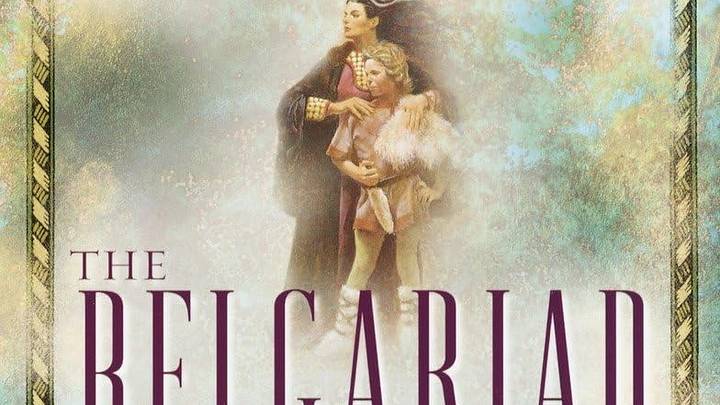
David Eddings is the credited author on the bestselling fantasy series The Belgariad and its sequel series The Mallorean — though he later credited his wife Leigh as a co-author, saying that she had been instrumental in writing all of his books. The two met as young adults while working at Boeing, and they married in 1962. Eddings did not find widespread success as an author until Pawn of Prophecy, the first installment of The Belgariad, was published in 1982. The series became a massive success, earning Eddings tens of millions of dollars and helping to advance the epic fantasy genre itself. However, even at the height of their fame, no one ever looked too closely at how the Eddings had spent the years before they struck gold.
We now know that the Eddings adopted a 2-month-old son in 1966, as well as a younger girl at some point in the next few years. In 1969, David and Leigh Eddings were arrested and charged with child abuse. This was widely reported at the time, with local papers sharing horrific details from the scene. They indicated that both children were restrained, struck, and perhaps seriously injured by the Eddings. Both authors were convicted and served one year in separate jails for their crimes, and lost custody of the children. The story seems to have been a regional sensation at the time, but it was never connected with the authors who rose to prominence two decades later.
The Eddings' lives make more sense after these revelations
David Eddings lived as a successful and relatively famous author for over 20 years at the end of his life, and he did not shy away from interviews or biographical information. That may be part of the reason this child abuse story remained hidden for so long — fans and journalists felt content that Eddings had shared everything about himself. Born in 1931, Eddings grew up in a suburb of Seattle, Washington and earned two degrees in literature there. Between his undergraduate and Master's studies, he was drafted into the U.S. Army and deployed to Germany. Finally, Eddings took a job as a purchaser at Boeing, where he met Leigh.
Shortly after they married, Eddings landed a job as a professor at Black Hills State College — now Black Hills State University — in Spearfish, South Dakota. He and Leigh moved there for most of that decade. It was there that they adopted their children, were convicted of abuse, and served their time in jail. After their release, the two moved to Colorado, and Eddings took a job at a grocery store. Years later, he would make his departure from academia into a self-effacing joke, saying that he left over a pay dispute and sometimes casting himself as stubborn in the matter.
Eddings had written two novels in college and a third while in jail. The third, High Hunt, would be the first to be published in 1973, but it was not successful. Eddings continued to pursue a career as an author while working in grocery stores — first in Colorado then back in Washington. Finally, Eddings tried his hand at fantasy and found massive success. He continued working in that genre until his death in 2009. Leigh preceded him in death in 2007.
Eddings' personal papers allow for speculation
It's been less than a decade since the online fantasy fandom began to connect Eddings criminal history with his career as an author, and many fans are still finding it out as they revisit The Belgariad. Naturally, many lifelong fans are shocked and horrified, and are struggling to reconcile their idyllic vision of Sendaria with the horrors described by The Black Hills Weekly. To top it off, Eddings donated a huge collection of his personal papers to his alma mater, Reed College, providing more clues and room for speculation.
Looking through the drafts, correspondences, journals, and other personal records Eddings left behind has given fans some wildly different interpretations of the author's legal trouble, but much of it amounts only to speculation. It seems fairly clear that the author was considering divorce from Leigh during their trial and jail time, as he discussed it in letters to his lawyer as well as his father. For whatever reason, the two chose to stick together instead, though Leigh did change her name after her release — she was born Judith Lee Schall.
Speculation and gossip aside, the archive of Eddings' personal papers provides a lot of insight into his own literary background, his creative process, and perhaps even his state of mind throughout his career. Journals indicate a years-long battle with alcoholism, with persistent, earnest efforts to change. Eddings also seems to have ruminated on the abuse that he himself suffered as a child, and the cyclical nature that abuse often expresses. In a 2020 blog post, critic James Gifford asserts that Eddings' novel High Hunt is highly autobiographical, perhaps indicating some self-reflection and exploration while the author was in jail.

Eddings' experience may be hidden in plain sight in The Belgariad
Gifford's post also brings up the question of how a re-reading of the Eddings' fantasy novels changes after the revelation of their criminal history. Some connections between the author and the fictional worlds he created are plain as day, while others are a matter of interpretation. It does seem notable that the hero of The Belgariad and The Mallorean, Garion, is an orphan raised by a mysterious adoptive family. While Garion does have consistent support from his "aunt" Polgara and his "grandfather" Belgarath, their familial life is necessarily unconventional, and Garion yearns for a rightful place in the world.
It's always dangerous to interpret characters and story arcs as analogous to the author's real life, but it's inevitable at the same time. Eddings may have been thinking of his own childhood when he wrote about Garion's idyllic upbringing on Faldor's Farm, or he may have been projecting the kind of life he dreamed of passing onto a child. It's easy to interpret Aunt Pol as a stand-in for Leigh, and it's notable how reverently the author writes about her. She is stern and stable, enforcing her maternal will with no question of disobedience right up until the fifth book in the series.
Eddings never seems to critique Polgara and Belgarath's parenting throughout the series. Garion's angry confrontation with Polgara in the second book, Queen of Sorcery, resolves with Garion apologetic and Polgara vindicated. In the fourth book, Castle of Wizardry, Garion yearns for Aunt Pol while they are apart, remembering her as a warm, nurturing presence. However, in all the books that come before, Polgara only embraces Garion a handful of times. For the most part she is an authority figure with an unyielding focus and little patience for questions or fancies.
Fans often interpret Belgarath as a self-insert character for Eddings himself, which is likely too simplistic to be the case. Still, this context makes it all the more interesting when we meet the spirit of Belgarath's wife, Poldera, in Castle of Wizardry. Here, we learn that Poldera actually started life as a wolf, not a human, and learned to shapeshift from Belgarath. Because their love affair started as wolves, it's more wild, more intense, and more permanent than any bond between humans. This seems extremely relevant for a man who considered divorce in the midst of unthinkable turmoil, then not only stuck by his wife but went out of his way to credit her as a co-author on all of his books.
There are countless ways we could re-interpret the Eddings' work with new knowledge of their personal lives, but it's a very limited pursuit in the end. There's a reason so many schools of literary criticism adopt the "death of the author" mentality. Still, Gifford's analysis stands out, and it may bring comfort to some fans. He wrote: "I now read Eddings’ later fantasy novels as an impossible attempt at atonement, a desperately failed wish put to paper, and a tortuously painful digging out of his and his wife’s shame."

Should fantasy fans stop recommending The Belgariad?
Engaging with novels and stories is always a highly personal affair, and context like this makes it all the more so. The revelations surrounding the Eddings' criminal past can't be summed up neatly, nor can their impact on their work and its fandom. For many, it's impossible to overlook the impact that The Belgariad and The Mallorean had on the fantasy genre, but for others it will be easy enough to kick under the rug. There's no right or wrong move there, only personal thresholds.
As for the material questions, Eddings was generous with his estate upon his death. The author left $18 million to his alma mater Reed College specifically for use in scholarships. Eddings' money goes to needs-based scholarships for students studying English and literature, as well as an endowed professorship in English. He also left $10 million to the National Jewish Medical and Research Center in Denver in honor of his late wife.
Eddings himself always encouraged his readers not to take his work too seriously. The author was known for his self-effacing humor about his own work, occasionally catching other authors and the entire fantasy genre in the crossfire. In one 1997 interview, he said that his favorite thing to hear was that his books had converted non-readers into readers. "I look upon this as perhaps my purpose in life," he said. "I am here to teach a generation or two how to read. After they've finished with me and I don't challenge them any more, they can move on to somebody important like Homer or Milton."
Now that Eddings' dark secret is finally spreading among his fans, perhaps more of us will take his advice and broaden our horizons as readers. The Belgariad is available now in print, digital, and audiobook formats.
 Add us as a preferred source on Google