

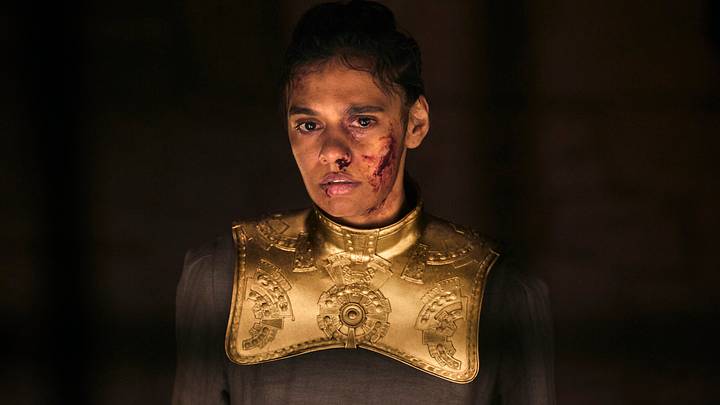
It's been more than a year since Prime Video canceled its television adaptation of Robert Jordan's The Wheel of Time, and I'm still grieving. Over the course of three seasons, the series helmed by showrunner Rafe Judkins found a passionate audience while constantly improving, presenting ever-better episodes the deeper it got into the sprawling story from Jordan's novels. There was much more to go, but alas, we shall never see it realized.
The Wheel of Time has been front of mind this week largely because Brandon Sanderson, the prolific fantasy author who wrote the final three books in the series following the death of Jordan in 2007, reflected on the show's run during a far-ranging interview with IGN. Sanderson is a fairly chatty author who isn't afraid to make his opinions known, which is part of why his fans love him so much. But when it came to The Wheel of Time adaptation, he often had some firm criticisms. In this latest interview, he walked a fine line between commiserating with the fans who were understandably devastated that the show was canceled after its best season, while remaining adamant that he wished it had stayed truer to the source material.
"I'm not one who thinks nothing can ever change in an adaptation, but there were alterations made here that led to an ever widening gulf between Robert Jordan's vision and the show," Sanderson said. "I feel there was a way to do what Amazon wanted and what the fans wanted, and maintain a little more clarity as to the themes of the books."
This isn't a sentiment unique to Sanderson either; just take one look at any comment section for anything Wheel of Time related across the internet, and you'll almost certainly find people who were distraught with the many liberties the show took. For my own part, however, I think The Wheel of Time did actually honor its source text far better than many other adaptations; it just did so in ways that were missed by parts of the fandom that wanted a 1:1 adaptation of Jordan's books, regardless of how good or even possible it would have been on television. This is especially true considering the real-world events that forced The Wheel of Time into some of those deviations, like recasting series lead Mat Cauthon deep into the filming of season 1, while grappling with production limitations imposed by the COVID-19 pandemic.
As someone who spends more time than most dissecting fantasy and sci-fi adaptations, I've seen plenty where the source material was tossed aside because the team behind the screen version simply didn't believe it was worth navigating (I'm looking at you, The Witcher season 2), but that was never the case with The Wheel of Time. Instead, what I see when I look at this series is a show that fought to stay as true to the spirit of the books as it could while adapting a borderline un-adaptable story in a coherent way, all while fighting against real-world production issues that put it at an almost constant disadvantage. The Wheel of Time is a series which always felt like it wanted to get closer and closer to Jordan's books, rather than go farther afield. And we saw the proof of that clearly in season 3, which was the best and most faithful season of the series by far.
In light of all that, we're looking back at 10 ways The Wheel of Time wore its love of Robert Jordan's source material on its sleeve. Dovie'andi se tovya sagain!

1. Casting
One of the foundational building blocks for any television series is its cast; miscasting even one core character with an actor who doesn't fit them well can have a butterfly effect that ripples outward, throwing everything out of whack. That's especially true with a series like The Wheel of Time, which features thousands of named characters, many of whom fulfill important roles throughout the books.
Fortunately, casting is one place where The Wheel of Time television show excelled. Not every single casting was 100% perfect to Jordan's descriptions, but so many of them were that it's hard to imagine a better-cast version of this series. Rosamund Pike as Moiraine Damodred, Josha Stradowski as Rand al'Thor, Madeleine Madden as Egwene al'Vere, Natasha O'Keeffe as the magnetically villainous Lanfear...there are so many pitch perfect castings in this series. It's very clear that the casting department of The Wheel of Time understood the assignment.

2. Costuming
Another part of The Wheel of Time's production that never less than immaculate was its costuming. Under the direction of the inimitable Sharon Gilham, Prime Video's series created lush and unique outfits for everyone from Aes Sedai sorceress to Seanchan warriors, monied aristocrats to backwater sheepherders, and everything in between.
Robert Jordan was one of those fantasy writers who described his world in extreme detail, and that included things like clothing, food, and decor. By putting so much effort into bringing these elements to life in the show, The Wheel of Time does his work proud.

3. Realizing Robert Jordan's world
A huge part of what makes an epic fantasy epic is the worldbuilding. Is the setting so vast and evocative that it feels like a real place? Do the characters go on winding journeys across its landscape that leave them irrevocably changed? Does the sense of wonder captivate the reader or viewer, transporting them into another world?
Robert Jordan's Wheel of Time books are one of the best examples in the fantasy genre of a living, believable world filled with secrets and lore so deep you need an encyclopedia to navigate it all. (Several of which have been published for The Wheel of Time, in fact.) And just like with the costuming and casting, this is one place where Prime Video's series rose to the occasion. By building expansive sets for places like Emond's Field and Tar Valon, the production created immersive playgrounds to film its scenes. But it didn't stop there; this series also filmed in countries around the world, from South Africa to the Czech Republic and beyond, all to create a vividly realized version of Robert Jordan's fantasy world on screen.
This is all the more impressive when you look at some of The Wheel of Time's contemporaries, like House of the Dragon or The Lord of the Rings: The Rings of Power. Both of those shows primarily use sets instead of real locations, and the difference is noticeable.

4. Leaning into the weirdness
While The Wheel of Time utilizes a lot of high fantasy trappings that are familiar in the genre, it also, quite frankly, loves to just get weird. The way Robert Jordan's world and cultures were built, it felt like he was never afraid to go out there and put something truly odd or mind-bending into the story if he could make it fit, like the cultural peculiarities of the Seanchan, or a portal to a pocket dimension inhabited by snake-like or fox-like beings who told devastating truths or made poisoned bargains.
Parts of that weirdness would have been understandable for The Wheel of Time TV show to leave out, but instead, it veered hard in the opposite direction, not only including all the weird bits of the books, but sometimes going the extra mile to make them even weirder. Seeing an Eelfinn on screen is the sort of thing Wheel of Time fans dreamed of for decades, and this show got the essence of the books down well enough that it wasn't afraid to make that a reality.

5. Expanding the small details
For every piece of The Wheel of Time story that Robert Jordan makes explicit, there are 10 other little details that he leaves in subtext, or only hints at in the barest sense. While the TV show received a fair amount of backlash from diehard book fans for spending time on things like Moiraine and Siuan Sanche's relationship or the Aes Sedai Alanna and her warders, rather than devoting more screentime to main characters like Rand or Perrin, much of that was in service to the bigger picture in a way that feels true to Jordan's style.
Nearly all of these expansions that The Wheel of Time show made were drawn from those small hints in the books, or done to lay a better groundwork for future moments. Moiraine and Siuan having had a romantic relationship is strongly hinted at in the prequel novel New Spring, and in the main books, we never see enough of Moiraine's interiority to know the true depth of her feelings by that point. Alanna plays a major role deep in the series, and all that careful set up with her warders stood to make it 10 times more of riveting than it was in the novels.
I agree that The Wheel of Time could have probably balanced out these side stories with its main players a bit better, but given how many of these expansions have their roots in the text, it's just one more testament to how hard the show worked to honor its source.

6. Choosing the right moments to spotlight
Over the course of its three seasons, The Wheel of Time developed a uinque cadence where it spent one or two episodes a season shining a strong spotlight on one specific character, highlight some of the most important moments of the story. In season 1, we got an episode which centered Moiraine at the White Tower; while that one isn't drawn from the book, it still holds up as one of the best episodes of the season. Seasons 2 and 3 went even closer to the source material, with episodes that revolved around Nynaeve al'Meara's Accepted trial in the White Tower, Egwene's torture at the hands of the Seanchan, Rand al'Thor's journey through the past in Rhuidean, and Perrin's leadership during the Battle of the Two Rivers.
Not every adaptation manages to pinpoint the story's highs as well, and The Wheel of Time did a great job of figuring out how to approach these utterly iconic parts of the saga. Sometimes that meant keeping things relatively faithful, as we saw in Rand's visions. In others, it meant expanding specific passages of the books into a more dramatic interpretation for the screen, like Egwene's episode, which is largely based on a single paragraph in The Great Hunt.

7. Casual lore drops
One element which often makes sprawling epic fantasy tales feel so massive isn't the deeply developed aspects of its lore, but rather the casual mention of people, places, and events which make the history of the story feel limitless. Robert Jordan is one of the masters of the genre in this respect. He loved to sprinkle tantalizing tidbits of lore throughout the books, often glossing over them in ways that made them feel totally normal to the people inhabiting the story, while serving as a fascinating hook that drew in fans for years.
This is something that Prime Video's series got right. So many conversations are littered with little references that expand the world in the exact same sort of way that Jordan did with his books. For example, in the season 2 premiere, there's a reference to the shrewdness of Sea Folk traders while Moiraine is bartering with the ship captain Bayle Domon; however, we don't actually meet the Sea Folk in the show until season 3. There are tons of little moments like this, and they make a huge difference in the authenticity of this fantasy world.

8. The magic
Arguably the most challenging aspect of adapting The Wheel of Time for the screen is how to depict the story's magic. Robert Jordan described the way "Channeling" magic worked in his universe at length, painting vivid mental pictures as his characters focused on visualizing these mystic forces at work. The "weaves" of magic come in different elements, keyed to different colors, while the male and female halves of the "One Power" also have their own distinctive characteristics.
The books depict all these things in a way that only the written word can, making the absolute most of the medium. However, the television show did incredible work in this respect as well. Before The Wheel of Time aired, this is one aspect I expected the series to struggle with, however it ended up being the exact opposite. The show's depiction of magic was breathtaking, and it captured so many of the little details from the books well, from the different colors of the weaves, to their fluid motions, to the darkness of the "taint" on the male half of the One Power which drives men who Channel mad.

9. The Forsaken
Few book series feature as memorable of a rogues gallery as The Wheel of Time's Forsaken, ancient Channelers sworn to serve the Dark One who hound Rand and his allies throughout the entirety of the series. In the books, there are 13 of these magic wielders who take on varying roles of prominence as the story goes on. In the show, there are eight.
While that might make it seem like the TV series opted to limit their involvement, this isn't the case at all. The Forsaken are much more developed out of the gate in the show, and when they are featured, The Wheel of Time pulls out all the stops to make them as much of a highlight as possible. Ishamael, Lanfear, and Moghedien all enraptured viewers, while the devious Rahvin was set up to become the main villain of season 4.
The Wheel of Time had a great grasp of what made the Forsaken so appealing in the book, and whenever it could, it dialed those elements up even further.

10. Long-game foreshadowing
The Wheel of Time is one of the all-time greatest fantasy stories, and part of what makes it so notable is its length. The series spans 14 mainline books and a prequel which tell one continuous narrative, making it one of the longest-running tales the genre has to offer. But with that length, it should come as no surprise that there are secrets Robert Jordan seeds early on which aren't resolved until many books later.
With television adaptations, there's always a temptation to stay focused only on the season at hand; after all, there's no guarantee of future seasons for most series, so using screentime to set them up comes with the risk of wasting time that could have been better spent on the current drama. But with something like The Wheel of Time, that foreshadowing is an essential part of what makes the overall arc of the story fulfilling.
As with so many other aspects of Jordan's books, this is something the creative team behind the show understood well. Hints about the ultimate fate of characters or simmering plot twists appear constantly in the series. For new fans, they may simply feel like little details that make the world more lively. But for those who have read the books, these hints shine as brilliantly as a beacon, signaling that The Wheel of Time knew just what we expected to see in the long run and wanted us to know these pivotal moments destined to play out in the show as well. I'm still upset that we won't see many of these excellently foreshadowed moments come to fruition.
The Wheel may have willed that Prime Video's TV series come to an end, but there will always be the books written by Robert Jordan and Brandon Sanderson. With time, history may yet remember The Wheel of Time as a series that did its best to honor one of the most complicated fantasy book series of all time, and succeeded in its own way despite the odds.
 Add us as a preferred source on Google