

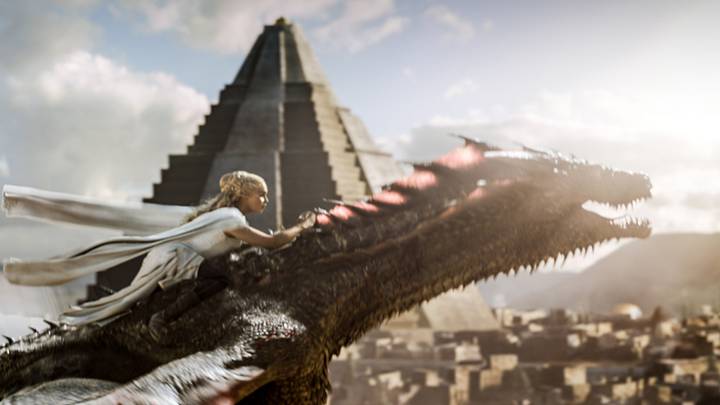
George R.R. Martin's A Song of Ice and Fire is one of those rare fantasy series that feels like a truly live-in world, complete with different cultures, characters who act like real people, complex politics, mysterious magic, and so much more. While it's pretty much a hallmark of the fantasy genre to have many of these trappings, it's much less common to see them executed with the level of detail presented in the Game of Thrones books.
Considering that the last mainline A Song of Ice and Fire book, A Dance with Dragons, was released all the way back in 2011, and the last Westeros novel in general, the Targaryen history Fire & Blood, came out in 2018, longtime readers of the series have gone quite a while without experiencing anything new in the Seven Kingdoms.
Fortunately, there are many other exceptional fantasy series out there today. Some of them even have worlds that are just as vast and rich as A Song of Ice and Fire. We've been waiting more than a decade and a half for Martin's penultimate novel, The Winds of Winter, so at this point it's safe to say that no matter how much you miss the Seven Kingdoms, it's time to broaden your horizons to other books and authors.
Here are 16 fantasy and sci-fi book series that will transport you to magical realms and expansive galaxies, each with enough depth to make fans of Westeros feel right at home.

1. Malazan Book of the Fallen
When it comes to detailed fantasy worlds, it's hard to beat Malazan Book of the Fallen, the dark, sprawling epic from Seven Erikson. This series is notoriously dense to the point where it's not typically recommended for new fantasy readers; it's good to have at least some familiarity with the genre before tackling Malazan, because Erikson does not hold your hand with this one.
Malazan Book of the Fallen tells the story of the Malazan Empire, and the many heroic and villainous figures who either try to expand its grasp onto its neighboring countries or bring about its downfall. Erikson has a background in anthropology and archeology, so the world itself is insanely detailed, filled with magic and lore and distinctive cultures that all intersect in fascinating ways. This story is personal, but also deific in scale. If you want a dark epic fantasy that you can really sink your teeth into, Malazan probably is that series.
There are 10 books in the original Malazan Book of the Fallen, as well as numerous novellas and several other novel series that take place either before or after the main sequence, which are written by Erikson and his longtime Malazan collaborator and friend, Ian Cameron Esslemont. It's not an exaggeration to say that Malazan is a fantasy world which can keep even the most voracious reader busy for years.

2. The Wheel of Time
Robert Jordan's The Wheel of Time is perhaps the single greatest instance of continuous long-form fantasy book storytelling, and while it does show a few signs of its age, it's still a pillar of the genre for a reason.
The Wheel of Time follows a group of friends from the idyllic village of Emond's Field who are swept up in a millennia-long struggle between the forces of good and evil. Each has a role to play, but one in particular is a mythic figure known as the Dragon Reborn, a reincarnated hero who is prophesied to either save the world or break it in his quest to defeat the Dark One. Magic plays a major part in The Wheel of Time thanks to the prominence of the Aes Sedai, a group of sorceresses who hold massive influence over the world and its many nations. The Aes Sedai, as well as all of the various cities and peoples the Emond's Fielders encounter on their travels, are as fleshed out as any in the genre.
Part of what makes The Wheel of Time so legendary is that it's telling the same story over the course of the entire series, rather than hopping to different time periods or casts like many other long-running fantasy sagas. Across 12 books penned by Robert Jordan and another 3 by Brandon Sanderson — who completed the series after Jordan's death — readers live the journey of characters like Rand al'Thor and Nynaeve al'Meara, coming to know them just as well as if they were real people making their way through a living world.

3. Brandon Sanderson's Cosmere
Since we just mentioned Brandon Sanderson, now is a good time to talk about his own masterwork as well. While it'd be easy to highlight Sanderon's best-known book series like Mistborn or The Stormlight Archive, both of which are flush with worldbuilding on par with Thrones, if you really want to appreciate the full breadth of what Sanderson has done you need to go a bit broader.
The Cosmere is an interconnected universe of fantasy stories set on different planets, all of which are are rooted in a shared mythos that is gradually revealed through its various volumes. Stormlight and Mistborn are the two central series of the Cosmere, but there are a number of other important books that tackle different worlds and time periods in it, like Elantris, Warbreaker, Tress of the Emerald Sea, and Isles of the Emberdark. Each of these books and series fills out different corners of the Cosmere.
One of the coolest things about the Cosmere is how these different planets grow and change over time. Each have cultures that come across both within their worlds and on a planetary scale, and those cultures change with the times and march of technology. If Martin's A Song of Ice and Fire is like a game of Risk in a fantasy world, Sanderson's Cosmere is more like Civilization, where the grand progress of the universe itself is as riveting in its own way as the many compelling personal tales that lie within it.

4. Tolkien's Legendarium
Tolkien's Middle-earth may seem like a no-brainer recommendation for ASOIAF fans, but it would be a disservice not to mention it. The Lord of the Rings is one of the foundational works of the fantasy genre, and its worldbuilding is still head and shoulders above many modern series, thanks in no small part to J.R.R. Tolkien's extensive work to bring the cultures, languages, and peoples of Middle-earth to life.
While you may have already read The Lord of the Rings and The Hobbit, unless you're a Tolkien scholar there's a good chance that there's more of Middle-earth still out there for you to experience. Like Sanderson's Cosmere, Tolkien wrote or drafted a number of other stories set in his iconic fantasy world, many of which were completed posthumously by his son, Christopher Tolkien. The Silmarillion tells the broad story of the First Age, when the original Dark Lord Morgoth tried to conquer the world, and the Second, when his lieutenant Sauron made his own bid for power by forging the One Ring. Then there are other tales like Beren and Lúthien and The Children of Húrin, which expand some of the great stories from the First Age out into proper standalone novels.
All these works, which together are known as Tolkien's Legendarium, are part of one of the richest fantasy worlds ever created, which was a massive influence on George R.R. Martin and basically every other writer in the genre.

5. The Dragonriders of Pern
Anne McCaffrey's Dragonriders of Pern is a bit different from the series we've talked about so far in that it's a fantasy story set on a sci-fi world. While there are no shortage of combinations of fantasy and sci-fi out there today, there aren't many examples like Pern, which features a culture of dragonriders that have flourished on an alien world.
Beyond the setting, another thing that makes Pern so unique is its antagonist. The primary threat of this series isn't some evil overlord, but a natural disaster that periodically rains noxious "Threads" down on the planet. Dragons are one of the only defenses the people of Pern have, as a skilled dragonrider can burn some of the Threads before they reach the surface, preventing them from devouring whatever they touch. Literally everything about the culture of Pern has grown up around this devastating phenomena. It's a fascinating combination of a medieval-coded dragon culture with different villages (called weyrs) vying for dominance, all while they struggle against a seemingly unstoppable force of nature.
There are more than two dozen books set on Pern, including primary sequences of novels and standalones set at different places along the world's sprawling timeline, along with shorter fiction as well. If you want to start at the beginning, pick up Dragonflight.

6. The First Law
The First Law world is one of the most beloved in dark fantasy, and of all the series on this list, in my opinion it comes the closest to Martin's Westeros. Joe Abercrombie has written three different series set in this world: The First Law trilogy, a set of three standalones, and The Age of Madness trilogy, which takes place a number of years later and follows the next generation as this dark fantasy world lurches into its industrial age. This means that the full experience of the saga holds multiple complete stories, each extremely compelling in their own right.
The original First Law trilogy follows Logen Ninefingers, a barbarian warlord who tries to leave his fearsome reputation behind but is ultimately drawn back into the cycle of violence, thanks in no small part to the machinations of the devious, abrasive wizard Bayaz. While you can certainly dive into other parts of Abercrombie's world first, this sequence, which begins with The Blade Itself, is the best introduction. It gives a great taste of the gritty, brutal setting, as well as the morally bankrupt people who populate it.
Abercrombie's First Law world is somewhat unique in that the author purposely leaves parts of it shrouded in mystery, giving himself space to flesh them out as needed when they become relevant in later books. He famously did not include a map with the original printings of those first three books, relying instead on creating as immersive an experience as possible through the text itself. Time has validated Abercrombie's approach, because by this point the world of The First Law has become one of the most well-known and celebrated staples of grimdark fantasy.

7. The Expanse
You may know The Expanse from its six-season television adaptation which ran on SyFy and Prime Video from 2015 to 2022, but even if you watched the show and enjoyed it, the book series holds enough differences to make for a fresh experience that will still keep you guessing.
James S.A. Corey's space opera takes place in a near-future where humanity has colonized the solar system, splitting over time into three distinctive factions: the old political superpower of Earth, the military culture of Mars, and the scattered space-dwelling peoples of the asteroid belts, known as Belters. These factions have ever-evolving dynamics, shifting fluidly from allies to enemies throughout the series as they contend with the sudden emergence of an alien substance known as the Protomolecule.
The Expanse is a new classic of the sci-fi genre, but parts of its DNA will feel very familiar to A Song of Ice and Fire readers. The books are split between multiple point-of-view characters in a way that's reminiscent of Martin's series, and the attention to detail in this imagined solar system is ridiculously immersive. To top all that off, authors Daniel Abraham and Ty Franck — who write the series under the pen name James S.A. Corey — have both worked with Martin in different capacities in the past. I'd say they picked up a bit of his magic in the process.
This completed series spans nine books total, as well as a short story collection which brings together all of Corey's smaller but no less essential works in the franchise.

8. Dune
Frank Herbert's Dune is a series which truly needs no introduction. Considered one of the pillars of the science fiction genre, Herbert's seminal 1965 novel still holds up as a masterclass in slow-burn, philosophical space opera storytelling. The first book is all about Paul Atreides, a young man who is forced onto a bloody path toward becoming a messiah to the people of the desert planet Arrakis, who in turn spread his will across the galaxy in a holy war that leaves utter destruction in its wake.
But Paul's story is only the beginning of Dune. Herbert wrote six books set in this universe during his life, but Dune truly expanded as a book franchise when his son Brian Herbert and co-author Kevin J. Anderson took over. Starting in 1999, Brian Herbert and Anderson began churning out Dune books with dizzying consistency, expanding all sorts of aspects of the lore, from specific characters to important historical events and the backstory of various factions. These books are still being released today, so Dune remains an ever-expanding world that shows no signs of slowing down.
With Denis Villeneuve's Dune: Part Three movie due to hit theaters this winter, now is a very good time to become more familiar with the wider mythos of Dune.

9. The Green Bone Saga
Not every series with deep worldbuilding needs to be a million books long. Sometimes, a good trilogy is enough to do the trick. That's the case with The Green Bone Saga, Fonda Lee's urban fantasy series consisting of Jade City, Jade War, and Jade Legacy.
The Green Bone Saga primarily takes place on the island of Kekon, which is this modern fantasy world's sole source of magical jade which gives its wearers heightened physical abilities. The island is ruled from the shadows by crime families; when the saga starts, the patriarch of one of those families is ailing, while another seeks to solidify its chokehold on the island's jade — and thus, the island at large. This series is extremely unique; I'd compare it to a flawless blend of a crime family story like The Godfather with thrilling martial arts sequences and worldbuilding largely inspired by East Asian cultures.
Lee is utterly meticulous in her approach to fleshing out Kekon and the world beyond. You don't need 10 books to get lost in this series; right from the first sentences, it's clear readers are in the hands of a master at her craft.
The Green Bone Saga trilogy's format is another part of what makes it such an engaging read. Jade City is all about the struggle for control on Kekon; Jade War expands its focus to the rest of the world as other countries begin to stake their own claims on Kekon's jade; and Jade Legacy expands even further, taking a wide eye to the series' timeline in order to explore how one generation of these hard-edged crime families passes their grudges, successes, and failures on to the next.

10. Michael J. Sullivan's World of Elan
Michael J. Sullivan is a legend in the indie fantasy space, and that reputation is well warranted. His Riyria Revelations books carved out a passionate fanbase when he first self-published them in the early 2000s; later, he made the leap to traditional publishing, re-releasing The Riyria Revelations books as well as two separate prequel series set in the same world: The Riyria Chronicles and The Legends of the First Empire. Then he went back to self-publishing to expand his world even more, with no limitations but what his own imagination could conjure.
Today, there are 21 novels published in Sullivan's Elan Saga spread across four series — with another dozen or so books and two more series planned down the road. These stories tell the full breadth of the fantasy world of Elan's history, from the formation of the empire which charted its future, to the exploits of an unlikely pair of mercenaries who rise to prominence long after that empire has become naught but dust and ruins. If you want to go deep on the full march of time in a fantasy world, it's hard to find a better option.
The original Riyria Revelations series spans six books (compiled into three omnibuses) that follow Royce and Hadrian, a thief and knight who are sucked into a kingdom-toppling conspiracy that puts them on the run to clear their names. The Riyria Chronicles, which spans five books, show how Royce and Hadrian first met and became partners. The Legends of the First Empire is a mythic six-book fantasy series that explores the ancient origins of this world, while the three-book series The Rise and Fall chronicles the ebb and flow of the great Novron Empire, which ruled for centuries and has faded into the past by the time of the original books.
Sullivan's latest book, Out of the Ashes, starts a brand new series which covers the time period after The Rise and Fall. Truly, no stone is left unturned in Elan.

11. The Realm of the Elderlings
Robin Hobb's Realm of the Elderlings is another one of those iconic fantasy sagas which began years ago and has endured the test of time, inspiring many of today's rising genre authors. It's a grand tale of magic, assassins, and political intrigue which also has a deep focus on the personal stories at its heart. If you love characters who make you writhe with frustration in your reading chair as they commit to bad decisions, you'll probably thoroughly enjoy the first books of Hobb's series.
The Realm of the Elderlings is a massive, completed fantasy saga that spreads across five different book series. The Farseer Trilogy is where it all began; it tells the tale of a young royal bastard named FitzChivalry who becomes an assassin's apprentice, and how he navigates the world and its wild magics.
But depending on your particular mood, you can also dive into the Realm of the Elderlings with one of its other series, like the nautical adventure Liveship Traders or the dragon-centric Rain Wild Chronicles. There's a great breakdown over at Reactor of how to approach reading Hobb's books, but no matter where you begin, you can rest easy knowing you're cracking open one of the most beloved and expansive works in the genre.

12. The Empire of the Wolf
If you'd prefer a sprawling fantasy world where you can still get in closer to the ground floor than some of the others on this list, the stories of Richard Swan's Sovan Empire are a solid choice. This dark fantasy world features a vividly realized empire which is in a state of constant flux with its neighboring countries as its colonial tendencies expand and contract over time. There's a flavoring to the tone and style of this series that fans of Joe Abercrombie will enjoy, but Swan's approach is still so uniquely his own that it stands well apart.
The Empire of the Wolf trilogy is a fantasy mystery that moves more toward epic fantasy in some of its latter stretches, and those mystery elements make it somewhat unique in the genre. It follows Sir Konrad Vonvault and his protégé Helena Sedanka as they seek to unravel a murder that leads to eldritch horrors neither could have anticipated. Vonvault is an Emperor's Justice — investigator, lawyer, judge and executioner all rolled into one, with a bit of necromancy tossed in for good measure. The focus on the legal intricacies of the Sovan Empire might seem like something that would be a bit dry at first glance, but Swan writes with such vigor and humor that he somehow makes jurisprudence as engaging as fantastical battles.
Beyond the original trilogy, Swan has penned a standalone prequel novella titled The Scour, which explores one of Vonvault's earlier adventures, as well as the first two books of a sequel trilogy, titled The Great Silence. The latter is set long after Vonvault's time, when an ominous new supernatural danger begins to emerge that threatens not just the human population of this world, but mermen and other fantastical beings as well. It's a combination of epic fantasy and horror in the best way, with some truly haunting passages that linger long after you've read the final page.

13. The Drowning Empire
The Drowning Empire by Andrea Stewart is a finished dark fantasy trilogy which began with The Bone Shard Daughter. Set on a world of drifting islands in an endless ocean, this series tells the story of Lin, the emperor's daughter, who discovers a horrifying secret about her past with far-reaching implications. While Lin wrangles with the intrigues of the palace, the rogue sailor Jovis becomes an unwilling folk hero after he begins manifesting strange magical abilities.
These books feature an East Asian-inspired fantasy world with elemental magic reminiscent of Avatar: The Last Airbender, as well as an entirely different magic system predicated on the titular bone shards, which are essentially runes that can be used to program monstrous constructs that would fit right into a horror movie. Stewart strikes that balance perfectly, all while throwing in a healthy dose of romance that will keep romantasy fans very happy as well.
On a worldbuilding level, part of The Drowning Empire's appeal is the depth of the history at play. There are mysteries in the present, but so many of them lead to lore that spreads back decades, and then centuries. The culture of the different islands varies depending on their prominence in the empire, and we see all of it from several angles thanks to Stewart's use of multiple viewpoint characters, who are realized with an uncommon blending of first and third-person narration that makes for a very fresh reading experience. And of course, the action and magic are spectacular. Oh, and did I mention it has one of the best animal companions in modern fantasy?
If you enjoy The Drowning Empire, Stewart is about to release the third and final volume of another trilogy this November, titled The Hollow Covenant. That series takes place in a different world, but it has enough of the author's hallmarks that it's a very natural expansion for those who get hooked on The Bone Shard books.

14. Between Earth and Sky
While many fantasy sagas are set in medieval European mileaus, we're living in a time where other cultures are being explored in the genre more than ever. One of the most notable fantasy stories of recent years set outside those typical trappings like knights and castles is Between Earth and Sky, Rebecca Roanhorse's trilogy which draws inspiration from the early empires of the Americas, like the Maya and Aztec.
Beginning with Black Sun, this series weaves a spellbinding tale of doomed prophecy and political power plays, with characters from disparate corners of the map drawn together as celestial events convene in the heavens above. At its heart are Serapio, a blind priest of the crow god destined for a terrible fate, and Xiala, a foul-mouthed female sailor from the island-dwelling Teek tribe. They journey to the plateau-bound metropolis of Tova, where the known world's spiritual leaders and ruling clans prepare for a massive shift in the balance of power, totally unaware that Serapio's coming will upend all their carefully laid plans.
Between Earth and Sky is a finished trilogy, and it's Roanhorse's masterpiece. The worldbuilding is fresh and interesting and deeply researched, while the characters sing on the page and the story's many twists and turns are often shocking in the best way. It won the Hugo Award for Best Series in 2025, beating out tough contenders like Brandon Sanderson's Stormlight Archive, so you know this is a series well worth checking out.

15. The Witcher
While The Witcher has been an iconic fantasy series in Poland for many decades, in recent years its popularity has exploded thanks to CD Projekt Red's mega-hit video game series, which resulted in new translations of the books in other countries and a big budget Netflix adaptation. If you've been curious about Andrzej Sapkowski's original novels and short stories, they've never been more accessible.
The Witcher is the story of Geralt of Rivia, a mutant monster hunter who often finds himself in situations that beget deep moral quandaries. Who is more monstrous: the beasts acting on instinct, or the human making horrific choices? These sorts of questions almost always lie at the heart of Geralt's adventures, and because of it there's an emotional weight to this series that goes well beyond the witcher's swashbuckling.
Geralt has one of the best supporting casts in the genre. His sorceress lover Yennefer of Vengerberg is ever imperious, powerful, and utterly headstrong in ways that simultaneously chafe and inspire affection. His adoptive daughter Ciri is a princess on the run who wants nothing more than to wield a sword, but destiny has other plans that make her a target for vitually everyone. The bard Dandelion is philosophical and absurd by turns, and never fails to get a groan or a gruff retort out of the witcher. There's a conversational quality to Sapkowski's writing that makes them all feel real in a way not every story achieves.
Of course, Sapkowski's world is also deeply realized as well. From Kaedwen to Redania and the Nilfgaardian Empire, there are a number of powerful cultures at play in The Witcher that each stand apart from the others. The Continent is inspired by the countries and cultures of Eastern Europe, and it makes for a distinctly different tone than so many other fantasy series out there.
There are nine Witcher books in all. The Last Wish and Sword of Destiny are short story collections which serve as the entry point for Geralt's adventures; the main Witcher Saga novels span five more books that tell Geralt's biggest and most epic tale; and then there are two standalone prequels, Season of Storms and Crossroads of Ravens, which tell longer stories set during Geralt's younger years. I'd recommend starting at the beginning with The Last Wish.

16. Terry Brooks' Shannara
When it comes to fantasy worlds with immense worldbuilding, Shannara always deserves to be in the conversation. The first book in Terry Brooks' world, The Sword of Shannara, was released in 1977 and became the first fantasy novel to ever hit the New York Times paperback bestseller list. In many ways, he is considered a spiritual successor to Tolkien, with a world that similarly features elves, dwarves, humans, druids, and halflings battling dark forces.
In some ways, those similarities run a bit too deep in Brooks' earliest books, but Shannara quickly distinguishes itself on its own merits. There are currently 35 books set in this fantasy world, most of which are broken up into separate sequences that explore different time periods and characters. There's no question that it's a worthy choice to scratch that fantasy itch, with enough material to stay immersed for the long haul.
While Brooks' choice of fantasy races will feel familiar, one of the most intriguing aspects of the Shannara world is that it's actually a post-apocalyptic version of our own. There are whole other books in a tangentially related series that explain that connection and how we got from skyscrapers to druid councils, so this unique bit of lore is expanded on in all the right ways.
With so many books, Shannara can be a little intimidating to figure out where to start. Terry Brooks discusses this broad fantasy world over at his website, offering some guidance on the best approach.
With so many great fantasy series available these days, there has literally never been a better time to be a fan of the genre. We may not be reading The Winds of Winter any time soon, but as we've discovered, there are so many other incredible options out there that you can stay busy reading for years to come regardless.
 Add us as a preferred source on Google