

Now that House of the Dragon season 3 is over, it's easier to see how each character arc was designed to work within the overarching storyline. The writers have a difficult task in adapting George R.R. Martin's "fictional history book" Fire & Blood, of which this season covered about 30 pages.
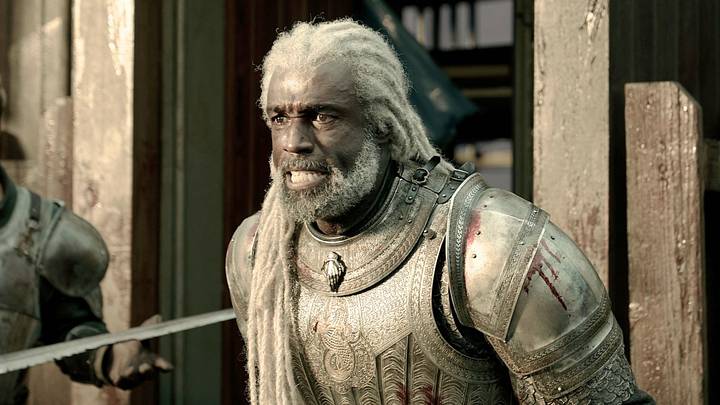
Once again, they managed to make a relatively cohesive story, with detours for all the major characters that paralleled and intersected each other. However, the glaring exception seems to be Lord Corlys Velaryon (Steven Toussaint), who felt strangely disconnected from the other events of the show. Looking back at season 3 as a whole, it's hard to understand why Corlys' story was written and paced the way it was.
Corlys Velaryon is a major player in the game of thrones at this time in Westerosi history, and he has driven a lot of action in House of the Dragon so far. He is one of the wealthiest and most politically powerful lords of the era, with decades of experience on the Small Council of King's Landing—not to mention the wisdom he earned before that traveling the world and fighting in wars. With that in mind, Corlys spent surprisingly little time advising the queen this season, and the counsel he did give felt out of place. The Sea Snake was made strangely apolitical this season, and that may have had ramifications on the story we can't see yet.

Corlys Velaryon's preoccupation with Alyn and Addam
First off, let's acknowledge the issue that always arises with comparing House of the Dragon to its source material. Fire & Blood is purposely written by an unreliable narrator, and its perspective is historical, not narrative. The book often provides two or three explanations for why an event happened or what the characters were thinking, but the events themselves are hard to debate. The book does not mention Corlys being lost in the Battle of the Gullet, nor does it mention him being captured by Ormund Hightower (James Norton). These were both added to the show.
The book also introduces Addam (Clinton Liberty) and Alyn (Abubakar Salim) to the story differently. In the book, Corlys introduces them to court as bastard sons of his own son, Laenor (John Macmillan), and others only speculate that they're his. When he asks Rhaenyra (Emma D'Arcy) to legitimize them, she complies without argument, and there is no rift between them. The feud between them was also an original idea for the show, and it worked primarily to remove Corlys from King's Landing.
With Corlys absent, Alyn was able to develop as a councilor and get more screentime. Rhaenyra arguably had more agency, as she wallowed in the moral quandaries of ruling with one less voice in her ear. Corlys was also present to witness the events at Tumbleton, and perhaps the writers have some plans for the future that will make use of these changes. For now, they seem pointless at best. They have had weakened Corlys's characterization, and since he's such an important character, that's bad news for the story overall.
Looking back, this all seems to stem from Corlys's guilt over his bastard sons. Since they were introduced, the Sea Snake has taken little interest in the actual politics of ruling Westeros. He seems indifferent to Rhaenyra's position, whereas in the book he actively advises her on how to make allies and when to be harsh. As it is, the show already removed Corlys from scenes where he should have counterbalanced Daemon's (Matt Smith) suggestions in the Small Council, urging Rhaenyra to make peace where possible. It's hard to imagine this version of the character recapturing his political savvy and brokering deals between noble Houses.

Corlys's suggestions don't add up
At the end of season 3, Corlys does get a chance to make some Hand of the King-like suggestions — even if the queen is nowhere to be seen. At Tumbleton, he questions whether Westerosi lords will ever put down their swords and accept a woman as a monarch, despite having already invested everything in Rhaenyra's cause. He tells Daemon that Rhaenyra should wed Rhaena (Phoebe Campbell) to Daeron (Benjamin Evan Ainsworth) and allow them to rule The Reach as Wardens of the South.
This is a nonsensical suggestion, especially after he himself just acknowledged that the seeds of rebellion remain throughout the realm. Corlys seems to think it will stop the fighting and that Daemon wants to prolong the war for his own selfish revenge. Since Corlys has been removed from the political plot for so long, this advice comes across as hasty and poorly thought-out. It shatters his image as a sea captain-turned-statesman, which is important for the future of the story.
Keep in mind that at this point, Corlys Velaryon should be 77 years old, though it's unclear if the show is sticking with that age range. The show frequently calls our attention to how strong he still is, but it should be characterizing him as shrewd and perceptive. The Sea Snake doesn't necessarily need to be on the battlefield anymore, but it seems like the TV writers and producers are unsure how to write him otherwise.
Hopefully Corlys Velaryon is headed for a reckoning in House of the Dragon season 4. Getting this character right in the big finale may be an important factor in whether his prequel spinoff series is greenlit by HBO.
 Add us as a preferred source on Google