

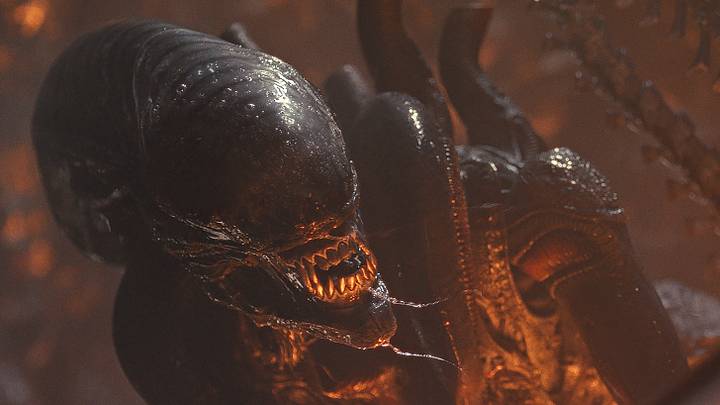
If there's one thing the Alien franchise can't get enough of, it's prequels—and sequels of those prequels. And even when we get sequels, we get prequels of those sequels. However, I think Alien is one of those special IPs that manages to make it work as its foundation. With each movie, we get more new characters put in increasingly creative and morbid situations against Xenomorphs or some evolutionary version of the perfect lifeform. But since the cliffhanger ending of Ridley Scott's Alien: Covenant, hardcore fans have always wondered what the rogue android, David (Michael Fassbender), has been up to.
Alas, we'll finally get an answer, and perhaps a satisfying conclusion, to David's story, which would give him the second-most live-action appearances in the Alien anthology saga. Respectfully behind Ellen Ripley, of course.
Scott broke the news in an interview with the Los Angeles Times. Rather than talking about Xenomorphs or aliens in general, he focuses on difficult questions about artificial intelligence. Longtime watchers of Scott's movies would know he's tackled the subject "almost human, but not" many times with Alien (1979), Blade Runner, Prometheus, and Alien: Covenant. Both Alien and Blade Runner (which was theorized to be the same universe) deal with characters who are artificial but face the challenges of humanity, whether they accept it or not.
Blade Runner had biorobotic replicants, but Alien deals a lot more with the data-driven side of artificial intelligence. Even without Scott's direction, the franchise has continued to feature android characters at the core of its narrative. In Fede Alvarez's Alien: Romulus, the android Andy (David Jonsson) is considered a brother by human Marie Raines "Rain" Carradine (Cailee Spaeny). Andy was innocent and heartwarming, though with a neuro-glitchy system. He received an upgrade module that increased his intelligence and processing but made him cold in the process. Ultimately, he's an android who embraces the best of humanity. However, David, the android, takes a much darker turn.
In Prometheus, the Weyland-Yutani Corporation launches an expedition to an ancient planet in search of the origins of human life. Suffice to say, they found a lot more than they expected. The only survivors were a mangled David and Elizabeth Shaw (Noomi Rapace), who crash on a different planet. Years later, another team investigates a distress signal from that uncharted planet. They find David, but Shaw is long gone. Over the years, he's grown fascinated by the xenomorphs, treating them like experimental pets, and every other human is only a variable for his plans.
In the interview, Scott says, “AIs can go off. And if they do, it’s like a bomb.” David, as an AI, has been ticking for quite some time across two movies. I'm frightened to think of the Reanimator-esque scenarios that a callous, scientist android would put more human characters through. He'd have a little ship of horrors by his third live-action film appearance.
The interview also mentions that Scott doesn't use AI technologies in his movies. Writing about AI characters is more interesting to him. We're still in an age where only humans can create art that portrays artificial intelligence in an honest way. A lot has changed since Alien: Covenant was released in 2017, but the Alien franchise has been pretty consistent with how it portrays androids. They're smart, certainly smarter than humans, but being "alive" isn't any easier.
Now that Alien: Covenant is getting a sequel, I wonder if anyone's bold enough to tackle a sequel to Alien: Resurrection, or would 20th Century Studios prefer we forget that happened?
 Add us as a preferred source on Google