

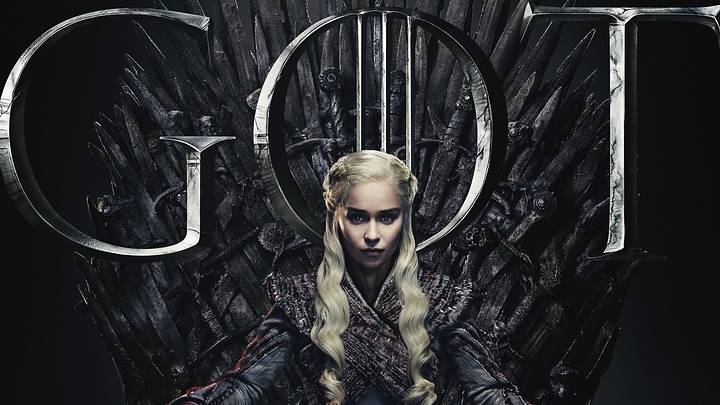
Emilia Clarke's Daenerys Targaryen and her eight-season journey from Pentos to King's Landing is one of the most central storylines in Game of Thrones. Although she's initially shrugged off as a real threat to the revolving door of monarchs who sit the Iron Throne, those in King's Landing start to become more and more aware that she stands a good chance of reaching them and restoring her family's dynasty.
However, there was one element of this arc that always troubled me. Although it was clear that characters like Tywin Lannister (Charles Dance) became progressively more nervous as Daenerys grew closer, it always felt like the audience was simply being asked to accept that the fear he and the others were feeling was justified. King's Landing was definitely not without its significant defenses. Thankfully, the show's first spinoff has done a fantastic job of clearing things up in this respect.

Game of Thrones rarely succeeds in making Daenerys' dragons seem like the huge advantage they are
Daenerys amasses an increasingly impressive army the closer she gets to King's Landing, but it's not so big that Cersei (Lena Headey) and company should feel notably overpowered. King's Landing is very capable of defending itself against invaders, and as Cersei infamously reminds everyone just before it falls: "The Red Keep has never fallen." Of course, Daenerys also has three dragons at her heel, which become larger and increasingly loyal to her as they travel.
That is really what everyone is afraid of. In a world without nuclear weapons or fighter jets, it's the side with the most dragons that's the most feared and always has the upper hand. Regardless, the fact that we very rarely see the dragons unleashed in battle makes it tricky to fully understand why Daenerys' apparent advantage is so overwhelming. This is made even more strange by the fact that, at the start of the show, no living character has any memory of a dragon's might, and that the prevailing stories about them revolve around how small, weak, and frail they were before they died out.

Plus, we see two of Daenerys' dragons meet their end by the time of Game of Thrones' final episode, so we know they aren't invulnerable if the right countermeasures are installed. It is, ultimately, the survival of Drogon, her final dragon and the one fully bonded to Daenerys, that puts her on the verge of claiming the Iron Throne before Jon Snow (Kit Harington) kills her. But this falsely suggests that just one dragon would have achieved the same goal, when it more than likely wouldn't have done.
This uneven representation of how much of an advantage her dragons give her really sits at odds with the ongoing sentiment throughout Game of Thrones that a trio of fire-breathing beasts requires constant monitoring and preparation. I did still understand that it was an edge that wasn't to be taken lightly, but it wasn't until House of the Dragon that the franchise could drive home how much of a favorite in the conflict Daenerys was.

How House of the Dragon makes the fear of Daenerys' biggest advantage more palpable
As the title of the series might suggest, House of the Dragon goes in hard on this specific area of the lore. Set during an era when dragons are slightly more commonplace (or at least not believed to be extinct), the Targaryens are kept solidly in power thanks to their control over every beast that represents the silver-haired family's House. The tipping point comes when the disagreement over who should rightfully succeed King Viserys I Targaryen (Paddy Considine) after his death turns especially fiery — literally and figuratively.
As such, dragons stop being mere symbols of power and become heavily utilized during combat. The near-constant framing of dragons like Vhagar, Caraxes, and even Sheepstealer as weapons that can be pointed and aimed at those who oppose their riders makes them far more fearsome and immediate threats than how Daenerys' dragons, Drogon, Rhaegal, and Viserion are portrayed in Game of Thrones. Just the presence of one dragon at a battle tips the balance in that side's favor, and the fact that House of the Dragon pays so much attention to which side has the most dragons at any time makes their importance seem even more paramount.
So, even though no one in Game of Thrones is old enough to remember the threat that dragons presented, or the overwhelming advantage that they offered, it makes far more sense that the unease they feel about Daenerys' approach is so intense. Just as watching House of the Dragon helped me fully appreciate the magnitude of the fact that Clarke's character had three dragons while her enemies had zero, I'm sure Cersei and company grew up reading about eras when dragons were still around and feared.
Game of Thrones and House of the Dragon are streaming now on HBO Max. So is A Knight of the Seven Kingdoms, but there aren't any dragons in that. It's still good, though.
 Add us as a preferred source on Google