

Who currently is and who should be sitting the Iron Throne is central to both Game of Thrones and House of the Dragon. It's this ongoing war to become the King or Queen of the Seven Kingdoms that presents so many of the franchise's storytelling opportunities. As such, the rules surrounding the line of succession in Westeros are pretty meticulous and identical across the two eras. That being said, both shows find their own ways of putting a unique spin on the succession blueprint, neither of which technically breaks the rules.
While it may not seem like it at times, there are time-honored traditions and rules that spell out who should be King or Queen when the ruling monarch either abdicates, dies, or is killed. It would be a pretty dull ride if the characters actually abided by these rules, though. There is far more fun in the chaos of figuring out who should actually be wearing the crown at any given moment. However, Game of Thrones and House of the Dragon take different approaches to adding complications to proceedings, which allows them to feel like distinct stories rather than imitations of each other.

Game of Thrones thrives on its ambiguous line of succession
Mark Addy's King Robert I Baratheon led a rebellion that ended the Targaryen dynasty. His ascension to King of the Seven Kingdoms is probably the last time Game of Thrones champions a rightful monarch, or at least the closest thing to one. The Mad King certainly needed to be stopped, but ending Targaryen rule ended an unbroken run of silver-haired rulers whose line of succession was fairly easy to follow and, at least on paper, simple to predict.
After Robert's death, several Game of Thrones characters came forward who believed they had a rightful claim. Although the "correct" choice would have been Stannis (Stephen Dillane) as the late King's oldest male blood relative, the presence of a string of bastards whom Robert died thinking were his children was just one reason why Stannis was cast aside. The ongoing presence of surviving Targaryens like Daenerys (Emilia Clarke) and Jon Snow (Kit Harington) muddied the waters even further.
In other words, there's no clear answer to who should succeed King Robert, and if there was, there'd be no story. Just because there are rules about the line of succession in Game of Thrones lore doesn't mean they can't be subverted or even ignored by the characters if it benefits them. By the end of the show, those rules are completely dispensed with when Bran (Isaac Hempstead Wright) is made King, with a plan to elect future monarchs rather than their being born with the right to rule. When that change is made, it makes perfect sense that it's the end for Game of Thrones.

House of the Dragon makes it glaringly obvious who should sit the Iron Throne
Even though female heirs are far less common in the Game of Thrones franchise, Emma D'Arcy's Rhaenyra Targaryen is one of the few examples. With King Viserys I Targaryen (Paddy Considine) lacking a son to succeed him, and with his brother Daemon (Matt Smith) proving more and more unsuitable to rule, the sitting monarch makes the unorthodox move of officially naming his daughter as his heir to the Iron Throne.
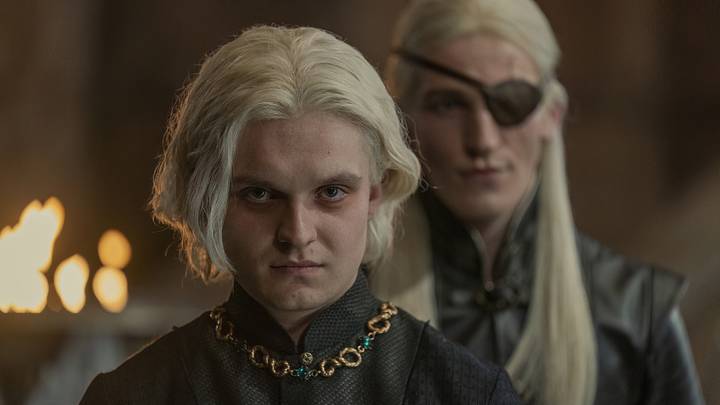
So, pretty simple, right? Wrong. There is a lot of pushback to Rhaenyra being named as her father's heir, and those discontented voices are made even louder when Viserys goes on to father three boys with Alicent Hightower (Olivia Hightower). Even though Viserys remains resolute that his daughter should be Queen, plans are put into motion to disobey his wishes once his illness takes him. It doesn't help that the scheme to put Viserys' oldest son, Aegon (Tom Glynn-Carney), on the Iron Throne is strengthened by a huge misunderstanding.
With Viserys' dying breath, his ailing mind focuses on the vision passed down from Aegon the Conqueror, which leads Alicent to misinterpret his ramblings as a change of heart about Rhaenyra succeeding him. When this mistake is eventually figured out, it's too late. Any hesitancy about installing Viserys' oldest son as King is dissolved by what Alicent spreads as fact, and Aegon succeeds his father. Unlike Game of Thrones, which draws its tension from the question of who should really be King or Queen of the Seven Kingdoms, House of the Dragon draws a massive circle around Rhaenyra and makes things increasingly frustrating that Viserys' wishes aren't being honored.
Even when she does take the Iron Throne in season 3, it's not like the resistance to her rule goes anywhere. If anything, it becomes even stronger because of those making what they believe to be more legitimate claims. It's a very smart way to separate the prequel from its parent show, and George R.R. Martin's source material should also be praised for providing such disparate and compelling takes on what is essentially the same subject matter.
Game of Thrones and House of the Dragon are streaming now on HBO Max.
 Add us as a preferred source on Google