

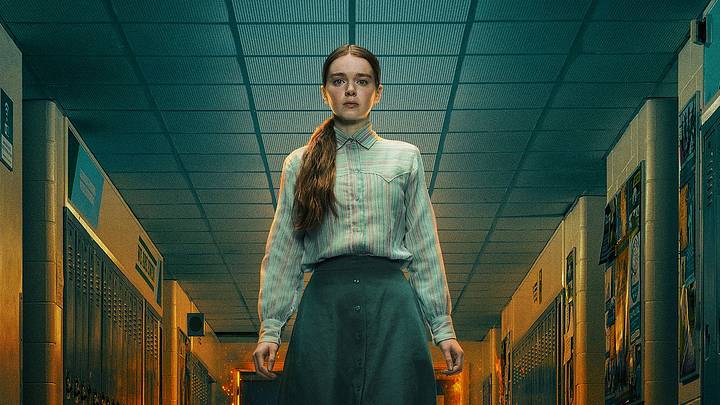
When news first broke that Stephen King’s seminal debut novel, Carrie, would be getting the prestige television treatment with an eight-episode series, I was extremely skeptical. For as effective as Carrie is as a novel, a large part of that stems from the simplicity and conciseness with which King tells the story. While King has certainly become an author associated with words like ‘prolific’ in the years since, between the sheer quantity of his output and just how lengthy many of his novels are, Carrie is a relatively short book. In fact, pound-for-pound, it’s one of the shortest books that King has ever written. And beyond that, this is a story that has already been adapted several times over, to infamously declining results. Brian De Palma’s 1976 Sissy Spacek-starring film adaptation stands tall as a bona fide classic, and everything else since has essentially withered within the shadow of that accomplishment. So the idea of a TV series elongating the novel, potentially stretching it thin, and ultimately still being an underwhelming version of the story wasn’t something I was immensely excited for.
However, the silver lining of the whole project from the word go was who was behind the entire project: Mike Flanagan. If you’re unfamiliar with the name, you are almost certainly not unfamiliar with the work. Over the course of the past decade-plus, Flanagan has become one of the most prolific and influential filmmakers within the horror genre, with films like Hush, Gerald’s Game, and Doctor Sleep and TV shows like The Haunting of Hill House, Midnight Mass, and The Fall of the House of Usher. Within his work, he has made multiple King adaptations, all of which have been sublime. So, if anyone was going to turn Carrie into a season of television successfully in 2026, Flanagan was a good horse to bet on.
Having now seen the first episode of Flanagan’s Carrie TV series for Amazon Prime, I am delighted to report that it goes above and beyond to deliver what it most needed to: proof of an artistic reason for this series to exist at all.

Carrie episode 1 review: "First Period"
Right off the bat, I will admit that Flanagan played his cards exactly right to begin to diffuse my defenses against this new iteration. For as much as I love De Palma’s film, I am also a huge fan of King’s original novel (it was the first King I ever read as a kid). While the 1976 film gets so much of the novel right, it does also eschew the larger structure of King’s writing, much of which sees the story unfolding in non-linear fashion, utilizing interviews with various characters involved in the story to recontextualize and augment the present-tense action after the fact. For the show, Flanagan (as both the writer and director of this first episode) makes the choice to bring King’s original structure back into the fold, but distinctly through its own lens. Rather than those text-based interviews, Flanagan’s version updates things to a documentary crew of sorts interviewing characters and starts off the episode by making it clear that things will not end well for Carrie or the residents of this town.
It’s a strong framing device that feels immediately compelling and I’m sure was implemented, at least in part, to try and provoke binge-watching. But it also serves to highlight one of the real strengths of Flanagan’s re-interrogation of King’s story, which is the ways in which it has been updated for the setting of the modern era. King wrote Carrie in the early ‘70s and it was published in 1974. De Palma’s film was made shortly thereafter, releasing just two years later. Each of them chronicles the struggles of Carrie White as a bullied student through the lens of their setting in both time and place. In the years since, while there have been numerous attempts at subsequent adaptations, they have remained increasingly reticent to change things up too much or speak to their specific era in any kind of impactful way. Flanagan’s Carrie make the bold decision to set the story concretely in 2026, and is all the better for it.
In the past decade-plus alone, so much has shifted about the culture surrounding childhood, adolescence, and the ways in which young people interact with one another, and Flanagan adeptly taps directly into the anxieties that stem from these changes. In a fascinating way, he’s actually able to have his cake and eat it too here, presenting the story as something that young viewers are likely to find an increasingly accurate portrait of what their day-to-day lives actually look like in school, while simultaneously utilizing the dissonance between the school that adults remember and this current reality as a driving engine of the story and its themes. In this version, Carrie White has been completely homeschooled and shielded from the world her entire life prior to attending high school for the first time. She’s never used a computer, doesn’t know about school shootings, and finds herself and her own sensibilities in stark contrast to everyone around her. This intergenerational friction is fantastic for the piece, and opens up both thematic and politically-minded possibilities that Flanagan seems eager to engage with and explore in ways that I wasn’t expecting.

But if there’s one thing that can be pointed to as the shining light of this first episode as a whole, it has to be Summer H. Howell’s performance as Carrie. She is flat-out incredible as this more empathetic and open-hearted-if-secluded take on the character, and her work here breathes a surprising amount of vibrancy and life into this take on the story. The performances from the cast as a whole are great, as Flanagan brings over many of his most regular collaborators, but the other one who really caught my attention in this episode was Samantha Sloyan as Margaret White, Carrie’s mother. Sloyan has long been an MVP of the Flanagan troupe (her role in Midnight Mass should have won her an Emmy years ago) but she really excels here, with Flanagan’s take and her performance creating a still very-much-misguided matriarch, but one who feels spine-tinglingly believable and even sympathetic at times in some truly unsettling ways.
Flanagan’s Carrie also dares to take some big swings on changes to the source material. Probably my favorite of these was the infamous shower scene itself, which gets a completely different context and has a lot more emotional heft leading into it for all parties involved, as a result. This works really well, and manages to earn its placement as the episode’s finale. However, for me, the jury is very much still out on one of the other major changes which comes in the final moments of the episode, implying much bigger changes that lie ahead. While I admire the metatextual angle of Flanagan’s awareness of audiences’ familiarity with this story and how he looks to utilize those expectations in interesting ways, I’m not sure I’m onboard with the potentially seismic impact of what the episode’s cliffhanger suggests. But I remain open-minded, and eager to see where things go.
Verdict
Overall, the first episode of Flanagan’s Carrie is a strong start that more than proves that the series was made with artistic craft, care, and passion for both the source material and the desire to innovate within this established sandbox. It sets the stage in an effective and thrilling way, while also showcasing that this is more than just a rehash of prior versions.
GRADE: B+
 Add us as a preferred source on Google