

Spoilers ahoy for The Lord of the Rings: The Rings of Power season 3, episode 7.
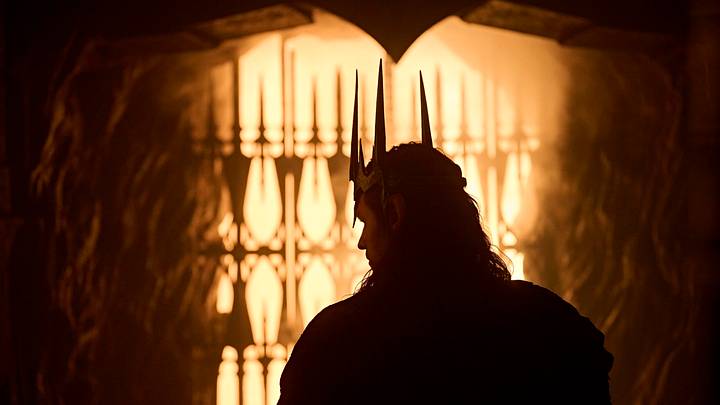
The Ring’s creation is nigh, with Sauron (Charlie Vickers) one step closer to unlocking it. Númenor unites and prepares to sail to Middle-earth to confront him. Bring on the Akallabêth. Círdan has glowed up. Maybe he’s getting ready for a noble donation of his ring to Gandalf, which we know is in the cards. By the end of this episode, Pallando (Ciarán Hinds) is more rational, wise and sympathetic. There’s little textual character development for the show to go on, but the subtle notes it applies are unobtrusive yet moving.

Sharing one lifetime together, or facing the ages alone?
Galadriel (Morfydd Clark)—the real Galadriel this time—frees Celeborn (Jamie Campbell Bower). He tells her the bad news: he gave Sauron the information he needs to complete the One Ring. Their relationship issues are on full display, and they run deeper than Sauron. They’ve grown apart, and centuries of trauma stand between them. Is Celeborn breaking up with Galadriel here? This drama definitely never happened in any Tolkien book we’ve ever read, and we’ve read them all. But it’s ensuring we definitely keep watching.
Elendil (Lloyd Owen) and Míriel (Cynthia Addai-Robinson) finally kiss. We know nothing about Elendil’s love life from the books, but this show-only romance was a long time coming, and it pays off. They say goodbye here, and Míriel’s faith has never shone so brightly. She has become who she has to be.

Out of the frying pan, into the fire
Mount Doom throws Sauron around like a ragdoll as he tries to melt Fëanor’s hammer into metal he can forge the Ring with, lava spurting everywhere. As physical as Sauron would like to be with Galadriel and Celeborn this season, it seems Orodruin is the only willing participant in his games. Also, Sauron riding a fell beast? We’ve never seen it before on page or screen, but we love to see it.
Theo (Tyroe Muhafidin) gives up his ring. We didn’t see that coming. But before we can feel any relief for the beleaguered character, he discovers it unharmed in the pan he tried to burn it in, staring up at him enticingly. Book readers and moviegoers will remember Gandalf throwing the One Ring into Frodo’s fire, only for it to come out cool. Theo’s transformation into a Ringwraith has only just begun.

A deal with the devil
Original material alert: Sauron goes to Khazad-dûm, where Thráin (Eddie Marsan) lets him head down to the mines to make a deal with the Balrog (voiced by Simon Pegg). The Balrog’s loyalty to Morgoth but hatred of Sauron is everything Sauron deserves and more. Durin (Owain Arthur) and his family are exiled, along with their Dwarven ring. Durin has his Faramir moment, refusing to put it on, which is powerful. In Appendix A of The Lord of the Rings, it is in the middle of the Third Age that Durin’s folk flee Moria after delving too deep and awakening the Balrog.
The Balrog mocks Sauron’s fair form, as the Eastern Orcs do in The Nature of Middle-earth. It sneers that Sauron is so ruled by his own dismal beauty that he has forgotten what he is. The Balrog name-drops Ungoliant as Radagast does in the first Hobbit movie. Is she alive? The Balrog can’t confirm, and neither can The Silmarillion. Then there’s the Balrog’s talk of a dark fire that shall one day eclipse even the Secret Fire. Is this a reference to his Third Age clash with Gandalf? Or even the Dagor Dagorath? For the uninitiated, that’s the prophesied final battle.
Sauron promises to free the Balrog from the mountain, which we know will happen via the Dwarves digging too deep, if the Balrog tells him how to make the One Ring. LotR says Durin’s folk were too numerous and valiant for Sauron to conquer from without. But what about from within?
Sauron asks the Balrog how he can survive the endless fire, burn and yet live. The answer is to become one with it, submitting to its embrace and being reduced, in infinite pain, to purest being. Guided by the Balrog, Sauron purges redemptive desire with each smack of hammer to anvil, growing increasingly animalistic as black sand shifts around morphing gold. It’s sci-fi, alien and otherworldly, and it explains the series’ opening sequences.
One Ring to rule them all, One Ring to find them
This episode has to ask how it felt for Sauron to make the One Ring. It answers: he poured a huge part of himself into a small piece of jewelry, how do you think it felt? Vickers’ performance is career-defining. Here’s the vulnerability the show has been chipping away at. The Ring magnetising to Sauron’s finger as he lies on the ground halfway through in defeat is obscene. The pitch of his cries ascends in agony as fëa (soul) and hröa (body) contort, then, with a roar of finality, it is done.
This is how evil does marriage and its consummation, as the Balrog points out: thou and thou forever. Self only. His essence is being pulled out of him, and it sounds like it, with black blood drawn from his arms into the Ring. Whoever he may or may not have had as his queen or king in the imaginings of screenwriters, he will reign alone. The Elven Ring-bearers hear Sauron chant the inscription as it burns onto the ring on his finger, which is straight from The Silmarillion.

One Ring to bring them all, and in the darkness bind them
Tolkien said: “Much of the strength and will of Sauron passed into that One Ring,” forged secretly in Mount Doom. Elrond recounts this Silmarillion narrative in Fellowship. In Morgoth’s Ring, and the clue is in the name, Tolkien went a step further. He describes Sauron’s magic in forging the Ring as an imitation of Morgoth’s, when Morgoth poured his essence into the very fabric of Arda. Tolkien calls it a vaster and more perilous version of what Sauron later did with the rings.
Morgoth’s essence lived particularly in gold. Tolkien says this “Morgoth-element in matter” was what made Sauron’s magic possible. And it lived in fire too: Tolkien notes that the cosmically equipped Melkor was better at working with volcanic eruptions than trees. In a poetic meeting of evil with evil, maybe Morgoth was the only willing participant in Sauron’s games all along.
This season gratifies where previous seasons teased. As the showrunners have said, this is Sauron’s origin story, and he’s the main character here. So while previous seasons teased his plans, this season lays those cards out, no holds barred. We see his pleasure, his pain, his path. That makes it cautionary while tragic, but most importantly, believable.
The Rings of Power season 3 is streaming now on Prime Video. For more on the Dark Lord’s rise, check out our complete guide to The Lord of the Rings: The Rings of Power season 3.
 Add us as a preferred source on Google