

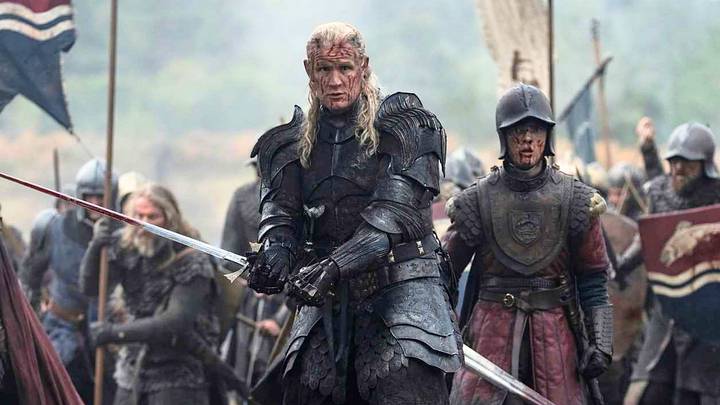
House of the Dragon season 3 concluded with a bang, and like much of the series so far, it sparked plenty of discussion among fans. The season continues the show’s trend of treating George R.R. Martin's Fire & Blood as a historical roadmap rather than a strict blueprint.
Certain changes expanded characters in compelling ways, while others significantly altered battles, relationships, and political storylines that helped shape the Dance of the Dragons.
There are several notable changes I would say added layers of depth to the story. These include Prince Daeron Targaryen’s reddish-brown hair possibly hinting at Alicent's decision to send him away to Oldtown at an early age, and his dragon Tessarion’s dragonfire being orange-yellow in color instead of cobalt blue, possibly because it could resemble undead Viserion's blue fire after the Night King resurrected him in Game of Thrones. Other notable changes were rearranging the players in the Battle of the Gullet and modifying Helaena's ending.
But these aren’t even the biggest departures from the source material this season. Some worked brilliantly for television, while others left many book readers wondering why events that already worked on the page needed to be restructured.
Let's take a closer look at the four best and four worst book changes in House of the Dragon season 3.
- Best: Putting Daemon Targaryen in the battlefield
- Worst: Major changes to the Battle of Tumbleton
- Best: Alys Rivers gets a backstory
- Worst: Skipping the Battle of the Honeywine and rushing the Fishfeed
- Best: Ormund Hightower becomes one of the show’s most effective villains
- Worst: Folding Nettles’ story into Rhaena Targaryen
- Best: Expanding Aegon’s adventure with Larys, reunion with Aemond
- Worst: Starting Baela and Alyn’s romance too early
- Bonus: Neither worst nor best but significant… Rhaneyra’s prophecy arc

Best: Putting Daemon Targaryen in the battlefield
One of the best changes the adaptation made is placing Daemon Targaryen where we always wanted to see him: on the battlefield.
Let’s be honest, if we can have Matt Smith’s Daemon not only dominate the skies with Caraxes but also lead armies into battle, wielding Dark Sister, why wouldn’t we want to watch that?
In Fire & Blood, Daemon spends much of this portion of the Dance operating away from several major battles while pursuing Aemond and Vhagar across the Riverlands. As a result, he isn't present for key conflicts such as the Battle at the Red Fork or the Battle of Tumbleton.
The show adaptation takes a different route for Daemon, and honestly? It works.
It places Daemon directly at the center of the war alongside the Rivermen and Winter Wolves, first at the Red Fork, then Fishfeed (which we did not get a glimpse of), and later at Tumbleton. This allows him to become one of Team Black’s primary military leaders. And more importantly, this change serves Daemon's character arc. Earlier seasons often portrayed him as impulsive, prideful, and willing to pursue victory at any cost. Season 3 begins challenging those instincts.
With Rhaena’s storyline merged with Nettles, it makes sense that Daemon, one of the most experienced in battle, would be on the battlefield as the military commander rather than away on another mission or perpetually waiting for the next major event to happen around him. Earlier in the season, Daemon and Rhaenyra finally begin moving toward the same goal. And in the finale, before the Battle of Tumbleton, when Rhaenyra tells him, “Do not make a monster of me,” it becomes one of the defining moments of his character growth.
Daemon understands what is at stake. He understands that it is not merely his goal to win the battle but also to preserve innocent lives, and with it Rhaenyra’s reputation. At Tumbleton, after discovering that Ormund Hightower deliberately placed children on the front lines, Daemon changes course, abandoning his usual scorched-earth approach to a strategic one to minimize civilian casualties.
It’s a small moment, but an important one. The Rogue Prince remains ruthless, but he begins thinking beyond immediate victory. His actions now reflect a growing awareness of how war affects Rhaenyra's reputation, her claim, and the future of her reign.
Daemon’s transformation through his presence at the battlefield adds layers to his complexity. For a character whose greatest weakness has always been allowing pride and impulse to dictate his actions, that is a meaningful development. So, the change isn't merely about giving the audience another Matt Smith dragon battle. It gives Daemon a visible evolution: he remains ruthless, but his priorities have changed. This arc gives us an insight into one of the key and strongest Targaryens during the civil war.

Worst: Major changes to the Battle of Tumbleton
Ironically, the same storyline that benefits Daemon also produces one of the season’s most controversial book changes.
In Fire & Blood, Tumbleton is actually two separate battles. The Black faction hold Tumbleton while Ormund marches the Hightower army to take the city. The First Battle of Tumbleton sees Hugh Hammer and Ulf White betray Rhaenyra, becoming the “Two Betrayers,” handing the Greens two additional dragons and a devastating victory. Daeron on Tessarion also take to the sky into battle.
The aftermath of the first battle leads to the Second Battle of Tumbleton, where Addam of Hull on Seasmoke, rallies an army of the Rivermen in a surprise attack to reclaim the town for queen Rhaenyra and redeem himself. All the chaos and carnage result in the deaths of several dragons and their riders, leaving Tumbleton destroyed.
The show has rearranged the battle and numerous character roles, merging elements from both battles rather than presenting two distinct events.
Ulf’s betrayal stays consistent with the source; the only modification is that he ends up attacking both factions, turning on both sides. While Hugh arrives to save his wife, abandoning his post at the Dragonpit, Gwayne Hightower is also present despite being absent from this stage of the book narrative, as he dies after Rhaenyra takes King’s Landing.
Lord Corlys Velaryon is also at Tumbleton as a captive. First captured by Ormund and later, after being released by Gwayne, taken as Daemon’s prisoner. Events like Ormund’s death also resemble the source material to the extent that Lord Roderick Dustin (Roddy the Ruin) fatally attacks him (at his rear), but the show adapts Ulf on Silverwing to ultimately burn them both to death.
Some individual moments work well: Caraxes’ majestic walk at Daemon's call to burn Tumbleton's gate open, Daemon’s thrilling duel with Ser Jon Roxton giving us a Valyrian steel sword on Valyrian steel sword action, and Roddy the Ruin’s impactful confrontation with Ormund.
But certain changes, like Daeron and Tessarion's non-participation in the battle and Addam’s crucial role, are either removed from the equation entirely or we might get a version of it in season 4. At the end of it all, Team Black win the battle, and Tumbleton is completely covered in ashes with many innocent lives perished.
Through Tumbleton's battles, the book mainly focuses on the dangers of empowering dragonseeds whose loyalties remain uncertain. Although Ulf and Hugh’s actions pose a question to their loyalties, the show’s version focuses more on the broader chaos of dragon warfare and Rhaenyra’s desire to avoid civilian casualties.
The Battle of Tumbleton was always going to be one of season 3's biggest set pieces. The larger problem is that much of what made Tumbleton significant is lost. Daeron and Tessarion barely participate, Addam’s heroics are potentially postponed and with it the dragon deaths. Additionally, the devastating political fallout surrounding the dragonseeds' betrayal is greatly diminished.
The result is still visually impressive, but it lacks the complexity and tragedy that made Tumbleton so important in the source material. For now, though, this feels like one of the missed opportunities to depict the cost of dragon war and trusting dragonseeds with nuclear power. Perhaps the aftermath will bring some of these missing pieces back into the fold, or maybe the changes will redirect the story into a different direction.

Best: Alys Rivers gets a backstory
Few characters benefited more from adaptation than Alys Rivers.
She is one of the strangest characters in House of the Dragon and Fire & Blood, precisely because we know so little about her. Much of her story in the book comes from rumors, conflicting accounts, and speculation. She is deeply connected to Harrenhal, and eventually becomes deeply bonded to Aemond Targaryen. But the historical nature of the book makes it so that much of her life is left deliberately uncertain. That ambiguity is part of her appeal.
Season 3 possibly fills in some of the blanks instead of simply preserving the mystery.
According to Alys’ claims, she was once married to King Harren Hoare (Harren the Black) and has witnessed the destruction of Harrenhal during Aegon’s Conquest. After her son was mortally wounded by dragonfire, she turned to ancient magic and cures from the forest to attempt to save him, only to become cursed with an unnaturally long life and be bound to the castle itself.
Whether every detail of her claim is true remains uncertain, but that’s what makes the change work.
If true, Alys' past gives her a reason to understand suffering, death, and the destructive reality of Targaryen power better than anyone else. It also makes her connection with Aemond and her motives with him far more compelling. Furthermore, Alys revealed to Daemon that she wants Harrenhal, and later tells Aemond exactly how she aims to achieve that. Although she might not be truthful, but as someone with mysterious powers to manipulate, there is something deeply unsettling about her being driven by such hidden motives.
Season 3 expands Alys into a fully realized character while leaving room for uncertainty, and additionally uses her to explore Aemond’s vulnerabilities. As Ryan Condal has indicated that there is more to her story waiting to be explored, her adaptation change is exactly the kind that helps strengthen the story without sacrificing what made the character intriguing in the first place.
We understand Alys more than we did before, but we still have plenty of questions to ask in season 4.

Worst: Skipping the Battle of the Honeywine and rushing the Fishfeed
For a season focused heavily on war, season 3 surprisingly skipped what could be called two of the Dance’s most important battles: Honeywine and Fishfeed.
The Battle of the Honeywine and the Battle by the Lakeshore, better known as Fishfeed, are two of the most important land battles in Fire & Blood.
The Battle of Honeywine is particularly important because this is where Daeron Targaryen earns his title. At the banks of the Honeywine River in the Reach, when Ormund’s forces are nearly overwhelmed, Daeron arrives on Tessarion and turns the tide to bring the Green faction to victory. This moment establishes him as a genuine player in the civil war, after which he earns his knighthood, famously dubbed “Daeron the Daring.”
Without Honeywine, one of Daeron’s defining moments disappears. The show instead presents this title as a part of Ormund’s carefully constructed public image for Daeron- a bold, young prince contending for the Iron Throne, rather than something earned on the battlefield.
While Fishfeed feels like an even greater omission.
Known in the histories of Fire & Blood as the bloodiest land battle of the entire Dance, Fishfeed demonstrates the ferocity of the Winter Wolves led by Roddy the Ruin and the strength of the Riverlands armies. After Lord Jason Lannister’s death at the Battle at the Red Fork, the remaining army marches toward Harrenhal, where they are ambushed by the Black forces. Pushed against the lake of Gods Eye, the Lannister forces are entirely obliterated, turning them into floating corpses in the lake, earning it the name “Fishfeed” as the fish fed on the dead.
Instead of witnessing the horrors of the battle firsthand, viewers hear about it through song and celebration in the aftermath, in season 3 episode 2. As a significant battle, Fishfeed deserved more screen time. Maybe even a scene depicting the aftermath of floating armies in the lake, with the Winter Wolves and the Rivermen forces emerging bloodied but triumphant, to reflect the intensity.
It is also a shame that by omitting Fishfeed, the show skipped events that would have allowed for new characters like Roddy the Ruin and Alysanne Blackwood (Black Aly) to turn into legends. The show never even mentions their names.
It is understandable that, given the season’s budget priorities and its focus on larger set pieces like the Gullet and Tumbleton, these battles were skipped or glossed over. Especially considering how VFX-heavy Honeywine could have been with an entirely new dragon, Tessarion, in the battle, and how large the production for Fishfeed would have been, considering it occurs at a lakeshore.
Even so, both battles play an important role in shaping the war and its key players. Honeywine explains why Daeron is a celebrated figure. Fishfeed shows why the Winter Wolves and the Rivermen become such a powerful force in the war. By reducing both conflicts, the show loses an opportunity to show the brutality and human cost of the Dance at its peak. Instead, we get just enough to make us wish we could have had more of Tessarion in the sky, and Roddy the Ruin in action living up to his name.

Best: Ormund Hightower becomes one of the show’s most effective villains
Another pleasant surprise is how much more interesting Ormund Hightower became.
Fire & Blood treats Lord Ormund Hightower primarily as a capable commander leading the massive Hightower host in the Dance. The book offers little insight into his personality beyond military accomplishments. But the show adaptation transforms him into the sharply defined and fully developed chilling antagonist Team Green desperately needs in the field.
By exploring Ormund’s relationship with his cousin Gwayne Hightower and Daeron Targaryen, Ormund emerges as a calculating political operator whose ambitions extend far beyond simply winning the war. His increasingly erratic behavior, obsession with control, extreme sensitivity to odor, and manipulation of Daeron to believe his Targaryen blood is a “taint” he must get rid of, depicts the complex layers of a fanatic, making him a memorable villain.
Ormund’s decision to unofficially prop Daeron as King, with Aegon crippled and Aemond missing, is a brilliant thematic mirror to Otto Hightower’s political scheming. His belief that Daeron could become a more useful king than either Aegon or Aemond is consistent with the Hightower worldview of superiority, as he would rather use the young prince to further his control over the Crown than serve him or House Targaryen.
Just as Otto maneuvered Alicent toward Viserys to place Hightower blood closer to power, Ormund sees an opportunity to shape the future through Daeron. Only dial it all the way up to ultimately cast the Targaryens aside and have an Oldtown-raised boy with a dragon as a direct ticket to run the Seven Kingdoms as regent.
Even details like his explosive crash-out when things don’t go his way and inability to accept defeat in a game of Cyvasse add so much psychological depth to him. Even the fake Daeron deception plan, the coins bearing Daeron’s face, and the capture of Rhaenyra’s Hand, Corlys Velaryon, show how strategic and politically cunning Ormund is.
Reading between Martin’s lines, turning a military commander into a fiercely ambitious political fanatic whose presence as an extension also brings insight to Daeron and Gwayne, is one of the season’s best adaptations.

Worst: Folding Nettles’ story into Rhaena Targaryen
Of all the adaptation changes, Rhaena Taragaryen’s storyline collapsing with Nettles’ stands as one of the show’s most controversial and biggest departures from the text.
In Fire & Blood, Nettles is one of the most fascinating dragonriders of the Dance. She is a commonborn bastard who, unlike most riders, claims Sheepstealer not through noble blood or mystical Targaryen connection, but by patiently feeding the dragon sheep. Her existence challenges the long-held idea that dragons belong only to those with dragon blood.
Nettles also plays a pivotal role as Daemon’s loyal companion and their complex bond eventually drives a wedge of mistrust between Daemon and Rhaenyra. While Rhaena, in the book, eventually claims Morning who is considered to be one of the last healthy dragons to have hatched and tamed.
The show replaces this narrative with Rhaena pursuing and bonding with Sheepstealer in the mountains of the Vale. This change certainly brings Rhaena into the fold of the war in a way that she isn’t in the books, and she gains a meaningful dragon arc of her own.
However, the adaptation loses something important in the process. Nettles' presence questioned assumptions about bloodlines, dragon-riding, and power itself. Removing her removes that aspect and also eliminates her bond with Daemon further in the story which plays a big part in Daemon and Rhaenyra's plot.
In conversation with IGN, showrunner Ryan Condal explained the decision born of wanting to give Rhaena more to do while also avoiding introducing the complicated Daemon-Nettles bond that would eventually impact Daemon and Rhaneyra’s relationship so much. Furthermore, he added that, “it felt like we were covering off on a lot of the different walks of life of these kind of commoners (dragonseeds) who up-jumped into Targaryen dragon riders.”
Condal continued that with this, Rhaena “gets her great wish and it becomes her greatest nightmare,” adding:
“And it felt like pairing a wild dragon with a lady of noble blood... that helps keep us at the core of where we wanted to take Rhaenyra and Daemon’s relationship. It did not feel like, to us, an infidelity story was some place that we wanted to go with Daemon and Rhaenyra given everything they’d been through at this point.”
Although stripping Nettles from the narrative solves the problem of overcomplicating multiple evolving aspects of key characters while giving Rhaena a larger role, it also substantially breaks Daemon’s late-game arc.
The logic is understandable considering the direction they chose for Daemon and Rhaenyra, and I do agree that the closest thing to not fully eliminate Nettles is by merging her with Rhaena, but it results in a larger narrative loss by leaving out an important character from the book.

Best: Expanding Aegon’s adventure with Larys, reunion with Aemond
One area where season 3 successfully capitalizes on the gaps in Fire & Blood is Aegon’s storyline.
In the book, Larys helps Aegon escape into hiding on Dragonstone while he stays behind in King’s Landing. It leaves much of Aegon’s disappearance and survival off-page, creating an opportunity for the show to explore his escape and survival. Unlike the adaptation, there was no plan to escape to Braavos.
Aegon and Larys wandering back and forth, around the surrounding countryside of Rook’s Rest, trying to survive, should have been a disaster. Instead, it became one of the season’s most unexpectedly entertaining storylines amid the chaos of war. Larys desperately trying to keep his injured king alive while Aegon repeatedly questioning his loyalty and whether he even wants to play pretend anymore is the odd-couple dynamic that brings some welcome levity to the season.
More importantly, the adaptation shows how Aegon spends most of his time loathing Aemond, driven to take revenge, and is willing to rely on Larys, a clubfoot, for his survival. For a moment we also see Aegon meet the reality that, stripped of his power and dragon, he is just another helpless crippled.
Then comes the reunion at Harrenhal. After Sunfyre’s resurrection that saved Aegon from the Mooton army, he flies straight to Harrenhal to confront Aemond. Their meeting is entirely original to the show, but is exactly the sort of scene that you wouldn’t expect, but hoped to see.

Aemond, who has spent much of the season injured in Harrenhal, manipulated by Alys Rivers and believing he may have killed his brother, looks genuinely confused at the sight of Aegon and Sunfyre in Harrenhal. This unexpected reunion delivers the hilarious moment as Aegon slaps Aemond, shouting, “I’M ALIVE!”
Earlier, both brothers were moving in opposite directions: Aegon planning to escape to Braavos, Aemond planning on settling in Harrenhal to start his line of Targaryens.
Now forced to confront each other, Aemond asks for forgiveness, but Aegon has a plan to align them in the same direction. He instructs Aemond to fly Vhagar alongside him to Tumbleton, remind Daeron and Ormund of their loyalties before marching together to take King’s Landing. However, Aemond is not sure if he is ready to leave Harrenhal yet.
As Ewan Mitchell expressed in a behind the scenes featurette, Aemond “is torn between Alys, the new life he envisioned for himself, and going back to the past, to his brother Aegon. And these two loyalties and which one he chooses.” Meanwhile, Tom Glynn-Carney aptly expressed in the featurette that Aegon's only motive now is, “looking forward to engaging in full nuclear war. Revenge, revenge, revenge.”
Now, as both brothers reunite, the Greens’ cause is resurrected, creating an entirely new dynamic heading into season 4.
These additions explore Aegon’s side of the story during the Dance while giving us an insight into his arc. It’s the kind of moment that doesn't exist in Fire & Blood but feels perfectly suited to television.

Worst: Starting Baela and Alyn’s romance too early
Technically, Baela and Alyn of Hull ending up together isn’t a book change. The timing of it is. And that changes so much that it alters how their relationship feels.
Because yes, Baela Targaryen and Alyn of Hull (eventually Velaryon) do end up together in Fire & Blood. The only difference is that these events take place after the Dance of the Dragons, when the motivations are different. As the regency council pressures Baela into a political arranged marriage, she refuses and secretly escapes to marry Alyn, who has by then inherited the title of Lord of the Tides.
The show adaptation, however, takes a different approach and establishes their romance in the middle of the war, shortly after the death of Baela’s betrothed, Prince Jacaerys Velaryon. Season 3 introduces romantic feelings between Baela and Alyn, in what is supposed to be them seeking some form of stability in each other, bonding over tragedy and loss in the turbulent times. The timing, execution, and placement of it in the story are dramatically different from the book.
By building their bond during the active conflict, the series transforms what was originally a circumstantial decision into a genuine, slow-burn love story. The problem isn’t necessarily the pairing itself; it's that there is very little buildup before the relationship becomes romantic.
Prior to their kiss in season 3 episode 6, Baela and Alyn hardly share meaningful scenes, making the moment feel more surprising than emotionally satisfying. The show changes the timing, but their dynamic and character development also aren't there yet, so the relationship feels rushed. Additionally, what makes the decision even stranger is that the season spends considerably more time building Balea’s dynamic with Addam.
This creates another issue. Much of Baela’s season 3 story revolves around grief, loss, guilt and to some extent anger toward Rhaenyra, while trying to figure out where her future is headed now that she has lost Jace and with him her secured future of becoming queen. Burdened with the guilt of failing to save Jace, she is overworking to compensate for his loss and is exhausted. And introducing a romance at this stage, with someone we haven’t seen her interact with much, doesn’t really add anything to those themes. It instead distracts from them.
The book version may have been stronger as it arrives later, at a time when circumstances are different. By the time Baela chooses Alyn, she has survived the war, lost people she loved, and doesn’t have the raging war dictating priority for her (as a dragonrider). The marriage becomes an act of agency where she decides to choose her future rather than allowing others to choose for her.
The show may ultimately arrive at the same destination, but by moving their romance forward so aggressively, it loses the weight of Baela’s decision and much of what makes their relationship meaningful ahead.

Bonus: Neither worst nor best but significant… Rhaneyra’s prophecy arc
We’re closing out with a bonus book change that we wouldn’t categorize as worst or best, but it’s worth discussing.
Rhaenyra Targaryen’s “Prince That Was Promised” speech marks the single biggest narrative deviation from Fire & Blood that significantly impacts her character arc.
In the book, Aegon the Conqueror’s prophecy plays no role in Rhaenyra’s motivation. She is purely driven by politics, grief, revenge, and her right to the Iron Throne as King Viserys’ chosen heir. As the war progresses, paranoia, loss, and emotional devastation gradually lead her to descend into cruelty and transform into a harsher ruler devoid of empathy. The prophecy never influences her decisions. While the show effectively explores Rhaenyra’s shift from merciful to ruthless, her arc into claiming herself as a near-messianic figure is a substantial shift from the source material.
Rhaenyra begins season 3 grief-stricken and cautious, repeatedly choosing to negotiate over unnecessary bloodshed. But quickly everything begins to collapse: even though she refuses a formal coronation, the High Septon doesn’t anoint her; she prioritizes aiding the smallfolk to strategically earn a favorable image, but that alienates the noble houses; her cautious approach allowed Ormund to occupy Tumbleton for days and even silently destabilize King’s Landing. Meanwhile, Aegon and Aemond couldn't be found despite Rhaenyra having six dragons at her disposal.
Then, Aegon and Sunfyre return, which changes the political landscape overnight. To many Green supporters, including the people of the Faith, Aegon’s survival is divinely ordained. And suddenly, Rhaenyra isn’t simply fighting a rival claimant; she is fighting the idea that Aegon’s survival symbolizes the gods’ favor. Which could be what leads Rhaenyra to completely turn towards the prophecy as a source of purpose and legitimacy.
At the Grand Sept, after executing the High Septon for refusing to recognize her rule, Rhaenyra publicly reveals Aegon the Conqueror’s dream that was a secret meant to pass from ruler to heir. Rather than relying solely on succession, she uses the prophecy to frame her rule as part of a greater destiny, rendering the Faith irrelevant, and proclaiming, “If your world is to survive, I must light the way. Because I am the shield of the people. I am Rhaenyra the Chosen.”

It’s a fascinating change because it both works and doesn’t at the same time.
On one hand, the prophecy arc risks pulling attention away from the political realities that define the civil war in the book. On the other, her speech perfectly illustrates how far Rhaenyra has changed from the cautious queen we met at the start of the season. What began as a responsibility passed down by Viserys increasingly resembles genuine belief in the prophecy that she is the chosen one.
Although Rhaenyra understands that starving citizens care only for food and safety, she wants to send the message that her line is how their future is secured, which shows us how she begins confusing duty with divine certainty. Even Prince Joffrey’s first public appearance is strategic because it reinforces the idea that her line is secured. Furthermore, the prophecy becomes a tool to justify her decisions in choosing violence and even to alienate those close to her.
As Emma D’Arcy said about Rhaenyra’s arc in Inside the Episode featurette, “Rhaenyra begins the season doubtful of her rightness, but I think by the end of episode 8, she is resolute in her wrongness.” Showrunner Ryan Condal similarly noted that “everybody comes out the end of it wizened, a little bit harder, more corrupt,” which might be the direction Rhaenyra is headed in season 4.
If the series is using the prophecy to deliberately chart Rhaenyra’s gradual corruption into the book version—a ruthless queen who earned the famous comparison to Maegor the Cruel—then her speech may be the first major step of that transformation.
Whether viewers embrace or reject it, her prophecy arc may prove to be season 3’s most important adaptation change, whose true impact won’t be clear until the final season.
Season 4 of House of the Dragon is set to release in 2028, promising more dragons and the definitive end of the Dance!
 Add us as a preferred source on Google