

This article contains SPOILERS for The Rings of Power season 3, episodes 5 and 6, as well as The Silmarillion.
The fifth and sixth episodes of The Rings of Power are out now on Prime Video, and things are heating up across the board. Yet while much ado has been made about Sauron's quest to forge the One Ring this season, along with the return of Galadriel's long-lost husband Celeborn, a different storyline has been quietly stealing the spotlight. Yes, the dramas of Middle-earth are riveting, and Sauron (Charlie Vickers) is an undeniably excellent villain...but across the sea in Númenor, the tides are roiling in unexpected and deeply compelling ways.
Númenor is the island empire of Men descended from the Edain, blessed with longer lifespans than usual mortals thanks to their ancestors' valor in the War of Wrath. Of all the civilizations in The Lord of the Rings, Númenor is tied most explicitly to the Second Age. Its entire rise and fall happens during that time period, while other civilizations, like the Elves and Dwarves, manage to find a way through.
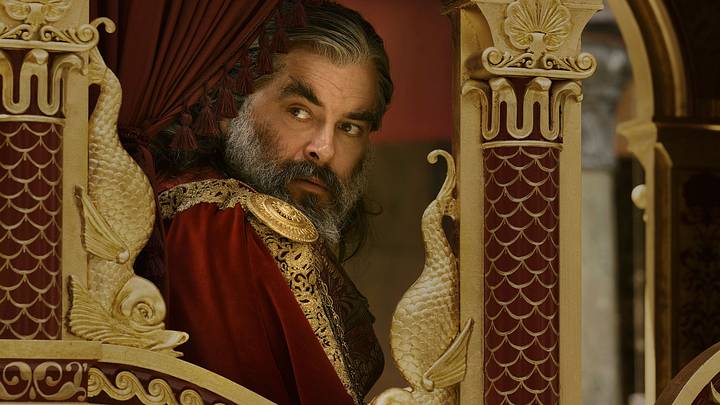
So far, season 3 has held much of the best material out of the entire show for its Númenórean storyline, and it isn't close. After two seasons of simmering political unrest, Ar-Pharazôn (Trystan Gravelle) seized the Sceptre to become King of Númenor, forcing his rival and cousin Queen Míriel (Cynthia Addai-Robinson) into hiding with her Faithful. The tensions hit a boiling point in season 3, with assassination attempts, spies, deaths, and captives being taken. From the gut-punch single-episode story of Eärien (Ema Horvath) working as a mole in Pharazôn's court, to the return of Elrond (Robert Aramayo) to the island kingdom his brother Elros founded centuries earlier, Númenor hasn't missed a beat.
All of this feels somewhat removed from the rest of Middle-earth, thanks to Númenor's location as an island halfway between the mainland and the Elven paradise of Valinor. But that's about to change in a major way in the final two episodes of season 3, and once it does, there will be no going back for Númenor.

The fall of Númenor awaits in The Rings of Power season 4
One of the key parts of The Silmarillion is a chapter called the Akallabêth, which details the story of the Second Age, including the rise and fall of Númenor. Essentially, Númenor is Tolkien's version of Atlantis writ large against Middle-earth. And just like the myths of that legendary utopia's fall, Númenor is laid low by its own hubris, before being swallowed by the sea from whence it came.
However, that's a massive oversimplification for a plotline that is probably going to become one of the most iconic parts of The Rings of Power's entire run. During the Elves war against Sauron, Númenor eventually joins the fight with a massive armada, leading to the Dark Lord's surrender. He's then taken back to Númenor as a prisoner and prize of war, where he begins manipulating the people there — especially the nation's prideful, power-hungry ruler, Ar-Phrazôn. Ultimately, Sauron is able weasel his way into becoming a trusted advisor, tainting Númenor's people, creating a cult to the Dark Lord Morgoth, and convincing Pharazôn to chase his deepest, most egregious desire: to attack Aman itself, the Undying Lands of the Valar, in a bid to attain immortality.
Though the Númenóreans are long-lived, they are not immortal, and it was part of the bargain from the Valar that when they were given their island at the start of the Second Age, they were never to sail west toward Valinor or Aman, the land of the Valar. Immortality is the domain of Elves, Valar, and Maiar; it is not for Men, even those of noble descent like the Númenóreans.
When Pharazôn does eventually lead his great armada west toward Aman, he succeeds in landing there. The Valar — angelic beings in Tolkien's legendarium — call for help from Eru Ilúvator, this fantasy universe's version of God who we heard talking to Gandalf in episode 303. And Eru's wrath is magnificent and terrible. Pharazôn's forces are buried beneath the shifting landscape. Aman is swept away from the world, into an astral realm where Men can never again reach it. And the island of Númenor, the proudest nation of Men ever to rise in MIddle-earth, is shattered and pulled beneath the waves.
As it happens, when Númenor goes down, Sauron goes with it. Pharazôn leaves him behind when he sets sail, but it doesn't prevent Sauron from suffering Eru's wrath either. His physical body is destroyed during the fall of Númenor, and he can never again assume forms that let him charm the races of MIddle-earth. This is why, by the time of The Lord of the Rings, Sauron is only manifested as a floating eye above Barad-dûr.

The aftermath & the set up
Not all of Númenor is lost during its fall. The Faithful receive a warning of the impending doom, and Elendil sets sail with nine ships for Middle-earth, along with his sons Isildur and Anárion. There they found the Realms in Exile: Arnor and Gondor. These great nations play a major role in the War of the Last Alliance that caps off the Second Age, with their legacy spilling over into the Third Age and The Lord of the Rings proper.
Because we'll need to watch not only the fall of Númenor, but the founding of Gondor and Arnor before the final battle with Sauron, it's looking increasingly likely that Númenor's fall will end up as a central pillar of The Rings of Power season 4. The fifth and sixth episodes of the season revolve around the Elves trying to convince the Númenóreans to join the fight against Sauron; if they do, and that fight comes to a head in the final two episodes, it's not a stretch to think that this season could end with Sauron being taken captive and brought back to Númenor — which is probably exactly where he wants to be.
The Rings of Power has already done a great deal of set up for all of the web of interconnected storylines that will lead to Númenor's fall, and in season 3, they're standing out as some of the strongest pieces of the show. Pharazôn's pride, Númenor's division, Elendil's forming of an army loyal to the Valar, Míriel's vision of the city being flooded in season 1, the empire's brutal colonization efforts in Middle-earth; all of these things lay the foundation for the greater story yet to come. The fall of Númenor is a central part of the Second Age that is utterly unique compared to what we saw in The Lord of the Rings or The Hobbit. If the show can pull it off, it could become one of the next timeless pieces of Tolkien's legendarium on screen.
The Lord of the Rings: The Rings of Power season 3 is streaming now on Prime Video. Its final two episodes arrive on Wednesday, November 25. Check back for more, as we recap each episode, analyze how they differ from page-to-screen, and explore the vast cast of characters featured in the series.
 Add us as a preferred source on Google